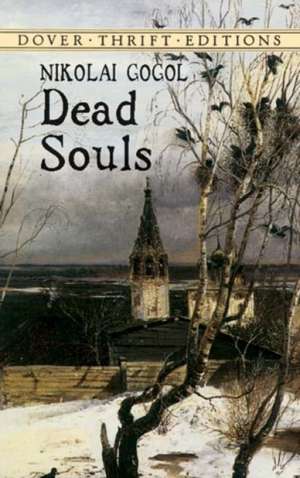
Dead Souls: Dover Thrift Editions
Autor Nikolai Gogolen Limba Engleză Paperback – 28 sep 2003
Din seria Dover Thrift Editions
-
 Preț: 56.06 lei
-
 Preț: 39.90 lei
-
 Preț: 24.96 lei
- 19%
 Preț: 28.70 lei
- 16%
 Preț: 24.59 lei
-
 Preț: 32.25 lei
-
 Preț: 42.38 lei
- 38%
 Preț: 66.97 lei
- 42%
 Preț: 34.60 lei
- 19%
 Preț: 47.73 lei
- 19%
 Preț: 68.89 lei
-
 Preț: 122.73 lei
- 15%
 Preț: 48.01 lei
- 55%
 Preț: 21.02 lei
-
 Preț: 40.66 lei
-
 Preț: 59.98 lei
-
 Preț: 26.93 lei
- 14%
 Preț: 58.15 lei
- 17%
 Preț: 59.67 lei
-
 Preț: 42.79 lei
- 65%
 Preț: 18.38 lei
- 18%
 Preț: 50.99 lei
- 57%
 Preț: 30.06 lei
- 19%
 Preț: 36.96 lei
- 41%
 Preț: 35.83 lei
-
 Preț: 36.25 lei
-
 Preț: 53.48 lei
-
 Preț: 65.45 lei
- 20%
 Preț: 22.68 lei
- 19%
 Preț: 34.51 lei
- 19%
 Preț: 23.40 lei
- 20%
 Preț: 22.62 lei
- 54%
 Preț: 41.37 lei
-
 Preț: 71.58 lei
- 19%
 Preț: 20.14 lei
-
 Preț: 54.95 lei
- 50%
 Preț: 17.89 lei
-
 Preț: 47.74 lei
- 19%
 Preț: 23.11 lei
- 39%
 Preț: 43.26 lei
- 19%
 Preț: 34.37 lei
-
 Preț: 82.98 lei
- 19%
 Preț: 23.05 lei
-
 Preț: 31.89 lei
- 19%
 Preț: 71.42 lei
- 19%
 Preț: 23.14 lei
- 19%
 Preț: 98.62 lei
-
 Preț: 50.02 lei
- 20%
 Preț: 47.93 lei
Preț: 72.29 lei
Puncte Express: 108
Carte disponibilă
Livrare economică 13-27 noiembrie
Livrare express 29 octombrie-04 noiembrie pentru 21.02 lei
Livrare prin curier în România Termenul estimat este afișat lângă disponibilitate.
Transport gratuit de la 400.00 lei Plată online sau ramburs, în funcție de opțiunile comenzii.
Retur gratuit în 14 zile Comandă securizată și suport în română.
Specificații
ISBN-13: 9780486426822
ISBN-10: 0486426823
Pagini: 304
Dimensiuni: 133 x 210 x 19 mm
Greutate: 0.24 kg
Editura: Dover Publications Inc.
Colecția Dover Thrift Editions
Seria Dover Thrift Editions
ISBN-10: 0486426823
Pagini: 304
Dimensiuni: 133 x 210 x 19 mm
Greutate: 0.24 kg
Editura: Dover Publications Inc.
Colecția Dover Thrift Editions
Seria Dover Thrift Editions
V-ar putea interesa
-
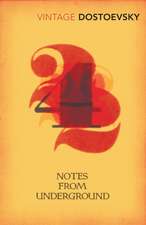 Notes From UndergroundFyodor Dostoevsky-27%Preț: 51.59 lei71.05 lei
-
 -36%Preț: 60.23 lei93.70 lei
-
 Diary of a Young Girl: Anne FrankAnne Frank-17%Preț: 54.32 lei65.72 lei
-
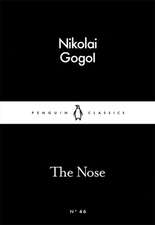 NoseNikolay Gogol-39%Preț: 17.44 lei28.47 lei
-
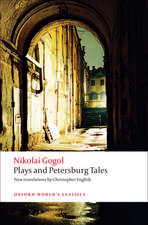 Plays and Petersburg Tales: Petersburg Tales, Marriage, The Government InspectorNikolai Vasilyevich Gogol-17%Preț: 54.99 lei65.92 lei
-
 Preț: 51.04 lei
-
 -27%Preț: 67.20 lei92.34 lei
-
 The Collected Tales of Nikolai GogolNikolai GogolPreț: 114.43 lei
-
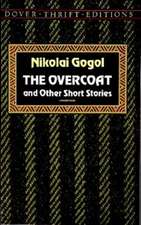 The Overcoat and Other Short StoriesNikolai Gogol-19%Preț: 29.14 lei35.86 lei
-
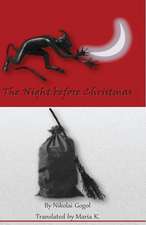 The Night Before ChristmasNikolai GogolPreț: 56.14 lei
-
 OblomovIvan GoncharovPreț: 37.37 lei
-
 Dead Souls: 1-16Nikolai Vasil'evich GogolPreț: 102.11 lei
-
 -27%Preț: 68.02 lei93.11 lei
-
 Reminiscences of Tolstoy, Chekhov and AndreevMaxim GorkyPreț: 105.54 lei
-
 And the Earth Will Sit on the MoonNikolai GogolPreț: 78.87 lei
-
 Nikolai GogolVladimir Nabokov-26%Preț: 58.05 lei78.60 lei
-
 Petersburg Tales: New TranslationNikolai GogolPreț: 50.55 lei
-
 -8%Preț: 58.24 lei63.38 lei
-
 The Village of Stepanchikovo and Its InhabitantsFyodor DostoevskyPreț: 65.69 lei
-
 The IdiotFyodor DostoevskyPreț: 40.12 lei
Descriere
A stranger arrives in a Russian backwater community with a bizarre proposition for the local landowners: cash for their "dead souls," the serfs who have died in their service. Gogol's comic masterpiece offers a vast and satirical painting of 19th-century Russia. A work of great symbolism, it continues to inspire 21st-century authors and readers.
Recenzii
Praise for previous translations by Richard Pevear and Larissa Volokhonsky, winners of the PEN/Book-of-the-Month Club Prize
The Brothers Karamazov
“One finally gets the musical whole of Dostoevsky’s original.” –New York Times Book Review
“It may well be that Dostoevsky’s [world], with all its resourceful energies of life and language, is only now–and through the medium of [this] new translation–beginning to come home to the English-speaking reader.” –New York Review of Books
Crime and Punishment
“The best [translation] currently available…An especially faithful re-creation…with a coiled-spring kinetic energy… Don’t miss it.” –Washington Post Book World
“Reaches as close to Dostoevsky’s Russian as is possible in English…The original’s force and frightening immediacy is captured…The Pevear and Volokhonsky translation will become the standard version.” –Chicago Tribune
Demons
“The merit in this edition of Demons resides in the technical virtuosity of the translators…They capture the feverishly intense, personal explosions of activity and emotion that manifest themselves in Russian life.” –New York Times Book Review
“[Pevear and Volokhonsky] have managed to capture and differentiate the characters’ many voices…They come into their own when faced with Dostoevsky’s wonderfully quirky use of varied speech patterns…A capital job of restoration.” –Los Angeles Times
With an Introduction by Richard Pevear
From the Hardcover edition.
Notă biografică
Nikolai Vasilevich Gogolwas born in 1809; his family were small gentry of Ukrainian cossack extraction, and his father was the author of a number of plays based on Ukrainian popular tales. He attended school in Nézhin and gained a reputation for his theatrical abilities. He went to St Petersburg in 1829 and with the help of a friend gained a post in one of the government ministries. Gogol was introduced to Zhukovsky, the romantic poet, and to Pushkin, and with the publication ofEvenings on a Farm near Dikanka (1831) he had an entrée to all the leading literary salons. He even managed for a short period to be Professor of History at the University of St. Petersburg (1834-5).Diary of a MadmanandThe Story of the Quarrel between Ivan Ivanovich and Ivan Nikiforovichappeared in 1934,The Nosein 1836, andThe Overcoatin 1842. Gogol also wrote the playThe Inspector(1836),Dead Souls(1842), and several moralizing essays defending the Tsarist regime, to the horror of his liberal and radical friends. He lived a great deal abroad, mostly in Rome, and in his last years became increasingly prey to religious mania and despair. He made a pilgrimage to Jerusalem in 1848, but was bitterly disappointed in the lack of feeling that the journey kindled. He returned to Russia and fell under the influence of a spiritual director who told him to destroy his writings as they were sinful. He burned the second part ofDead Souls, and died in 1852 after subjecting himself to a severe regime of fasting.