
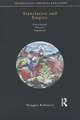
Translation and Empire: Translation Theories Explored
Autor Douglas Robinsonen Limba Engleză Hardback – 11 mai 2016


Preț: 1150.52 lei
Preț vechi: 1403.06 lei
-18%
Puncte Express: 1726
Carte tipărită la comandă
Livrare economică 30 noiembrie-14 decembrie
Livrare prin curier în România Termenul estimat este afișat lângă disponibilitate.
Transport gratuit pentru acest produs Plată online sau ramburs, în funcție de opțiunile comenzii.
Retur gratuit în 14 zile Comandă securizată și suport în română.
Specificații
ISBN-13: 9781138146587
ISBN-10: 1138146587
Pagini: 140
Dimensiuni: 156 x 234 x 12 mm
Greutate: 0.45 kg
Ediția:1
Editura: Taylor & Francis
Colecția Routledge
Seria Translation Theories Explored
Locul publicării:Oxford, United Kingdom
ISBN-10: 1138146587
Pagini: 140
Dimensiuni: 156 x 234 x 12 mm
Greutate: 0.45 kg
Ediția:1
Editura: Taylor & Francis
Colecția Routledge
Seria Translation Theories Explored
Locul publicării:Oxford, United Kingdom
V-ar putea interesa
-
 The Translator As CommunicatorBasil HatimPreț: 471.65 lei
 -
 The Interpreting Studies ReaderFranz Pochhacker-15%Preț: 493.16 lei580.19 lei
 -
 On TranslationPaul RicoeurPreț: 246.03 lei
 -
 Translation and IdentityMichael CroninPreț: 465.68 lei
 -
 Preț: 358.34 lei
 -
 -8%Preț: 451.50 lei490.76 lei
 -
 Language to LanguageChristopher TaylorPreț: 398.72 lei
 -
 Mouse or Rat?: Translation as NegotiationProf Umberto EcoPreț: 121.13 lei
Public țintă
Postgraduate and UndergraduateCuprins
1. Postcolonial Studies, Translation Studies
Translation and empire
What does postcolonial mean?
The rise of postcolonial theory
Hegemony, subjectification and interpellation
Language, place and self
Beyond nationalism: migrant and border cultures
2. Power Differentials
Translating across power differentials
Disproportionate translations
'Inscrutable' texts
Stereotypes
Writing for translation
Theorizing across power differentials
3. Translation as Empire: The Theoretical Record
Emperors and displaced populations
The sublimation of empire: Cicero and Horace
Translatio Imperii et Studii
Taking the original captive
Translation and empire
4. Translation and the Impact of Colonialism
Eric Cheyfitz and the colonization of the New World
Repression and hierarch
Projection
Eloquence and dialogue
Property
Centre and periphery
Niranjana and the British interpellation of India
Rafael and the Spanish conversion of the Tagalogs
The hierarch of languages
Confession
5. Resistance, Redirection, and Retranslation
Tejaswini Niranjana and retranslation
Vicente Rafael and mistranslation
Samia Mehrez and métissés
6. Criticisms
Translation and empire
What does postcolonial mean?
The rise of postcolonial theory
Hegemony, subjectification and interpellation
Language, place and self
Beyond nationalism: migrant and border cultures
2. Power Differentials
Translating across power differentials
Disproportionate translations
'Inscrutable' texts
Stereotypes
Writing for translation
Theorizing across power differentials
3. Translation as Empire: The Theoretical Record
Emperors and displaced populations
The sublimation of empire: Cicero and Horace
Translatio Imperii et Studii
Taking the original captive
Translation and empire
4. Translation and the Impact of Colonialism
Eric Cheyfitz and the colonization of the New World
Repression and hierarch
Projection
Eloquence and dialogue
Property
Centre and periphery
Niranjana and the British interpellation of India
Rafael and the Spanish conversion of the Tagalogs
The hierarch of languages
Confession
5. Resistance, Redirection, and Retranslation
Tejaswini Niranjana and retranslation
Vicente Rafael and mistranslation
Samia Mehrez and métissés
6. Criticisms
Descriere
Arising from cultural anthropology in the late 1980s and early 1990s, postcolonial translation theory is based on the observation that translation has often served as an important channel of empire