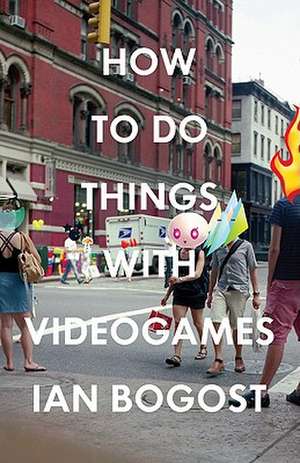
How to Do Things with Videogames: Electronic Mediations
Autor Ian Bogosten Limba Engleză Paperback – 5 aug 2011
Găsim în această carte un exercițiu analitic fascinant care pornește de la un exemplu concret: modul în care jocurile video pot fi utilizate pentru a documenta evenimente istorice sau pentru a servi drept platforme de propagandă electorală. În How to Do Things with Videogames, Ian Bogost propune o microecologie a mediilor digitale, refuzând să trateze jocurile video ca pe un monolit cultural. Apreciem în mod deosebit structura riguroasă a volumului, organizat în 20 de eseuri scurte și tăioase, fiecare dedicat unei funcții specifice a mediului: de la empatie și reverență, la aspecte pragmatice precum munca sau exercițiul fizic. Această progresie de la concepte abstracte la utilizări cotidiene demonstrează că jocurile nu mai sunt o subcultură marginală, ci un strat fundamental al realității noastre sociale. Cititorul care a aplicat ideile din Persuasive Games va găsi aici o extindere a teoriei retoricii procedurale, însă într-un format mult mai accesibil și diversificat. Dacă în lucrările sale anterioare Bogost se concentra pe mecanismele de convingere, aici el lărgește spectrul pentru a include 'kitsch-ul', 'relaxarea' și chiar 'titilarea'. Merită menționat că această lucrare se distanțează de abordările pur teoretice din Computer Games as a Sociocultural Phenomenon, preferând o examinare punctuală a modului în care jocurile 'fac' lucruri în lume. Stilul este tehnic dar incisiv, oferind o perspectivă critică asupra modului în care simularea transformă înțelegerea noastră despre artă și consum.
Din seria Electronic Mediations
-
 Preț: 174.04 lei
 - 20%
 Preț: 680.56 lei
 -
 Preț: 144.30 lei
 -
 Preț: 182.33 lei
 -
 Preț: 209.36 lei
 -
 Preț: 129.97 lei
 -
 Preț: 108.68 lei
 -
 Preț: 150.57 lei
 -
 Preț: 173.29 lei
 -
 Preț: 130.40 lei
 -
 Preț: 186.14 lei
 -
 Preț: 183.29 lei
 -
 Preț: 273.25 lei
 - 20%
 Preț: 157.30 lei
 -
 Preț: 176.16 lei
 -
 Preț: 181.78 lei
 -
 Preț: 218.56 lei
 -
 Preț: 212.28 lei
 -
 Preț: 181.44 lei
 -
 Preț: 147.30 lei
 -
 Preț: 191.87 lei
 -
 Preț: 172.29 lei
 -
 Preț: 184.68 lei
 - 20%
 Preț: 181.07 lei
 -
 Preț: 190.58 lei
 - 20%
 Preț: 173.85 lei
 - 20%
 Preț: 182.73 lei
 -
 Preț: 228.16 lei
 -
 Preț: 218.10 lei
 -
 Preț: 219.41 lei
 -
 Preț: 171.16 lei
 -
 Preț: 205.83 lei
 -
 Preț: 159.11 lei
 -
 Preț: 181.80 lei
 - 26%
 Preț: 130.54 lei
 -
 Preț: 165.50 lei
 - 18%
 Preț: 96.36 lei
 - 5%
 Preț: 125.99 lei
 - 36%
 Preț: 117.30 lei
 - 26%
 Preț: 118.94 lei
 - 12%
 Preț: 165.76 lei
 -
 Preț: 169.57 lei
 - 19%
 Preț: 142.55 lei
 -
 Preț: 217.92 lei
 - 18%
 Preț: 145.77 lei
 - 34%
 Preț: 136.99 lei
 - 34%
 Preț: 512.69 lei
 - nou
 Preț: 135.02 lei
Preț: 112.89 lei
Preț vechi: 141.10 lei
-20%
Carte disponibilă
Livrare economică 31 octombrie-14 noiembrie
Livrare express 20-24 octombrie pentru 20.12 lei
Specificații
ISBN-10: 081667647X
Pagini: 192
Dimensiuni: 140 x 216 x 20 mm
Greutate: 0.25 kg
Ediția:New.
Editura: University of Minnesota Press
Colecția Univ Of Minnesota Press
Seria Electronic Mediations
V-ar putea interesa
-
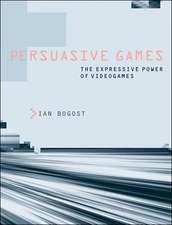 Persuasive GamesIan BogostPreț: 359.47 lei
 -
 I Am ErrorNathan Altice-20%Preț: 292.42 lei365.52 lei
 -
 The Future Was HereJimmy Maher-20%Preț: 279.41 lei349.26 lei
 -
 Racing the BeamNick MontfortPreț: 138.05 lei
 -
 -13%Preț: 240.76 lei275.24 lei
 -
 Gameplay Mode: War, Simulation, and TechnoculturePatrick Crogan-20%Preț: 181.07 lei226.34 lei
 -
 Cross Edge: The Official Strategy GuideJustin WeiglePreț: 293.78 lei
 -
 Preț: 67.07 lei
 -
 Game Freaks 365's Video Game Guide 2011Kyle W. BellPreț: 98.85 lei
 -
 Preț: 236.80 lei
 -
 Queer Game StudiesBonnie Ruberg-20%Preț: 169.84 lei212.30 lei
 -
 Playing Nature: Ecology in Video GamesAlenda Y. Chang-20%Preț: 157.30 lei196.63 lei
 -
 Preț: 44.48 lei
 -
 Unity Para PrincipiantesRicardo Cunha Mattos PortellaPreț: 43.97 lei
 -
 The New Book of Optical IllusionsGeorg RuschemeyerPreț: 160.02 lei
De ce să citești această carte
Recomandăm această carte profesioniștilor din media și designului de jocuri care doresc să înțeleagă impactul jocurilor dincolo de divertisment. Cititorul câștigă o perspectivă clară asupra modului în care simulările digitale modelează comportamente umane și structuri sociale. Este un ghid esențial pentru a înțelege de ce identitatea de „gamer” devine desuetă pe măsură ce jocurile devin universale.
Despre autor
Ian Bogost este un cercetător de renume, deținând funcția de Distinguished Chair în Media Studies la Georgia Institute of Technology. Este partener fondator al Persuasive Games LLC și un designer de jocuri recunoscut pentru titluri care abordează teme sociale complexe. Opera sa vastă include titluri precum Persuasive Games și Racing the Beam, fiind un pionier în studiul modului în care algoritmii și simulările transmit mesaje ideologice. În afara domeniului digital, Bogost a explorat ontologia obiectelor în seria Object Lessons, publicând volume precum Air Conditioning și Shipping Container, demonstrând o capacitate unică de a analiza semnificația ascunsă a lucrurilor obișnuite.
Descriere scurtă
Bogost, a leading scholar of videogames and an award-winning game designer, explores the many ways computer games are used today: documenting important historical and cultural events; educating both children and adults; promoting commercial products; and serving as platforms for art, pornography, exercise, relaxation, pranks, and politics. Examining these applications in a series of short, inviting, and provocative essays, he argues that together they make the medium broader, richer, and more relevant to a wider audience.
Bogost concludes that as videogames become ever more enmeshed with contemporary life, the idea of gamers as social identities will become obsolete, giving rise to gaming by the masses. But until games are understood to have valid applications across the cultural spectrum, their true potential will remain unrealized. How to Do Things with Videogames offers a fresh starting point to more fully consider games’ progress today and promise for the future.
Notă biografică
Cuprins
Introduction: Media Microecology
1. Art
2. Empathy
3. Reverence
4. Music
5. Pranks
6. Transit
7. Branding
8. Electioneering
9. Promotion
10. Snapshots
11. Texture
12. Kitsch
13. Relaxation
14. Throwaways
15. Titillation
16. Exercise
17. Work
18. Habituation
19. Disinterest
20. Drill
Conclusion: The End of Gamers
Notes
Gameography