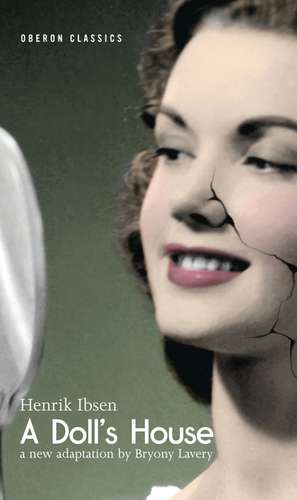
A Doll's House: Oberon Classics
Autor Henrik Ibsen Adaptat de Bryony Laveryen Limba Engleză Paperback – 5 feb 2004
Remarcăm că această ediție a piesei A Doll's House se distinge de alte versiuni prin includerea traducerii clasice realizate de William Archer, cea care a facilitat pătrunderea operei lui Henrik Ibsen în spațiul anglofon și a declanșat dezbateri aprinse asupra condiției feminine. Spre deosebire de edițiile pur literare, acest volum din seria Dover Thrift Editions funcționează ca un instrument de studiu complex, oferind o perspectivă istorică asupra scandalului provocat de decizia Norei de a părăsi căminul conjugal.
Subliniem structura riguroasă a cărții, care completează textul dramatic cu o secțiune de apendice extrem de valoroasă. Cititorul va găsi aici nu doar piesa în trei acte, ci și finalul alternativ pe care Ibsen a fost forțat să îl scrie pentru premiera germană, precum și reacții timpurii de la contemporani precum August Strindberg. Această abordare critică ajută la înțelegerea modului în care „casa de păpuși” a familiei Helmer a fost percepută ca un atac direct la adresa moralității epocii. Merită menționat că volumul completează excelent titluri precum A Doll's House, Men of Honour, When We Dead Awaken din seria Oxford World's Classics, aducând în plus detalii despre geneza textului și adaptările sale timpurii.
În contextul operei sale, dacă lucrări precum Peer Gynt and Brand explorează elemente suprarealiste și versul alb, A Doll's House marchează tranziția definitivă a lui Ibsen către realismul social în proză. Este piesa care i-a consolidat statutul de „tată al realismului”, investigând minciunile din spatele fațadelor domestice, temă pe care o va rafina ulterior în Four Major Plays. Progresia narativă este una tensionată, de la aparența unei fericiri de Crăciun la dezintegrarea totală a iluziilor sub presiunea secretelor și a șantajului.
Din seria Oberon Classics
- 22%
 Preț: 96.48 lei
 - 18%
 Preț: 84.46 lei
 - 25%
 Preț: 117.01 lei
 - 12%
 Preț: 140.15 lei
 - 17%
 Preț: 87.00 lei
 - 22%
 Preț: 77.15 lei
 -
 Preț: 82.32 lei
 - 26%
 Preț: 85.11 lei
 - 14%
 Preț: 71.61 lei
 - 17%
 Preț: 84.93 lei
 - 25%
 Preț: 65.48 lei
 - 24%
 Preț: 72.58 lei
 - 22%
 Preț: 71.16 lei
 -
 Preț: 84.55 lei
 - 25%
 Preț: 72.04 lei
 - 23%
 Preț: 73.80 lei
 - 7%
 Preț: 138.42 lei
 - 17%
 Preț: 86.58 lei
 - 20%
 Preț: 146.01 lei
 - 45%
 Preț: 94.58 lei
 - 23%
 Preț: 86.36 lei
 - 6%
 Preț: 104.90 lei
 - 17%
 Preț: 137.74 lei
 - 9%
 Preț: 87.77 lei
 - 15%
 Preț: 146.63 lei
 - 16%
 Preț: 86.09 lei
 - 10%
 Preț: 84.93 lei
 - 11%
 Preț: 81.29 lei
 - 17%
 Preț: 85.79 lei
 - 22%
 Preț: 86.31 lei
 - 19%
 Preț: 80.64 lei
 - 17%
 Preț: 85.79 lei
 - 22%
 Preț: 86.51 lei
 - 16%
 Preț: 72.59 lei
 - 17%
 Preț: 85.41 lei
 - 17%
 Preț: 114.12 lei
 - 16%
 Preț: 115.81 lei
 -
 Preț: 92.97 lei
 - 24%
 Preț: 84.46 lei
 - 23%
 Preț: 80.77 lei
 - 24%
 Preț: 85.49 lei
 - 25%
 Preț: 71.24 lei
 - 35%
 Preț: 61.58 lei
 -
 Preț: 91.89 lei
 - 18%
 Preț: 89.53 lei
Preț: 86.09 lei
Preț vechi: 95.06 lei
-9%
Carte tipărită la comandă
Livrare economică 07-21 decembrie
Specificații
ISBN-10: 1840024321
Pagini: 122
Dimensiuni: 124 x 196 x 10 mm
Greutate: 0.17 kg
Editura: Bloomsbury Publishing
Colecția Oberon Books
Seriile Oberon Classics, Oberon Modern Plays
Locul publicării:London, United Kingdom
V-ar putea interesa
-
 Moab Is My WashpotStephen Fry-35%Preț: 61.76 lei94.31 lei
 -
 Think: A Compelling Introduction to PhilosophySimon Blackburn-18%Preț: 77.15 lei93.70 lei
 -
 Joseph Conrad's Heart of Darkness: A CasebookGene M. Moore-13%Preț: 287.67 lei329.91 lei
 -
 Oxford Reader's Companion to ConradOwen Knowles-14%Preț: 204.82 lei238.22 lei
 -
 -13%Preț: 304.17 lei350.40 lei
 -
 Teach Your Child How To ThinkEdward de Bono-19%Preț: 64.54 lei79.23 lei
 -
 Lateral ThinkingEdward de Bono-19%Preț: 63.91 lei78.85 lei
 -
 One Flew Over the Cuckoo's NestKen KeseyPreț: 72.45 lei
 -
 Sophocles: AntigoneSophoclesPreț: 106.65 lei
 -
 The Cambridge Companion to English Poetry, Donne to MarvellThomas N. CornsPreț: 292.71 lei
 -
 The Bell JarSylvia PlathPreț: 71.58 lei
 -
 Working with Emotional IntelligenceDaniel Goleman-25%Preț: 70.10 lei93.73 lei
 -
 Mansfield ParkJane Austen-24%Preț: 61.21 lei80.42 lei
 -
 Three WishesLiane Moriarty-17%Preț: 60.92 lei73.15 lei
 -
 The Last AnniversaryLiane Moriarty-17%Preț: 60.58 lei73.15 lei
 -
 Violence and the SacredDr René Girard-22%Preț: 150.47 lei194.07 lei
 -
 Conrad's Heart of DarknessJohn P. AndersonPreț: 156.79 lei
 -
 Plato and a Platypus Walk Into a BarDaniel KleinPreț: 65.59 lei
 -
 Hard TimesCharles DickensPreț: 28.01 lei
De ce să citești această carte
Recomandăm acest volum studenților și pasionaților de dramaturgie care doresc să analizeze nu doar textul piesei, ci și impactul său cultural. Prin includerea finalului alternativ și a cronicilor de epocă, cititorul câștigă o înțelegere profundă a modului în care Ibsen a revoluționat teatrul modern. Este un instrument esențial pentru oricine dorește să exploreze originile feminismului literar și ale realismului psihologic.
Despre autor
Henrik Johan Ibsen (1828–1906) a fost un dramaturg și regizor norvegian, considerat „tatăl realismului” și unul dintre fondatorii modernismului în teatru. După o etapă timpurie dedicată dramelor în versuri, Ibsen a revoluționat scena europeană prin piesele sale în proză care investigau moralitatea clasei de mijloc și condiția femeii. Opera sa, care include titluri fundamentale precum „Hedda Gabler” sau „Fantomele”, este a doua cea mai jucată din lume după cea a lui Shakespeare. Ibsen a rămas în istorie pentru curajul de a expune realitățile inconfortabile ascunse sub convențiile sociale ale secolului al XIX-lea.
Descriere
Henrik Ibsen's ground-breaking play created a huge sensation at its premiere in 1879 and is as fresh and pertinent as ever, with an unfading capacity to shock.
Recenzii
Ibsen's masterwork lays out a provocation to play around inside the heads of its characters - and get inside yours
An accomplished adaptation from Bryony Levary
Lavery's subtly modern version makes light work out of explanation-laden conversations - while understanding crucially that it's what's not being said between husband and wife that counts most
Notă biografică
Descriere scurtă
Textul de pe ultima copertă
One of the best-known, most frequently performed of modern plays, "A Doll's House" richly displays the genius with which Henrik Ibsen pioneered modern, realistic prose drama. In the central character of Nora, Ibsen epitomized the human struggle against the humiliating constraints of social conformity. Nora's ultimate rejection of a smothering marriage and life in "a doll's house" shocked theatergoers of the late 1800s and opened new horizons for playwrights and their audiences.
But daring social themes are only one aspect of Ibsen's power as a dramatist. "A Doll's House" shows as well his gifts for creating realistic dialogue, a suspenseful flow of events and, above all, psychologically penetrating characterizations that make the struggles of his dramatic personages utterly convincing. Here is a deeply absorbing play as readable as it is eminently playable, reprinted from an authoritative translation.
A selection of the Common Core State Standards Initiative.
Cuprins
Introduction
Henrik Ibsen and A Doll’s House: A Brief Chronology
A Note on the Text
A Doll’s House
A Note on Nora’s Final Exit
Appendix A: Contemporary Adaptations, Sequels, and Parodies
- 1.From a letter from Ibsen to a Danish newspaper regarding the ending of the play (17 February 1880)
- 2.Ibsen’s alternative ending (1880)
- 3.From Henry Arthur Jones and Henry Herman, Breaking a Butterfly (1882)
- 4.From August Strindberg, “A Doll’s House” (1884)
- 5.From Walter Besant, “The Doll’s House—and After,” The English Illustrated Magazine (October 1890)
- 6.From Ednah Dow Cheney, Nora’s Return: A Sequel to The Doll’s House (1890)
- 7.From Israel Zangwill and Eleanor Marx-Aveling, “A Doll’s House Repaired,” Time (March 1891)
- 8.From F. Anstey, “Nora; or, The Bird-Cage,” Mr Punch’s Pocket Ibsen (1893)
- 1.From Archer’s review of the first performance in England of A Doll’s House, Dramatic Review (4 April 1885)
- 2.From a letter to Charles Archer (13 June 1889)
- 3.From “Ibsen and English Criticism,” Fortnightly Review (July 1889)
- 4.From William Archer, The Theatrical “World” for 1893 (1894)
- 5.From The Collected Works of Henrik Ibsen (1906)
- 1.On A Doll’s House, Penny Illustrated Paper (1 June 1889)
- 2.From Shaw’s review of A Doll’s House, Manchester Guardian (8 June 1889)
- 3.From a letter to William Archer (11 June 1889)
- 4.From “Still after the Doll’s House,” Time (February 1890)
- 5.From The Quintessence of Ibsenism (1891)
- 6.From “A Doll’s House Again,” Saturday Review (15 May 1897)
- 7.From “The Technical Novelty in Ibsen’s Plays,” The Quintessence of Ibsenism (1913)
- 1.In London
- a.From The Era (28 March 1885)
- b.From The Times (8 June 1889)
- c.From The Globe (8 June 1889)
- d.From The Daily Telegraph (8 June 1889)
- e.From The Pall Mall Gazette (8 June 1889)
- f.From The Spectator (21 June 1889)
- g.From Clement Scott, “A Doll’s House,” The Theatre (1 July 1889)
- 2.In America
- a.From The Courier-Journal [Louisville, Kentucky] (8 December 1883)
- b.From The New York Times (27 September 1889)
- c.From The Boston Globe (31 October 1889)
- d.From The [New York] Sun (22 December 1889)
- e.From The New York Times (22 December 1889)
- f.From The [New York] Evening World (23 December 1889)
- g.From The [New York] Sun (16 February 1894)
- h.From The [New York] Evening World (7 June 1895)
- 3.In Montreal and Sydney
- a.From The [Montreal] Gazette (18 February 1890)
- b.From The Sydney Morning Herald (19 July 1890)
- 1.Henrik Ibsen, “Notes for the Tragedy of Modern Times” (19 October 1878)
- 2.From Henrietta Frances Lord, preface to her translation of A Doll’s House (1882)
- 3.From August Strindberg, preface to Getting Married (1884)
- 4.From Havelock Ellis, The New Spirit (1890)
- 5.From Ellen Battelle Dietrick, “The Doll’s House—T’Other Side,” Women’s Penny Paper (15 and 22 March 1890)
- 6.From Annie Nathan Meyer, “Ibsen’s Attitude Towards Woman,” The Critic [New York] (22 March 1890)
- 7.From Max Nordau, Degeneration (1895)
- 8.From Ibsen’s speech to the Norwegian Women’s Rights League (26 May 1898)
- 9.From Louie Bennett, “Ibsen as a Pioneer of the Woman Movement,” The Westminster Review (March 1910)
- 1.From “Nora Helmer off for the Antipodes: An Interview with Miss Janet Achurch,” The Pall Mall Gazette (5 July 1889)
- 2.From “Ethel Barrymore on Nora Helmer” (6 May 1905)
- 3.Alla Nazimova, “Ibsen’s Women,” The Independent (17 October 1907)
- 4.From Elizabeth Robins, Ibsen and the Actress (1928)
- 5.From Liv Ullmann, Changing (1976)