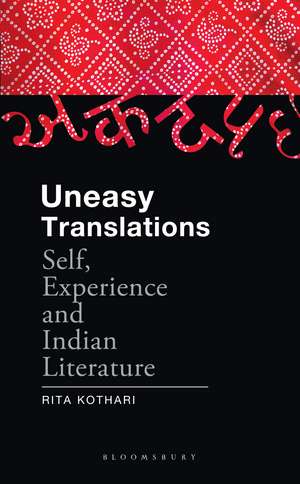
Uneasy Translations: Self, Experience and Indian Literature: Bloomsbury Academic India
Autor Rita Kotharien Limba Engleză Hardback – 30 sep 2022
Ne-a atras atenția modul în care Uneasy Translations reușește să transforme teoria traducerii dintr-o disciplină tehnică într-o metodă de înțelegere a sinelui și a structurilor sociale. Aplicabilitatea practică a acestui volum rezidă în capacitatea sa de a deconstrui modul în care limbajul și genul interacționează în viața cotidiană, oferind cercetătorilor instrumente pentru a analiza „manevrarea” mai multor limbi simultan (multilingvismul trăit). Credem că abordarea Ritei Kothari este esențială pentru cei care studiază științele umaniste, deoarece trece dincolo de textul scris, explorând memoria culturală și politicile identitare din India.
Cartea este organizată tematic, pornind de la experiența din sala de curs și evoluând spre analize complexe ale castelor și ale „ilizibilității” rușinii. Un capitol inedit este dedicat cântecului de film Hindi, privit ca un vehicul al traducerii culturale. Comparativ cu Indian Literature and the World de Rossella Ciocca, care analizează canonul literar și activismul politic, lucrarea de față este o alternativă mai intimă și fenomenologică pentru cursurile de studii culturale, având avantajul de a integra experiența directă a cercetătorului ca femeie și traducător într-un peisaj lingvistic fragmentat.
În contextul operei sale, Uneasy Translations rafinează temele explorate în Translating India și A Multilingual Nation. Dacă lucrările anterioare se concentrau pe politica culturală a limbii engleze și pe structura națiunii multilingve, noul volum aduce o rigoare subiectivă, transformând actul traducerii într-o etică a „vorbirii după” (anuvaad). Este o sinteză matură care îmbină rigoarea academică cu sensibilitatea față de textele „bhasha” (limbi indigene) și tradițiile lor intelectuale autonome.
Din seria Bloomsbury Academic India
- 33%
 Preț: 543.83 lei
 - 34%
 Preț: 542.29 lei
 - 33%
 Preț: 544.22 lei
 - 34%
 Preț: 541.31 lei
 - 33%
 Preț: 547.91 lei
 - 34%
 Preț: 541.03 lei
 - 33%
 Preț: 547.00 lei
 - 33%
 Preț: 544.81 lei
 - 33%
 Preț: 550.47 lei
 - 33%
 Preț: 551.53 lei
 - 33%
 Preț: 551.65 lei
 - 34%
 Preț: 542.45 lei
 - 33%
 Preț: 544.98 lei
 - 33%
 Preț: 544.22 lei
 - 33%
 Preț: 550.47 lei
 - 33%
 Preț: 551.65 lei
 - 32%
 Preț: 560.47 lei
 - 33%
 Preț: 551.25 lei
 - 33%
 Preț: 544.22 lei
 - 33%
 Preț: 548.04 lei
 - 33%
 Preț: 546.22 lei
 - 33%
 Preț: 549.51 lei
 - 33%
 Preț: 551.34 lei
 - 34%
 Preț: 542.67 lei
 - 33%
 Preț: 545.32 lei
 - 34%
 Preț: 541.90 lei
 - 33%
 Preț: 543.99 lei
 - 34%
 Preț: 543.64 lei
 - 26%
 Preț: 158.85 lei
 - 34%
 Preț: 542.67 lei
 - 33%
 Preț: 548.43 lei
 - 34%
 Preț: 543.46 lei
 - 34%
 Preț: 541.52 lei
 - 33%
 Preț: 545.44 lei
 - 33%
 Preț: 544.69 lei
 - 34%
 Preț: 542.72 lei
 - 33%
 Preț: 549.26 lei
 - 34%
 Preț: 543.46 lei
 - 34%
 Preț: 543.46 lei
 - 33%
 Preț: 548.91 lei
 - 33%
 Preț: 546.61 lei
 - nou
 Preț: 550.86 lei
 - 33%
 Preț: 550.47 lei
 - 33%
 Preț: 543.83 lei
 - 34%
 Preț: 541.15 lei
 - 33%
 Preț: 550.86 lei
 - nou
 Preț: 181.92 lei
Preț: 541.90 lei
Preț vechi: 816.47 lei
-34%
Carte disponibilă
Livrare economică 22 august-05 septembrie
Specificații
ISBN-10: 938916561X
Pagini: 256
Dimensiuni: 144 x 258 x 14 mm
Greutate: 0.38 kg
Editura: Bloomsbury Publishing
Colecția Bloomsbury Academic India
Seria Bloomsbury Academic India
Locul publicării:New Delhi, India
De ce să citești această carte
Recomandăm această carte studenților și cercetătorilor din domeniul literaturii comparate și al sociolingvisticii care doresc să înțeleagă traducerea nu doar ca transfer lingvistic, ci ca mod de viață. Cititorul câștigă o perspectivă profundă asupra modului în care casta, genul și istoria personală modelează limbajul. Este un instrument critic valoros care demonstrează cum cunoașterea devine democratică prin recunoașterea experiențelor marginalizate și a traducerilor incomplete.
Despre autor
Rita Kothari este un autor, traducător și academic de prestigiu, ocupând funcția de profesor de engleză la Universitatea Ashoka, unde coordonează centrul de traduceri. Este recunoscută la nivel internațional pentru contribuțiile sale teoretice în volume precum Translating India și A Multilingual Nation. Interesele sale de cercetare acoperă politica limbajului, partiția Indiei și tradițiile literare din regiunile Gujarat și Sindh. Printre traducerile sale notabile se numără The Stepchild (Angaliyat), o lucrare fundamentală despre opresiune și excludere socială, reflectând angajamentul său constant față de vocile de la periferia sistemului de caste.
Descriere
Cuprins
Prologue
1. Texts, Pre-texts and Experience
2. Language and Incomplete Travels
3. Scripting Caste: Pedagogies of Translation
4. Elsewhere: Language, Gender, Translation
5. The Illegibility of Shame
6. Saying It, Not Saying It: The 'Hindi' Film Song
7. Uneasy Translations
Afterword by Sundar Sarukkai
Bibliography
Recenzii
The relationship between language and experience is complex in India because of caste and class dynamics. To negotiate through this space is an act of courage and Rita Kothari does this from the vantage point of an insider. This exceptionally insightful book posits Kothari as an important thinker of language and literature.
Using stories and songs that chafe and struggle to express caste- and gender-specific ways of being in the world, the essays in this book enact its basic premises-that knowledge is born out of experience, that
languages and their hierarchies profoundly shape us but also provide some space for reinvention, and that uneasy translation is something we do and live every day. A wonderfully rich example of theorising, the book will delight, stimulate, and reward every reader interested in how words and languages work on us, their power and their magic.
This provocative book is going to make many stand on their toes. The artifice of language and expression is taken to task. English will have to pass the difficult tests put by the author. The page-turner tract will find an audience in many. Written with vivid details and punchy scholarly takes, Uneasy Translations is an extraordinary achievement. Rita Kothari is an outstanding metonym witnessing the metamorphosis of her calling-as a child of Sindhi migrants to a professional language hustler-rejoicing the critique of English and translations. Uneasy Translations is vital for the culture of languages and the discipline in general. It assures diverse India, rich with its long registers of languages, sub-languages, accents and dialects, to not rely on the hegemonic parlance of the English language to seek validations. It is a holler for writers and readers alike.
[A]n innovative exploration of the complex relationships between knowledge, experience, language and translation ... While Kothari's work is mainly located in a specifically Indian context, it offers profound insights into the issue of translation more universally.