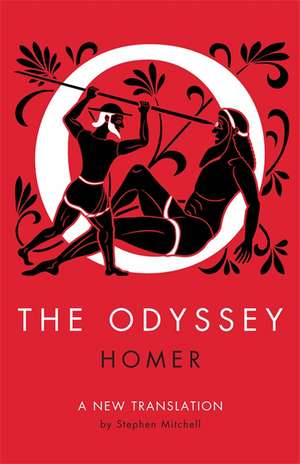
The Odyssey: A New Translation
Autor Homer Traducere de Stephen Mitchellen Limba Engleză Paperback – 13 noi 2014
Bazându-ne pe expertiza de trei decenii a lui Joe Sachs în cadrul programului „Great Books”, recomandăm această ediție a The Odyssey ca fiind un punct de intrare ideal în literatura antică. Observăm că această versiune nu este doar o simplă traducere, ci o recalibrare a textului homeric pentru cititorul contemporan, oferind o claritate modernă care nu sacrifică rigoarea originalului grecesc. Față de alte ediții academice, volumul de față, publicat în colecția Collins Classics, adoptă un stil „transparent și natural”, facilitând o imersiune rapidă în periplul de zece ani al lui Odiseu spre Ithaca.
Structura cărții este gândită strategic pentru a servi atât curiozității generale, cât și nevoilor curriculare. Credem că selecția capitolelor — de la întâlnirea cu ciclopul Polifem și vrăjitoarea Circe, până la coborârea în lumea umbrelor — reușește să păstreze tensiunea narativă intactă, oferind în același timp contextul necesar prin note de subsol și hărți detaliate. Cititorii familiarizați cu The Iliad and the Odyssey Boxed Set în traducerea lui Robert Fagles vor aprecia aici abordarea lui Sachs, care pune accent pe „auzirea” epopeii așa cum ar fi fost receptată de auditoriul antic, oferind o perspectivă mai intimă asupra personajelor.
În contextul operei autorului, dacă Classic Starts®: The Iliad este o adaptare pentru tineri, iar Circe and the Cyclops izolează episoade specifice, acest volum oferă o sinteză echilibrată. Această ediție reușește să demonstreze de ce poemul rămâne o explorare fundamentală a condiției umane, fiind o resursă esențială pentru oricine dorește să confrunte imaginația și inima lui Homer fără barierele unui limbaj arhaic excesiv.
Preț: 69.65 lei
Preț vechi: 94.04 lei
-26%
Carte disponibilă
Livrare economică 06-20 noiembrie
Livrare express 23-29 octombrie pentru 48.39 lei
Specificații
ISBN-10: 1780226802
Pagini: 368
Dimensiuni: 134 x 199 x 27 mm
Greutate: 0.3 kg
Editura: Orion Publishing Group
Colecția W&N
Locul publicării:London, United Kingdom
V-ar putea interesa
-
 Six Wives of Henry VIIIAlison Weir-27%Preț: 79.82 lei109.82 lei
 -
 Frederick the GreatNancy Mitford-37%Preț: 58.46 lei92.74 lei
 -
 The Sun KingNancy Mitford-32%Preț: 62.34 lei91.10 lei
 -
 The Portrait of a LadyHenry James-22%Preț: 64.66 lei82.53 lei
 -
 Candide and Other StoriesVoltairePreț: 47.27 lei
 -
 The IliadHomer-15%Preț: 51.13 lei60.08 lei
 -
 Medea and Other PlaysEuripidesPreț: 58.52 lei
 -
 The Love PoemsOvid-19%Preț: 69.94 lei86.16 lei
 -
 Selected PoetryJohn Keats-19%Preț: 52.70 lei64.76 lei
 -
 The IliadHomer-16%Preț: 61.78 lei73.85 lei
 -
 -39%Preț: 17.23 lei28.34 lei
 -
 The Black UnicornAudre Lorde-28%Preț: 51.24 lei70.85 lei
 -
 The Cancer JournalsAudre Lorde-36%Preț: 45.08 lei70.40 lei
 -
 Eyes of the Storm: A Graphic Novel (Bone #3)Jeff SmithPreț: 96.77 lei
 -
 The Story of HiawathaHenry Wadsworth LongfellowPreț: 56.95 lei
 -
 The Boys King ArthurSidney LanierPreț: 63.28 lei
 -
 The Merry Adventures of Robin HoodHoward Pyle-43%Preț: 74.90 lei131.41 lei
 -
 Preț: 28.01 lei
 -
 WavesVirginia WoolfPreț: 36.30 lei
 -
 UlyssesJames JoycePreț: 41.38 lei
 -
 Helen of TroyBettany Hughes-23%Preț: 147.53 lei191.52 lei
 -
 Midsummer Night''s DreamWilliam ShakespearePreț: 35.95 lei
 -
 Lord JimJoseph ConradPreț: 28.01 lei
 -
 Robinson CrusoeDaniel DefoePreț: 36.10 lei
 -
 Heart of DarknessJoseph ConradPreț: 30.68 lei
 -
 AeneidVirgilPreț: 36.01 lei
 -
 The Story of the IliadAlfred J. ChurchPreț: 69.86 lei
 -
 A Wonder Book and Tanglewood Tales, for Girls and BoysNathaniel HawthornePreț: 53.38 lei
De ce să citești această carte
Recomandăm această ediție pentru oricine dorește să descopere epopeea lui Homer într-un format accesibil, dar riguros. Cititorul câștigă o înțelegere profundă a călătoriei lui Odiseu datorită traducerii clare a lui Joe Sachs și a selecțiilor care elimină redundanțele, păstrând esența narativă. Este un instrument de studiu excelent datorită notelor explicative și hărților incluse, fiind ideal pentru studenți sau cititori pasionați de beletristica clasică.
Despre autor
Homer a fost un poet epic din Grecia Antică, considerat autorul fundamental al literaturii occidentale prin lucrările sale, Iliada și Odiseea. Deși identitatea sa rămâne subiect de dezbatere, tradiția îl descrie ca pe un bard orb din Ionia. Epopeile sale au modelat cultura și educația greacă, fiind pilonii pe care s-a construit civilizația europeană. Traducătorul acestui volum, Joe Sachs, aduce o perspectivă academică solidă, fiind cunoscut pentru traducerile sale fidele din Aristotel și Platon, realizate pe parcursul carierei sale de profesor la St. John's College.
Descriere
THE ODYSSEY, which tells of Odysseus's long voyage home after the battle of Troy, is one of the defining masterpieces of Western literature.
Populated by one-eyed man-eating giants, beautiful seductive goddesses, and lavishly hospitable kings and queens, it is an extraordinary work of the imagination, the original epic voyage into the unknown that has inspired other writing down through the ages - from ancient poems to modern fiction and films.
With its consummately modern hero, full of guile and wit, THE ODYSSEY is perfectly suited to our times.
Thanks to the scholarship and poetic power of the highly acclaimed Stephen Mitchell, this new translation recreates the energy and simplicity, the speed, the grace, and continual thrust and pull of the original, so that THE ODYSSEY's ancient story bursts vividly into new life.
Recenzii
Stephen Mitchell's faithful translation of the Odyssey has great vigor, and a plain eloquence that is quite free of pedantry. It does not plod. Its narrative drive is so compelling that the reader will find himself speaking the lines aloud, as I did.
This latest incarnation of the Odyssey leaves no doubt that Stephen Mitchell has made a deep connection to the tale's spiritual power, which he has managed to express with propulsive cadence and in exquisite detail. The bard sings again, this time at the banquet of Mitchell's ardent labor.
Yet again, one of today's gifted, knowing scholars and writers embraces one of the masterpieces of yore, and so doing offers us the Odyssey as a wise and stirring companion for our own personal voyage through time and life's many stirring, worrying, enabling moments.
This new translation is one of the best: clear and poetic without losing the essential kinetic energy of the first adventure tale.
Textul de pe ultima copertă
After ten bloody years of fighting in the Trojan War, the intrepid Odysseus heads homeward, little imagining that it will take another ten years of desperate struggle to reclaim his kingdom and family. The wily hero circumvents the wrath of the sea god Poseidon and triumphs over an incredible array of obstacles, assisted by his patron goddess Athene and his own prodigious guile. From a literal descent into Hell to interrogate a dead prophet to a sojourn in the earthly paradise of the Lotus-eaters, the gripping narrative traverses the mythological world of ancient Greece to introduce an unforgettable cast of characters: one-eyed giants known as Cyclopses, the enchantress Circe, cannibals, sirens, the twin perils of Scylla and Charybdis, and a fantastic assortment of other creatures.
Remarkably modern in its skillful use of flashbacks and parallel line of action, Homer's monumental work is now available in this inexpensive, high-quality edition sure to be prized by students, teachers, and all who love the great myths and legends of the ancient world.
A selection of the Common Core State Standards Initiative.
Cuprins
- The Gods
- Odysseus
- A Note on Poetic Form and on the Translation
- Map
- Book One: Athena Visits Ithaca
- Book Two: Telemachus Prepares for His Voyage
- Book Three: Telemachus Visits Nestor in Pylos
- Book Four: The Suitors Plan to Kill Telemachus
- Book Five: Odysseus Leaves Calypso’s Island
- Book Six: Odysseus and Nausicaa
- Book Seven: Odysseus at the Court of Alcinous in Phaeacia
- Book Eight: Odysseus Is Entertained in Phaeacia
- Book Nine: Ismarus, the Lotus Eaters, and the Cyclops
- Book Ten: Aeolus, the Laestrygonians, and Circe
- Book Eleven: Odysseus Meets the Shades of the Dead
- Book Twelve: The Sirens, Scylla and Charybdis, the Cattle of the Sun
- Book Thirteen: Odysseus Leaves Phaeacia and Reaches Ithaca
- Book Fourteen: Odysseus Meets Eumaeus
- Book Fifteen: Telemachus Returns to Ithaca
- Book Sixteen: Odysseus Reveals Himself to Telemachus
- Book Seventeen: Odysseus Goes to the Palace as a Beggar
- Book Eighteen: Odysseus and Irus the Beggar
- Book Nineteen: Eurycleia Recognizes Odysseus
- Book Twenty: Odysseus Prepares for His Revenge
- Book Twenty-One: The Contest with Odysseus’s Bow
- Book Twenty-Two: The Killing of the Suitors
- Book Twenty-Three: Odysseus and Penelope
- Book Twenty-Four: Zeus and Athena End the Fighting
- Literary Contexts
- from Xenophanes, Fragments (c. fifth century bce)
- from Pindar, Nemean 7 (c. fifth century bce)
- from Plato, The Republic (c. 380 bce)
- from Aristotle, Poetics (c. 335 bce)
- from Longinus?, On the Sublime (c. 1st century ce)
- from Demetrius?, On Style (c. 1st century ce)
- The Odyssey in Ancient Art
- Early Written and Printed Versions
Glossary
Acknowledgment