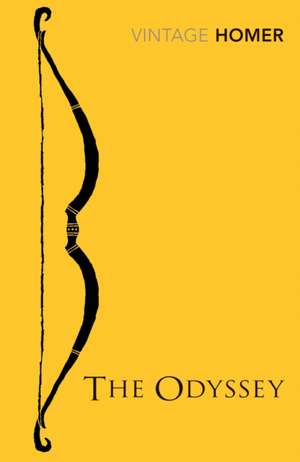
The Odyssey
Autor Homer Traducere de Robert Fitzgeralden Limba Engleză Paperback – 6 sep 2007
Considerăm că această ediție a Odiseei se adresează în primul rând cititorului care dorește să exploreze fundamentul literaturii occidentale fără bariera versificației arhaice, fiind ideală pentru cei care caută claritate narativă într-o poveste de o complexitate legendară. Găsim în această versiune în proză o cale de acces directă către psihologia lui Odiseu, transformând epopeea dintr-un monument de studiu într-o experiență de lectură fluidă și evocativă. Suntem de părere că forța textului rezidă în modul în care traduce tensiunea dintre voința umană și capriciile divinității, oferind o perspectivă lucidă asupra rătăcirilor eroului din Itaca. Esența volumului este dată de succesiunea probelor de supraviețuire: de la cântecul hipnotic al Sirenelor și capcana nimfei Calipso, până la confruntarea brutală cu ciclopul Polifem. Dacă The Odyssey (Translated Into Verse by Alexander Pope) v-a captivat prin eleganța formală și rigoarea metrică a poeziei clasice, această ediție extinde experiența în direcția accesibilității și a detaliului descriptiv, permițând evenimentelor să curgă cu ritmul unui roman de aventuri modern. Credem că această abordare pune accentul pe dramatismul întoarcerii acasă și pe violența cathartică a finalului, unde Odiseu trebuie să își revendice regatul în fața celor o sută de pețitori. Stilul ales de traducător păstrează demnitatea originalului grec, dar elimină asperitățile care pot descuraja un cititor neinițiat. Este o invitație de a reciti un text fundamental nu ca pe o obligație academică, ci ca pe o cronică vie a rezilienței umane în fața monștrilor și a zeilor răzbunători.
Preț: 51.08 lei
Preț vechi: 94.79 lei
-46%
Carte disponibilă
Livrare economică 12-18 noiembrie
Livrare express 24-30 octombrie pentru 70.46 lei
Specificații
ISBN-10: 0099511681
Pagini: 480
Dimensiuni: 129 x 198 x 29 mm
Greutate: 0.36 kg
Editura: Vintage Publishing
Locul publicării:United Kingdom
V-ar putea interesa
-
 Six Wives of Henry VIIIAlison Weir-27%Preț: 79.82 lei109.82 lei
 -
 Frederick the GreatNancy Mitford-37%Preț: 58.46 lei92.74 lei
 -
 The Sun KingNancy Mitford-32%Preț: 62.34 lei91.10 lei
 -
 The Portrait of a LadyHenry James-22%Preț: 64.71 lei82.53 lei
 -
 Candide and Other StoriesVoltairePreț: 47.27 lei
 -
 The IliadHomer-15%Preț: 51.13 lei60.08 lei
 -
 Medea and Other PlaysEuripidesPreț: 58.52 lei
 -
 The Love PoemsOvid-19%Preț: 69.94 lei86.16 lei
 -
 Selected PoetryJohn Keats-19%Preț: 52.70 lei64.76 lei
 -
 The IliadHomer-16%Preț: 62.08 lei74.03 lei
 -
 -39%Preț: 17.23 lei28.34 lei
 -
 The Black UnicornAudre Lorde-28%Preț: 51.27 lei70.85 lei
 -
 The Cancer JournalsAudre Lorde-36%Preț: 45.08 lei70.40 lei
 -
 Eyes of the Storm: A Graphic Novel (Bone #3)Jeff SmithPreț: 96.77 lei
 -
 The Story of HiawathaHenry Wadsworth LongfellowPreț: 56.95 lei
 -
 The Boys King ArthurSidney LanierPreț: 63.28 lei
 -
 The Merry Adventures of Robin HoodHoward Pyle-43%Preț: 74.90 lei131.41 lei
 -
 Preț: 28.01 lei
 -
 WavesVirginia WoolfPreț: 36.30 lei
 -
 UlyssesJames JoycePreț: 41.38 lei
 -
 Helen of TroyBettany Hughes-23%Preț: 147.53 lei191.52 lei
 -
 Midsummer Night''s DreamWilliam ShakespearePreț: 35.95 lei
 -
 Lord JimJoseph ConradPreț: 28.01 lei
 -
 Robinson CrusoeDaniel DefoePreț: 36.10 lei
 -
 Heart of DarknessJoseph ConradPreț: 30.68 lei
 -
 AeneidVirgilPreț: 36.01 lei
 -
 The Story of the IliadAlfred J. ChurchPreț: 69.86 lei
 -
 A Wonder Book and Tanglewood Tales, for Girls and BoysNathaniel HawthornePreț: 53.38 lei
De ce să citești această carte
Pentru cei care vor să descopere originile aventurii literare, acest volum oferă o poartă de intrare accesibilă. Cititorul câștigă o înțelegere profundă a arhetipului eroului rătăcitor, într-o proză engleză curată care face ca monștrii antici și intrigile din Itaca să pară surprinzător de actuale. Este recomandarea noastră pentru oricine dorește să parcurgă canonul vestic fără dificultatea versului antic.
Despre autor
Homer este figura legendară căreia tradiția îi atribuie paternitatea celor mai vechi și influente opere ale literaturii grecești: Iliada și Odiseea. Deși existența sa istorică rămâne un subiect de dezbatere între cercetători — unii plasându-l în secolul al VIII-lea î.Hr. în regiunea Ioniei — opera sa rămâne piatra de temelie a culturii europene. În contextul acestei ediții, vocea lui Homer este transmisă printr-o viziune academică ce onorează tradiția orală a aezilor, transformând poezia epică într-o narațiune coerentă pentru cititorul contemporan.
Notă biografică
Descriere scurtă
'The best poetic version of The Odyssey to have appeared this century' Hugh Lloyd-Jones
Penelope has been waiting for her husband Odysseus to return from Troy for many years. Little does she know that his path back to her has been blocked by astonishing and terrifying trials.
Will he overcome the hideous monsters, beautiful witches and treacherous seas that confront him?
This rich and beautiful adventure story is one of the most influential works of literature in the world.
Textul de pe ultima copertă
After ten bloody years of fighting in the Trojan War, the intrepid Odysseus heads homeward, little imagining that it will take another ten years of desperate struggle to reclaim his kingdom and family. The wily hero circumvents the wrath of the sea god Poseidon and triumphs over an incredible array of obstacles, assisted by his patron goddess Athene and his own prodigious guile. From a literal descent into Hell to interrogate a dead prophet to a sojourn in the earthly paradise of the Lotus-eaters, the gripping narrative traverses the mythological world of ancient Greece to introduce an unforgettable cast of characters: one-eyed giants known as Cyclopses, the enchantress Circe, cannibals, sirens, the twin perils of Scylla and Charybdis, and a fantastic assortment of other creatures.
Remarkably modern in its skillful use of flashbacks and parallel line of action, Homer's monumental work is now available in this inexpensive, high-quality edition sure to be prized by students, teachers, and all who love the great myths and legends of the ancient world.
A selection of the Common Core State Standards Initiative.
Cuprins
- The Gods
- Odysseus
- A Note on Poetic Form and on the Translation
- Map
- Book One: Athena Visits Ithaca
- Book Two: Telemachus Prepares for His Voyage
- Book Three: Telemachus Visits Nestor in Pylos
- Book Four: The Suitors Plan to Kill Telemachus
- Book Five: Odysseus Leaves Calypso’s Island
- Book Six: Odysseus and Nausicaa
- Book Seven: Odysseus at the Court of Alcinous in Phaeacia
- Book Eight: Odysseus Is Entertained in Phaeacia
- Book Nine: Ismarus, the Lotus Eaters, and the Cyclops
- Book Ten: Aeolus, the Laestrygonians, and Circe
- Book Eleven: Odysseus Meets the Shades of the Dead
- Book Twelve: The Sirens, Scylla and Charybdis, the Cattle of the Sun
- Book Thirteen: Odysseus Leaves Phaeacia and Reaches Ithaca
- Book Fourteen: Odysseus Meets Eumaeus
- Book Fifteen: Telemachus Returns to Ithaca
- Book Sixteen: Odysseus Reveals Himself to Telemachus
- Book Seventeen: Odysseus Goes to the Palace as a Beggar
- Book Eighteen: Odysseus and Irus the Beggar
- Book Nineteen: Eurycleia Recognizes Odysseus
- Book Twenty: Odysseus Prepares for His Revenge
- Book Twenty-One: The Contest with Odysseus’s Bow
- Book Twenty-Two: The Killing of the Suitors
- Book Twenty-Three: Odysseus and Penelope
- Book Twenty-Four: Zeus and Athena End the Fighting
- Literary Contexts
- from Xenophanes, Fragments (c. fifth century bce)
- from Pindar, Nemean 7 (c. fifth century bce)
- from Plato, The Republic (c. 380 bce)
- from Aristotle, Poetics (c. 335 bce)
- from Longinus?, On the Sublime (c. 1st century ce)
- from Demetrius?, On Style (c. 1st century ce)
- The Odyssey in Ancient Art
- Early Written and Printed Versions
Glossary
Acknowledgment
Recenzii
"Homer wrote a very long line of poetry—dactylic hexameter, with its six beats, and as many as seventeen syllables. Daniel Mendelsohn, the most recent translator of the Odyssey, preserves that scheme, writing a detailed, luxuriant, often beautiful line.”
“There are so many different English translations of the Odyssey. Which one is right for you? . . . The most Greek—Daniel Mendelsohn’s 2025 translation. And I’m saying this as someone who doesn’t read a word of Greek. I mean the one that seems to try to come closest to what it would be like to read the poem in the original language. ‘Tell me the tale of a man, Muse, who had so many roundabout ways / To wander, driven off course, after sacking Troy’s hallowed keep.’ This is not a poem that’s in a hurry to tell you a lot of things; this is a poem that is trying to kind of cast a spell on you.”
“[Mendelsohn's] language is luscious, full of detail, and lots of fun. (He describes Charybdis, for example, as being “like a seething cauldron / That bubbles up to the brim when it’s set on a roaring fire.”) When I read it aloud, my voice falls into a rolling cadence that propels the story forward. This is by design: Mendelsohn aims to replicate Homer’s original meter, which makes his version ideal for performance. Mendelsohn also retains Homer’s repetitious epithets for characters that some modern translations—written for the silent reader of the twenty-first century—have slimmed down."
“[A] lovely translation.”
“A virtuoso performance. . . . The best critics of the epic tradition come from within the tradition itself. Even as the genre gives us a window into the rage of battle, and all that justifying it entails, its ambiguities and ambivalences give us a roadmap for questioning the logics of authoritarianism, too. It’s in this double-vision that the true glory of epic resides—the tremendous success of Mendelsohn’s translation.”
“Reading Mendelsohn’s elegant new translation this past year, firmly in my middle years, I am fascinated by what it takes to reintegrate with your people, to show up, to finally drop the lies and masks and tricks, and to be seen, truly, for who you are.”
“Classicist and memoirist Daniel Mendelsohn offers a beautiful and majestic new translation of Homer’s Odyssey for the University of Chicago. At once contemporary in its readability and true to the original hexameter in its nuance and sophistication, Mendelsohn, one of the world’s leading experts on the poem, brings his profound knowledge to the work of making the Odyssey come alive. The Odyssey remains as relevant and powerful as ever, not least because of the Hollywood blockbuster currently in production.”
“When people ask me which translation of the Odyssey to read, I now tell them that if they read only one, it should be Mendelsohn’s.”
"A virtuoso performance. . . . There are many ways to reverse the tides of exclusion, political and interpersonal, alike. But in the spirit of Nolan’s adaptation, we can start by making Thersites and Polyphemus as much as Odysseus a continued part of the Homeric stories we tell. For the best critics of the epic tradition come from within the tradition itself. Even as the genre gives us a window into the rage of battle, and all that justifying it entails, its ambiguities and ambivalences give us a roadmap for questioning the logics of authoritarianism, too. It’s in this double-vision that the true glory of epic resides—the tremendous success of Mendelsohn’s translation. Here’s hoping Nolan’s film looks out with a similarly Janus-faced stare."