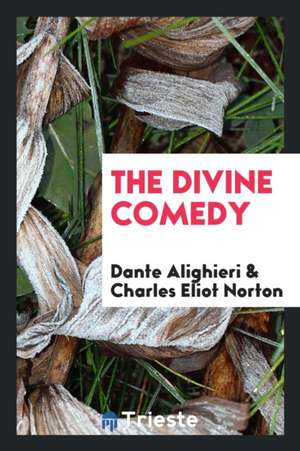
The Divine Comedy
Autor Dante Alighierien Limba Engleză Paperback – 16 mai 2018
Analizând ediția îngrijită de Robin Kirkpatrick pentru seria Penguin Classics, descoperim o abordare editorială ce onorează dubla natură a operei lui Dante: rigurozitatea teologică și intensitatea senzorială. Sursa principală a acestui volum este textul critic italian, prezentat față în față cu traducerea engleză, oferind astfel cititorului posibilitatea de a urmări muzicalitatea originală a celebrei terza rima. Spre deosebire de Circles of Hell sau Inferno, unde accentul cade pe damnare și suferință eternă, Purgatorio propune o schimbare de ton către speranță și efort conștient. Găsim în acest volum o descriere vibrantă a Muntelui Purgatoriu, unde suferința este asumată eroic de penitenți în drumul lor spre purificare. Structura narativă este marcată de o progresie fizică și spirituală, culminând cu intrarea în Paradisul Pământesc. Cititorii familiarizați cu The Divine Comedy of Dante Alighieri (traducerea lui Robert Durling) vor aprecia în ediția de față fluiditatea versului lui Kirkpatrick, care reușește să redea prospețimea peisajului montan și demnitatea voinței umane fără a sacrifica precizia academică. Dacă în Paradiso explorăm ordinea universală absolută, Purgatorio rămâne cea mai „umană” parte a trilogiei, ancorată în senzații fizice și în emoția regăsirii lui Beatrice. Suntem de părere că această ediție este esențială pentru înțelegerea modului în care Dante a transformat concepția tradițională despre mântuire, oferind un aparat critic modern care descifrează simbolismul complex al fiecărei trepte a muntelui.
Preț: 127.41 lei
Comandă specială
Livrare economică 03-09 noiembrie
Specificații
ISBN-10: 0649563557
Pagini: 236
Dimensiuni: 156 x 234 x 13 mm
Greutate: 0.34 kg
Editura: LIGHTNING SOURCE INC
V-ar putea interesa
-
 Wuthering HeightsEmily BrontëPreț: 28.01 lei
 -
 The LeopardJo Nesbo-13%Preț: 53.26 lei61.38 leiRecomandat
 -
 CockroachesJo NesboPreț: 58.46 leiRecomandat
 -
 The Gods Will Have BloodAnatole France-37%Preț: 58.20 lei92.60 lei
 -
 The Master and MargaritaMikhail Bulgakov-24%Preț: 55.47 lei73.45 lei
 -
 -16%Preț: 68.98 lei81.85 lei
 -
 Mystical Poems of RumiJalal al-Din RumiPreț: 134.37 lei
 -
 A Christmas Carol and Other Christmas StoriesCharles DickensPreț: 33.40 lei
 -
 Complete Dramatic WorksSamuel BeckettPreț: 144.12 lei
 -
 The Selected Poems of Emily DickinsonEmily DickinsonPreț: 80.85 lei
 -
 -26%Preț: 58.21 lei79.02 lei
 -
 MolloySamuel BeckettPreț: 98.83 lei
 -
 Five Nights at Freddy's The Silver Eyes 1Kira Breed-WrisleyPreț: 62.36 lei
 -
 Five Nights at Freddy's: The Twisted OnesScott CawthonPreț: 59.86 lei
 -
 Five Nights at Freddy's The Fourth Closet 3Scott CawthonPreț: 61.12 lei
 -
 The Silk Roads: A New History of the WorldProfessor Peter Frankopan-24%Preț: 96.05 lei125.70 lei
 -
 The Romanovs: The Story of Russia and its Empire 1613-1918Simon Sebag Montefiore-23%Preț: 85.99 lei111.69 lei
 -
 Of The NightDavid BlairPreț: 31.49 lei
 -
 The Whisperer in DarknessH. P. LovecraftPreț: 31.41 lei
 -
 Wuthering HeightsEmily BrontePreț: 30.97 lei
 -
 InfernoDante AlighieriPreț: 43.46 lei
 -
 AmoriscoKhaled MattawaPreț: 73.62 lei
 -
 FaustJohann Wolfgang GoethePreț: 68.08 lei
De ce să citești această carte
Recomandăm această ediție oricărui cititor care dorește să parcurgă „Divina Comedie” într-o formă accesibilă, dar riguroasă. Câștigul principal este formatul bilingv, care permite explorarea textului original alături de o traducere premiată. Este o lectură fundamentală pentru înțelegerea literaturii europene, oferind o perspectivă unică asupra compasiunii și a capacității umane de transformare, susținută de note explicative care clarifică referințele istorice și filozofice medievale.
Despre autor
Dante Alighieri (1265–1321) a fost un poet, scriitor și filozof italian, considerat „tatăl” limbii italiene moderne. Prin capodopera sa, „Divina Comedie”, el a impus utilizarea limbajului vernacular în literatură, demonstrând că dialectul toscan poate exprima idei teologice și filozofice la fel de complexe ca latina. Opera sa a exercitat o influență colosală asupra culturii occidentale, inspirând generații de scriitori, de la Chaucer la Milton. Dante rămâne figura centrală care a unit viziunea medievală despre lume cu sensibilitatea umanistă incipientă.
Descriere scurtă
Notă biografică
Dante, or Durante deli Alighieri, was born in Florence, Italy, circa 1265. His family was connected with the Guelph political alliance, supporters of the Papacy. His mother died before Dante¿s tenth birthday. Dante himself was betrothed to Gemma di Manetto Donati when he was aged only 12. The pair went on to marry, but Dante¿s true love was for Beatrice Portinari, who would inspire much of his poetry. Dante and Gemma had several children.
Dante was a member of Florence¿s Apothecaries¿ Guild, though he did not practice as a pharmacist. Allied to the White Guelphs, with whom he fought against the vanquishing Black Guelphs, he was eventually condemned to perpetual exile from Florence. He went first to Verona and then to Liguria. There is speculation that he travelled more widely, including to Paris and Oxford, although this has not been verified.
During his time of exile Dante conceived and wrote the three poems which form The Divine Comedy. He died in 1321, aged 56, of suspected malaria. He was buried in Ravenna, Italy, where a tomb was later erected in his name.
Stephen Wyatt is a playwright and dramatist with extensive experience in stage, radio and television.
Steve Ellis (Translator)
Steve Ellis, a Professor in English at the University of Birmingham, was born and brought up in York, and studied in Florence as part of his doctorate for London University. His frustration as a student with existing translations of Dante spurred a long-lasting desire to translate it himself.His critical works include Dante and English Poetry: Shelley to T.S. Eliot and a study of Eliot's Four Quartets. A major Gregory Award winner, he has also published two books of poetry, Home and Away and West Pathway
Descriere
Described variously as the greatest poem of the European Middle Ages and, because of the author's evangelical purpose, the `fifth Gospel', the Divine Comedy is central to the culture of the west. The poem is a spiritual autobiography in the form of a journey - the poet travels from the dark circles of the Inferno, up the mountain of Purgatory, where Virgil, his guide leaves him to encounter Beatrice in the Earthly Paradise. Dante conceived the poem as the new epic of Christendom, and he creates a world in which reason and faith have transformed moral and social chaos into order.Charles Sisson's blank verse translation is remarkable for its lucidity and vigour, and the Introduction, diagrams, maps, and notes by David Higgins provide the reader with invaluable guidance. ABOUT THE SERIES: For over 100 years Oxford World's Classics has made available the widest range of literature from around the globe. Each affordable volume reflects Oxford's commitment to scholarship, providing the most accurate text plus a wealth of other valuable features, including expert introductions by leading authorities, helpful notes to clarify the text, up-to-date bibliographies for further study, and much more.
Recenzii
Cuprins
Translator's Note
The Inferno
Introduction
Cantos
The Purgatorio
Introduction
Cantos
The Paradiso
Introduction
Cantos