
Statistical Physics of Complex Systems: Springer Series in Synergetics
Autor Eric Bertinen Limba Engleză Hardback – 28 sep 2021
Observăm o maturizare a literaturii dedicate sistemelor complexe odată cu apariția celei de-a treia ediții a volumului Statistical Physics of Complex Systems. Lucrarea se încadrează în nucleul curriculei de masterat pentru fizică teoretică și științe computaționale, servind drept punte între mecanica statistică fundamentală și modelarea fenomenelor interdisciplinare. Autorul reușește să mențină un echilibru între rigoarea formală și accesibilitate, evitând jargonul excesiv pentru a veni în întâmpinarea cercetătorilor din domenii conexe. Textul extinde cadrul teoretic propus de Complex Systems de Jean-Philippe Bouchaud prin adăugarea unor date noi și exemple concrete din sfera dinamicii agenților sociali și a rețelelor neuronale formale. Structura este concepută pentru a facilita studiul individual sau cursuri intensive: primele două capitole fundamentează formalismul stocastic și cel al echilibrului, în timp ce restul capitolelor explorează aplicații variate, de la sisteme haotice la rețele complexe. Recomandăm atenție sporită capitolelor 4 și 5, care transpun metodele fizicii în sociodinamică și evoluție biologică, oferind o perspectivă similară cu cea din Statistical Physics and Computational Methods for Evolutionary Game Theory, dar cu un accent mai pronunțat pe convergența teoremelor matematice. Spre deosebire de edițiile anterioare, versiunea din 2021 integrează secțiuni noi despre dinamica avalanșelor în materiale și repartiția bogăției, consolidând statutul cărții de resursă actualizată pentru analiza sistemelor cu mulți constituenți interacționari. Formatul modular permite cititorului să acceseze direct ariile de interes, fără a parcurge obligatoriu întreg volumul, fiind sprijinit de exemple rezolvate și anexe tehnice pentru simulări.
Din seria Springer Series in Synergetics
- 15%
 Preț: 677.02 lei
 -
 Preț: 403.04 lei
 -
 Preț: 411.78 lei
 -
 Preț: 409.71 lei
 - 18%
 Preț: 755.23 lei
 - 18%
 Preț: 766.57 lei
 -
 Preț: 386.04 lei
 -
 Preț: 393.24 lei
 -
 Preț: 384.12 lei
 -
 Preț: 401.21 lei
 - 15%
 Preț: 670.48 lei
 -
 Preț: 414.85 lei
 - 15%
 Preț: 515.66 lei
 -
 Preț: 422.88 lei
 - 15%
 Preț: 619.84 lei
 - 18%
 Preț: 1008.14 lei
 - 15%
 Preț: 645.63 lei
 -
 Preț: 411.51 lei
 -
 Preț: 375.29 lei
 - 15%
 Preț: 516.28 lei
 -
 Preț: 380.99 lei
 -
 Preț: 389.23 lei
 -
 Preț: 377.64 lei
 - 8%
 Preț: 594.60 lei
 - 15%
 Preț: 616.51 lei
 - 20%
 Preț: 466.68 lei
 -
 Preț: 412.31 lei
 - 18%
 Preț: 1121.34 lei
 - 18%
 Preț: 765.91 lei
 - 15%
 Preț: 647.87 lei
 -
 Preț: 375.08 lei
 - 15%
 Preț: 655.47 lei
 -
 Preț: 393.95 lei
Preț: 494.85 lei
Preț vechi: 582.17 lei
-15%
Carte tipărită la comandă
Livrare economică 26 noiembrie-10 decembrie
Specificații
ISBN-10: 3030799484
Pagini: 312
Ilustrații: XVII, 291 p. 33 illus.
Dimensiuni: 160 x 241 x 23 mm
Greutate: 0.58 kg
Ediția:3rd edition 2021
Editura: Springer
Colecția Springer Series in Synergetics
Seria Springer Series in Synergetics
Locul publicării:Cham, Switzerland
V-ar putea interesa
-
 -23%Preț: 395.18 lei516.41 lei
 -
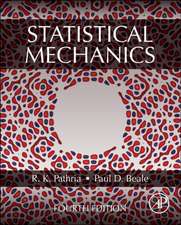 Statistical MechanicsR.K. Pathria-32%Preț: 568.15 lei833.67 lei
 -
 -10%Preț: 345.51 lei382.54 lei
 -
 -21%Preț: 407.61 lei517.76 lei
 -
 -29%Preț: 299.36 lei420.66 lei
 -
 The Nature of Complex NetworksSergey N. Dorogovtsev-16%Preț: 317.88 lei378.85 lei
 -
 When Things Grow Many: Complexity, Universality and Emergence in NatureLawrence Schulman-12%Preț: 270.12 lei307.01 lei
 -
 Essentials of Econophysics ModellingFrantisek Slanina-11%Preț: 469.59 lei527.63 lei
 -
 Concepts in Thermal PhysicsStephen J. Blundell-8%Preț: 346.11 lei378.20 lei
 -
 Networks: OxfordGuido Caldarelli-36%Preț: 48.37 lei75.59 lei
 -
 Complexity: A Very Short IntroductionJohn H. Holland-20%Preț: 56.62 lei70.82 lei
 -
 Why Stock Markets CrashDidier SornettePreț: 147.17 lei
 -
 Smaldino, P: Modeling Social BehaviorPaul E. Smaldino-16%Preț: 846.01 lei1007.16 lei
 -
 -14%Preț: 407.43 lei473.75 lei
 -
 Physical Biology of the CellRob Phillips-9%Preț: 816.70 lei897.48 lei
 -
 Thinking through Archaeological ComplexityStefani A. CrabtreePreț: 386.07 lei
 -
 The Nature of Code: Simulating Natural Systems with JavaScriptDaniel Shiffman-34%Preț: 215.83 lei326.00 lei
 -
 Physics, Nature and SocietyJoaquín MarroPreț: 232.09 lei
 -
 STATISTICAL PHYSICSKadanoff Leo PPreț: 420.12 lei
De ce să citești această carte
Recomandăm această ediție studentilor la masterat și cercetătorilor care doresc să aplice instrumentele fizicii statistice în domenii non-tradiționale. Cititorul câștigă o înțelegere clară a modului în care procesele stocastice modelează traficul rutier sau rețelele biologice. Este un manual esențial pentru cei care caută o trecere rapidă de la teorie la modelarea practică, oferind inclusiv suport pentru implementarea primelor simulări numerice.
Despre autor
Eric Bertin este un cercetător recunoscut în domeniul fizicii statistice, activând în cadrul laboratoarelor de prestigiu din Franța. Expertiza sa se concentrează pe sistemele ieșite din echilibru și pe aplicarea metodelor fizicii în modelarea fenomenelor colective. Prin contribuțiile sale în Springer Series in Synergetics, Bertin a devenit o voce importantă în pedagogia sistemelor complexe, promovând o abordare care combină claritatea conceptuală cu rigoarea matematică necesară în științele moderne.
Descriere scurtă
This course-tested textbook provides graduate students and non-specialists with a basic understanding of the concepts and methods of statistical physics and demonstrates their wide range of applications to interdisciplinary topics in the field of complex system sciences, including selected aspects of theoretical modeling in biology and the social sciences. It covers topics such as non-conserved particles, evolutionary population dynamics, networks, properties of both individual and coupled simple dynamical systems, and convergence theorems, as well as short appendices that offer helpful hints on how to perform simple stochastic simulations in practice. The original spirit of the book is to remain accessible to a broad, non-specialized readership. The format is a set of concise, modular, and self-contained topical chapters, avoiding technicalities and jargon as much as possible, and complemented by a wealth of worked-out examples, so as to make this work useful as a self-study text or as textbook for short courses.