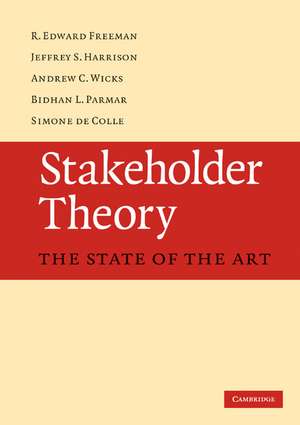
Stakeholder Theory
Autor R. Edward Freeman, Jeffrey S. Harrison, Andrew C. Wicksen Limba Engleză Paperback – 29 ian 2016
Considerăm că acest volum publicat de Cambridge University Press este indispensabil pentru publicul țintă format din antreprenori, manageri de top și studenți MBA care doresc să înțeleagă fundamentele managementului modern. Depășind simpla analiză teoretică, Stakeholder Theory semnată de R. Edward Freeman, Jeffrey S. Harrison și Andrew C. Wicks oferă o evaluare riguroasă a modului în care relațiile cu angajații, clienții și comunitățile definesc succesul unei organizații. Remarcăm progresia logică a lucrării, care debutează cu geneza conceptului și evoluează spre demonstrații practice în domenii precum finanțele, marketingul și dreptul. Complementar volumului Strategic Management (lucrarea originală din 1984), acest titlu acoperă deceniile de cercetare și diversificare a literaturii de specialitate apărute între timp, oferind o perspectivă actualizată și mult mai integrată. Dacă în The Blackwell Handbook of Strategic Management, autorii se concentrau pe contribuții originale ale cercetătorilor de top, în Stakeholder Theory focusul este pus pe reîncadrarea capitalismului ca un sistem de creare a valorii colective. Apreciem în mod deosebit modul în care autorii reușesc să lege etica de performanța financiară, demonstrând că responsabilitatea socială nu este un element periferic, ci însăși esența afacerilor contemporane. Structura în patru părți facilitează o parcurgere sistematică, de la contextul istoric și pragmatic, până la întrebările critice de la orizontul viitorului economic.
Preț: 403.21 lei
Carte tipărită la comandă
Livrare economică 01-15 decembrie
Specificații
ISBN-10: 0521137934
Pagini: 362
Ilustrații: 5 b/w illus.
Dimensiuni: 170 x 244 x 20 mm
Greutate: 0.63 kg
Editura: Cambridge University Press
Locul publicării:Cambridge, United Kingdom
V-ar putea interesa
-
 -16%Preț: 217.01 lei258.22 lei
 -
 Business EthicsAndrew Wicks-23%Preț: 1150.66 lei1494.36 lei
 -
 How Brands Grow: What Marketers Don't KnowByron Sharp-24%Preț: 189.21 lei248.04 lei
 -
 -14%Preț: 257.83 lei298.29 lei
 -
 Strategic Intelligence: Conceptual Tools for Leading ChangeMichael Maccoby-16%Preț: 368.41 lei440.34 lei
 -
 Developing Innovative OrganizationsB. Gailly-15%Preț: 580.87 lei683.38 lei
 -
 -13%Preț: 204.10 lei235.49 lei
 -
 Strategic Risk Management PracticeTorben Juul AndersenPreț: 380.40 lei
 -
 Sustainable Business DevelopmentDavid L. Rainey-11%Preț: 447.66 lei503.00 lei
 -
 Strategic ManagementR. Edward FreemanPreț: 361.32 lei
 -
 Strategy as PracticeGerry JohnsonPreț: 418.78 lei
 -
 Theory of the Firm for Strategic ManagementManuel BecerraPreț: 394.03 lei
 -
 Strategies, Markets and GovernanceRalf BoscheckPreț: 320.91 lei
 -
 -11%Preț: 616.19 lei692.35 lei
 -
 Leading Strategic ChangeEric FlamholtzPreț: 429.58 lei
 -
 The Search for Organic GrowthEdward D. HessPreț: 396.97 lei
 -
 The Blackwell Handbook of Strategic ManagementMichael A. HittPreț: 397.68 lei
 -
 Public Trust in BusinessJared D Harris-17%Preț: 295.76 lei357.34 lei
 -
 Ten Types of InnovationLarry KeeleyPreț: 217.06 lei
 -
 Preț: 211.77 lei
 -
 Innovation Book, TheMax MckeownPreț: 124.05 lei
 -
 The End of Competitive AdvantageRita Gunther McGrathPreț: 208.64 lei
 -
 Strategic Management of Healthcare OrganizationsJeffrey S. HarrisonPreț: 110.25 lei
 -
 -19%Preț: 69.09 lei85.66 lei
 -
 Preț: 38.00 lei
De ce să citești această carte
Recomandăm această carte liderilor care vor să treacă de la modelul depășit al maximizării profitului pe termen scurt la o strategie sustenabilă. Cititorul va câștiga un cadru conceptual solid pentru gestionarea intereselor divergente și va învăța cum să integreze etica în deciziile financiare și de marketing. Este un instrument esențial pentru recalibrarea viziunii asupra succesului în afaceri într-o lume interconectată.
Despre autor
R. Edward Freeman este considerat părintele teoriei stakeholderilor, fiind un autor prolific și o autoritate recunoscută la nivel mondial în etica afacerilor și management strategic. Alături de coautorii săi, acesta a redefinit modul în care este înțeles capitalismul modern. Jeffrey S. Harrison și Andrew C. Wicks completează echipa de experți, aducând o vastă experiență academică și practică în analizarea responsabilității corporative, contribuind la consolidarea acestui domeniu în cadrul unor instituții de prestigiu precum Darden School of Business.
Descriere scurtă
Cuprins
Recenzii
'Ed Freeman and his colleagues have produced an erudite, subtle, vigorously argued account of stakeholder theory. Their provocative book will not be the last word on the subject, but it is the best contribution so far to an extraordinarily important conversation.' Edwin Hartman, New York University