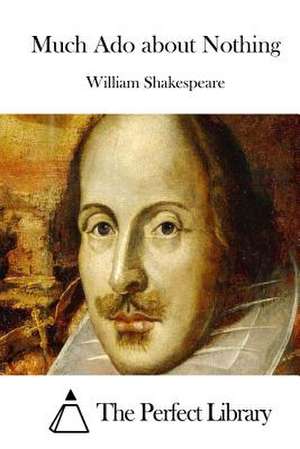
Much Ado about Nothing
Autor William Shakespeare Editat de The Perfect Libraryen Limba Engleză Paperback
Considerăm această ediție a piesei Much Ado About Nothing un instrument de studiu esențial, structurat metodologic pentru a facilita trecerea de la lectura de plăcere la analiza critică. Organizarea materialului urmărește o progresie logică: textul original este flancat de note explicative, fiind urmat de o secțiune densă de „Perspective și teme” care analizează mecanismele de înșelăciune și „noting” (observare/ascultare) ce guvernează acțiunea în Messina. Această abordare didactică permite cititorului să identifice rapid cum zvonurile și dezinformarea influențează ambele planuri narative: cel tragicomic al cuplului Hero-Claudio și cel spiritual al duelurilor verbale dintre Beatrice și Benedick.
Subliniem importanța aparatului critic integrat de Cedric Watts și Claire McEachern, care transformă experiența lecturii prin detalii despre convențiile teatrului elisabetan și figurile de stil utilizate de William Shakespeare. Ediția de față completează perspectiva oferită de Much Ado About Nothing: A Critical Reader de Dr. Deborah Cartmell, adăugând textul integral adnotat și exerciții practice de scriere academică, în timp ce lucrarea menționată se concentrează preponderent pe istoricul reprezentațiilor scenice și ecranizărilor moderne.
În contextul operei autorului, dacă ediții precum The Tempest sunt orientate strict spre curriculumul GCSE, volumul de față adoptă o viziune mai largă, oferind o galerie foto și analize de interpretare care îi ajută pe studenți să vizualizeze piesa în context performativ. Credem că această ediție reușește să mențină echilibrul între rigoarea academică și accesibilitatea necesară unui cititor contemporan, oferind claritate asupra unor termeni arhaici fără a fragmenta cursivitatea lecturii.
Preț: 91.42 lei
Carte disponibilă
Livrare economică 07-21 noiembrie
Specificații
ISBN-10: 1512138231
Pagini: 104
Dimensiuni: 152 x 229 x 6 mm
Greutate: 0.15 kg
Editura: CREATESPACE
V-ar putea interesa
-
 The Adventures Of Huckleberry FinnMark TwainPreț: 28.01 lei
 -
 CLASSICS HOUND OF BASKERVILLESArthur Conan DoylePreț: 28.01 lei
 -
 The Prince and the PauperMark TwainPreț: 28.01 lei
 -
 A Midsummer Night's DreamWilliam ShakespearePreț: 28.01 lei
 -
 To the LighthouseVirginia WoolfPreț: 28.01 lei
 -
 PygmalionGeorge Bernard ShawPreț: 28.01 lei
 -
 Much Ado About NothingProf. Eric Rasmussen-19%Preț: 67.11 lei82.48 lei
 -
 -25%Preț: 60.36 lei80.29 lei
 -
 Preț: 33.67 lei
 -
 Preț: 27.62 lei
 -
 Paradise LostJohn MiltonPreț: 94.76 lei
 -
 de Amor Y de Sombra / Of Love and ShadowsIsabel AllendePreț: 102.22 lei
 -
 Adventures of Huckleberry FinnMark TwainPreț: 39.28 lei
 -
 Academic Vocabulary in Use Edition with AnswersMichael MccarthyPreț: 203.09 lei
 -
 A Shakespeare Story: The Taming of the ShrewAndrew Matthews-30%Preț: 34.27 lei48.61 lei
 -
 Steve Jobs: The Exclusive BiographyWalter Isaacson-24%Preț: 178.10 lei235.15 lei
 -
 Steve JobsWalter IsaacsonPreț: 70.53 lei
 -
 All's Well That Ends WellWilliam ShakespearePreț: 38.47 lei
 -
 King JohnWilliam ShakespearePreț: 37.70 lei
 -
 The Kite RunnerKhaled Hosseini-25%Preț: 37.58 lei50.39 lei
 -
 A Shakespeare Story: Henry VAndrew Matthews-28%Preț: 35.54 lei49.40 lei
 -
 De amor y de sombraIsabel AllendePreț: 137.21 lei
De ce să citești această carte
Recomandăm această ediție pentru oricine dorește să exploreze profunzimea celei mai spirituale comedii a lui Shakespeare. Dincolo de textul original, cititorul câștigă o înțelegere clară a contextului social elisabetan prin notele exhaustive. Este alegerea ideală pentru studenți și actori, oferind un ghid practic despre cum se construiește un eseu critic și cum a evoluat piesa pe scenă de-a lungul secolelor.
Despre autor
William Shakespeare (1564–1616) este recunoscut universal drept cel mai important dramaturg al limbii engleze. Cariera sa în Londra, ca actor și acționar al companiei Lord Chamberlain's Men, i-a permis să creeze un corpus impresionant de 39 de piese și 154 de sonete. Much Ado About Nothing aparține perioadei sale de maturitate în genul comediei, demonstrând măiestria sa în utilizarea dialogului scânteietor și a jocurilor de cuvinte complexe. Opera sa, tradusă în toate limbile majore, rămâne fundamentul literaturii dramatice universale, fiind continuu reinterpretată în mediul academic și artistic.
Descriere scurtă
Descriere
Features of each edition include:
- The original introduction to the Kittredge Edition
- Editor’s Introduction to the Focus Edition. An overview on major themes of the plays, and sections on the play’s performance history on stage and screen.
- Explanatory Notes. The explanatory notes either expand on Kittredge’s superb glosses, or, in the case of plays for which he did not write notes, give the needed explanations for Shakespeare’s sometimes demanding language.
- Performance notes. These appear separately and immediately below the textual footnotes and include discussions of noteworthy stagings of the plays, issues of interpretation, and film and stage choices.
- How to read the play as Performance Section. A discussion of the written play vs. the play as performed and the various ways in which Shakespeare’s words allow the reader to envision the work "off the page."
- Comprehensive Timeline. Covering major historical events (with brief annotations) as well as relevant details from Shakespeare’s life. Some of the Chronologies include time chronologies within the plays.
- Topics for Discussion and Further Study Section. Critical Issues: Dealing with the text in a larger context and considerations of character, genre, language, and interpretative problems. Performance Issues: Problems and intricacies of staging the play connected to chief issues discussed in the Focus Editions’ Introduction.
- Select Bibliography & Filmography
Each New Kittredge edition also includes screen grabs from major productions, for comparison and scene study.
Cuprins
Lewis Carroll: A Letter to Ellen Terry
George Bernard Shaw: Shakespeare?s Merry Gentlemen
Donald A. Stauffer: From Shakespeare?s World of Images
W. H. Auden: From The Dyer?s Hand
Carol Thomas Neely: Broken Nuptials in ?Much Ado About Nothing?
Sylvan Barnet: ?Much Ado About Nothing? on the Stage
NEWLY ADDED ESSAY:
Robert Smallwood: Three Ways to Begin ?Much Ado About Nothing?
Notă biografică
Recenzii
- Lois Potter, Ned B. Allen Professor Emeritus, University of Delaware
The differences between, and comparative merits of, various editorial series are suggested by the three editions of The Taming of the Shrew published this year. Laury Magnus's New Kittredge Shakespeare edition is, like the other New Kittredge volumes, a workable text for high school and first year college students interested in film and theater. The introduction elaborates on one theme — Elizabethan constructions of gender — and offers a very broad performance history, focusing on Sam Taylor's and Zeffirelli's film versions as well as adaptations such as Kiss Me Kate and Ten Things I Hate About You (accompanied by a still of ten hearthtrobs Heath Ledger and Julia Stiles). The volume is determined to eradicate any confusion that a first time reader of the play might experience: the dramatis personae page explains that "Bianca Minola" is "younger daughter to Baptista, wooed by Lucentio-in-disguise (as Cambio) and then wife to him, also wooed by the elderly Gremio and Hortensio-in-disguise (as Licio)" (p.1). Other editorial notes, based on Kittredge's own, are confined mostly to explaining individual words and phrases: additional footnotes discuss interpretive choices made by film and stage productions. Throughout, the editorial emphasis is on the play less as text than as performance piece, culminating in fifteen largely performance-oriented "study questions" on topics such as disguise, misogyny, and violence.
Studies in English Literature, Tudor and Stuart Drama, Volume 51, Spring 2011, Number 2, pages 497-499.