
Existential Medicine: Essays on Health and Illness: New Heidegger Research
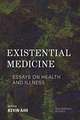
Editat de Kevin Ahoen Limba Engleză Hardback – 30 apr 2018
Adresat studenților la medicină și filozofie, cercetătorilor din domeniul bioeticii și practicienilor din sănătate care doresc să își umanizeze abordarea clinică, Existential Medicine propune o schimbare necesară de paradigmă. Subliniem modul în care acest volum colectiv reușește să umple golul dintre știința medicală obiectivată și realitatea subiectivă a pacientului. Apreciem efortul editorului Kevin Aho de a reuni perspective noi din fenomenologie și hermeneutică pentru a analiza domenii diverse, de la gerontologie și îngrijiri paliative până la psihiatrie.
Comparabil cu Handbook of Phenomenology and Medicine de S. Kay Toombs în rigoarea academică, volumul de față este actualizat pentru provocările tehnologice contemporane, precum medicina de augmentare și transplantul de organe. Reținem că lucrarea nu se rezumă la teorie pură, ci aplică conceptele lui Heidegger, Merleau-Ponty sau Gadamer direct în contextul clinic. Structura este împărțită în trei secțiuni majore: curente noi în psihiatria existențială, fenomenologia anxietății și a durerii, respectiv etica medicalizării. Această progresie permite cititorului să treacă de la fundamentele teoretice ale analizei existențiale la studii de caz concrete despre durerea cronică sau dorința de nemurire.
În contextul operei sale, Kevin Aho continuă investigația începută în Body Matters și Existentialism, rafinând critica adusă modului în care medicina modernă ignoră 'lumea vieții' (life-world) a suferindului. Dacă în lucrările anterioare se concentra pe neglijarea corpului în filozofia tradițională, aici coordonează o demonstrație interdisciplinară despre cum fenomenologia poate deveni un instrument practic esențial pentru orice medic sau terapeut.
Din seria New Heidegger Research
- 21%
 Preț: 289.64 lei
 - 23%
 Preț: 259.47 lei
 - 27%
 Preț: 284.87 lei
 - 33%
 Preț: 794.27 lei
 - 19%
 Preț: 331.02 lei
 - 29%
 Preț: 347.76 lei
 - 45%
 Preț: 503.78 lei
 - 27%
 Preț: 283.29 lei
 - 28%
 Preț: 223.43 lei
 - 23%
 Preț: 328.48 lei
 - 19%
 Preț: 331.43 lei
 - 19%
 Preț: 326.92 lei
 - 29%
 Preț: 346.24 lei
 - 24%
 Preț: 269.14 lei
 - 19%
 Preț: 332.57 lei
 - 16%
 Preț: 334.63 lei
 - 26%
 Preț: 286.94 lei
 - 26%
 Preț: 259.28 lei
 - 28%
 Preț: 219.46 lei
 - 28%
 Preț: 220.15 lei
 - 26%
 Preț: 280.84 lei
 - 22%
 Preț: 319.95 lei
 - 27%
 Preț: 252.91 lei
 - 27%
 Preț: 282.40 lei
 - 34%
 Preț: 948.77 lei
 - 32%
 Preț: 552.38 lei
 - 22%
 Preț: 316.87 lei
 - 34%
 Preț: 598.59 lei
Preț: 731.91 lei
Preț vechi: 1150.22 lei
-36%
Carte tipărită la comandă
Livrare economică 16-30 noiembrie
Specificații
ISBN-10: 1786604825
Pagini: 336
Ilustrații: 1 tables;
Dimensiuni: 154 x 232 x 24 mm
Greutate: 0.7 kg
Editura: Bloomsbury Publishing
Colecția Rowman & Littlefield
Seria New Heidegger Research
Locul publicării:New York, United States
V-ar putea interesa
-
 -20%Preț: 312.43 lei388.81 lei
 -
 Phenomenology of IllnessHavi Carel-22%Preț: 213.53 lei272.68 lei
 -
 Action and InteractionShaun GallagherPreț: 350.25 lei
 -
 Enactivist Interventions: Rethinking the MindShaun Gallagher-16%Preț: 218.46 lei259.15 lei
 -
 The Embodied Mind, revised editionEleanor Rosch-20%Preț: 225.75 lei283.16 lei
 -
 The Seminar of Jacques Lacan: Freud's Papers on TechniqueJacques Alain-MillerPreț: 146.21 lei
 -
 The Seminar of Jacques Lacan – Book IIIJacques LacanPreț: 157.81 lei
 -
 Preț: 157.94 lei
 -
 The Seminar of Jacques LacanJacques LacanPreț: 138.71 lei
 -
 On Feminine Sexuality, the Limits of Love and KnowledgeJacques LacanPreț: 118.38 lei
 -
 EcritsJacques LacanPreț: 245.40 lei
 -
 The Seminar of Jacques LacanJacques LacanPreț: 124.11 lei
 -
 Preț: 175.17 lei
 -
 Preț: 416.87 lei
 -
 -27%Preț: 318.81 lei435.26 lei
 -
 The Object RelationJacques Lacan-19%Preț: 453.82 lei560.27 lei
 -
 Preț: 163.04 lei
 -
 The Enigma of Health: The Art of Healing in a Scientific AgeHans-Georg GadamerPreț: 152.37 lei
 -
 Illness: The cry of the fleshHavi CarelPreț: 312.59 lei
 -
 Desire and its InterpretationJacques LacanPreț: 171.46 lei
 -
 AnxietyJacques LacanPreț: 134.28 lei
 -
 The SinthomeJacques LacanPreț: 157.36 lei
 -
 Transference - The Seminar of Jacques Lacan, Book VIIIJacques LacanPreț: 160.94 lei
 -
 Ethics of the RealAlenka ZupancicPreț: 141.09 lei
 -
 -19%Preț: 68.80 lei85.28 lei
De ce să citești această carte
Această carte este esențială pentru cei care doresc să înțeleagă dincolo de diagnostic, oferind instrumente filozofice pentru a decripta sensul bolii. Cititorul câștigă o perspectivă profundă asupra modului în care anxietatea, trauma și durerea reconfigurează existența umană. Este un apel la empatie fundamentat academic, ideal pentru practicienii care vor să integreze medicina narativă și etica fenomenologică în activitatea lor zilnică.
Descriere
Existential Medicine explores the recent impact that the philosophies of existentialism, phenomenology, and hermeneutics have had on the health care professions. A growing body of scholarship drawing primarily on the work of Martin Heidegger and other influential twentieth-century figures such as Maurice Merleau-Ponty, Jean-Paul Sartre, and Hans-Georg Gadamer has shaped contemporary research in the fields of bioethics, narrative medicine, gerontology, enhancement medicine, psychiatry and psychotherapy, and palliative care, among others. By regarding the human body as a decontextualized object, the prevailing paradigm of medical science often overlooks the body as it is lived. As a result, it fails to critically engage the experience of illness and the core questions of 'what it means' and 'what it feels like' to be ill. With work from emerging and renowned scholars in the field, this collection aims to shed light on these issues and the crucial need for clinicians to situate the experience of illness within the context of a patient's life-world. To this end, Existential Medicine offers a valuable resource for philosophers and medical humanists as well as health care practitioners.
Cuprins
Recenzii
This masterful collection of essays demonstrates the promise of Heidegger's phenomenology for understanding the complex unity of lived, embodied, intercorporeal, affective, and hermeneutic components of pain and suffering. Spanning topics in existential psychiatry, phenomenologies of chronic pain and aging, medical technologies, health and illness, Existential Medicine is a must-read for health professionals and everyone else grappling with the vulnerabilities of the human condition.
Existential Medicine is a stellar collection of philosophical essays, written by the leading scholars in the field. The volume draws on the phenomenological-existential tradition, and addresses contemporary issues in medical practice, including themes such as psychiatry, embodiment, death and pain, health, and technology. Illness stands at the intersection of biology and natural science on one hand and personal meaning and subjective experience on the other - the previously transparent body and homeliness of the world profoundly altered by ageing, illness, suffering and pain. This edited volume will be a superb resource for health care practitioners, philosophers, and wider colleagues in policy and academia.
[.] remind[s] the readers of this society of an important area where humanistic practitioners, scholars and researchers - those who are sensitive to the existential dimension of human being - are needed today.
In 1954 philosopher Martin Heidegger published an influential essay entitled "The Question Concerning Technology," in which he argued that modern technology had joined forces with science to dictate the encompassing framework of human life. Everyone is subject to the scientific dogma that only "what is measurable is real." During the 1960s Heidegger became interested in psychiatry and psychotherapy. In a series of seminars he gave in Zollicon, Switzerland, he set himself against the "scientific dogma." The human body, he said, is not just another object in the world. It is "an effective, situated and embodied existence." The 16 essays in this collection elaborate on this premise. The scholarship is impressive although not always convincing. One reads, for example, that "while health care today is more effective that ever at keeping human beings alive it has never been more estranging." It is not clear how or why this is so. Or again Heidegger calls his method a form of "poetizing" or "projective saying." One hears in these essays echos of Heidegger's well-known animus against modernity. One also senses a pervasive reliance on the language of phenomenology. This is a book for medical ethicists.
Summing Up: Recommended. Graduate students, researchers, faculty.
. the collection of essays in Kevin Aho's inspiring publication is an invitation to join the exploration of phenomenology and existential medicine and find new potentials for philosophy of medicine within these traditions. Existential Medicine is a well-balanced but also composite collection of essays, a rhizome of Heidegger-medicine-hybrids that cover a remarkable amount of ground within the medical sphere. We join the many skillful thinkers who have contributed to the volume in an exploration of the possibilities for phenomenology-and particularly Heideggerian thought-to contribute in manifold ways and in a variety of debates within philosophy of medicine. . For the essay collection Aho has managed to curate a book that touches upon an impressive range of philosophical and medical fields. Particularly it is enjoyable that the collection has such a strong emphasis on illnesses that are typically considered somatic, thus succeeding in moving existential medicine beyond the psychiatric realm within which the use of philosophy-and particularly the use of existential philosophy-in medicine is sometimes stuck.
Kevin Aho's masterfully selected collection is an excellent showcase
of the contributions that phenomenology, hermeneutics, and existentialism
can make to medicine. The volume features insights by major
contributors to the field of medical humanities, inspired by the work of
Heidegger and Gadamer, among others.