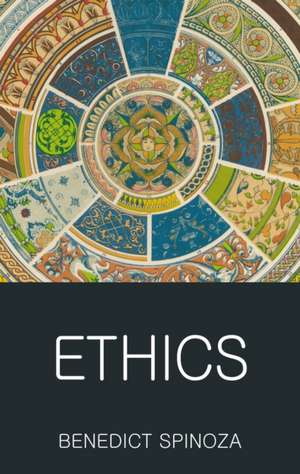
Ethics: Classics of World Literature
Autor Benedict De Spinoza Traducere de A. K. Stirling, W. H. Whiteen Limba Engleză Paperback – 5 mar 2001
Această ediție a lucrării Ethics, apărută în prestigioasa serie Classics of World Literature, oferă cititorului acces la traducerea clasică realizată de A. K. Stirling și W. H. White, facilitând parcurgerea unuia dintre cele mai riguroase sisteme filosofice din istorie. Ceea ce aduce nou acest volum este prezentarea sistematică a „metodei geometrice”, o abordare rară în filosofie, unde Benedict De Spinoza emulează structura Elementelor lui Euclid pentru a demonstra adevăruri despre existență, divinitate și morală. Subliniem ambiția proiectului de a integra metafizica, psihologia și etica într-un singur flux logic. Spinoza propune o viziune radicală pentru secolul al XVII-lea: Dumnezeu nu este un creator extern universului, ci este identic cu natura însăși, iar ființele umane sunt „moduri” de manifestare ale acestei substanțe unice. Putem afirma că rigoarea cu care autorul își construiește argumentele transformă lectura într-un exercițiu intelectual intens, unde fiecare concluzie depinde strict de axiomele stabilite anterior. Acoperă aceeași arie tematică ca Improvement of the Understanding, Ethics and Correspondence, dar ediția de față se concentrează exclusiv pe textul fundamental al Eticii, oferind un format compact și accesibil pentru studiul universitar. Față de comentariile critice precum Spinoza's 'Ethics' de Steven Nadler, care acționează ca un ghid explicativ, volumul de la WORDSWORTH EDITIONS LTD pune cititorul în contact direct cu textul original, lăsând logica internă a autorului să se dezvăluie neintermediat. În contextul operei sale, lucrarea reprezintă punctul culminant al gândirii începute în A Theologico-Political Treatise Part I (Chapters I to V), trecând de la analiza critică a religiei la o reconstrucție completă a realității prin rațiune pură.
Din seria Classics of World Literature
-
 Preț: 43.91 lei
 -
 Preț: 46.25 lei
 -
 Preț: 44.86 lei
 -
 Preț: 44.68 lei
 -
 Preț: 51.08 lei
 -
 Preț: 43.10 lei
 -
 Preț: 45.09 lei
 -
 Preț: 46.55 lei
 -
 Preț: 49.05 lei
 -
 Preț: 50.72 lei
 -
 Preț: 49.36 lei
 -
 Preț: 48.77 lei
 -
 Preț: 46.92 lei
 -
 Preț: 42.81 lei
 -
 Preț: 45.48 lei
 -
 Preț: 47.64 lei
 -
 Preț: 44.09 lei
 -
 Preț: 44.98 lei
 -
 Preț: 55.43 lei
 -
 Preț: 47.42 lei
 -
 Preț: 49.75 lei
 -
 Preț: 47.42 lei
 -
 Preț: 44.08 lei
 -
 Preț: 43.40 lei
 -
 Preț: 42.36 lei
 -
 Preț: 43.47 lei
 -
 Preț: 42.78 lei
 -
 Preț: 42.87 lei
 -
 Preț: 44.16 lei
 -
 Preț: 45.05 lei
 -
 Preț: 47.32 lei
 -
 Preț: 46.41 lei
 -
 Preț: 47.21 lei
 -
 Preț: 48.52 lei
 -
 Preț: 42.93 lei
 -
 Preț: 42.25 lei
Preț: 44.39 lei
Carte disponibilă
Livrare economică 05-19 noiembrie
Livrare express 21-27 octombrie pentru 20.20 lei
Specificații
ISBN-10: 1840221194
Pagini: 368
Ilustrații: index
Dimensiuni: 128 x 196 x 20 mm
Greutate: 0.22 kg
Ediția:New
Editura: WORDSWORTH EDITIONS LTD
Colecția Classics of World Literature
Seria Classics of World Literature
Locul publicării:United Kingdom
V-ar putea interesa
-
 Papers and JournalsSøren Kierkegaard-17%Preț: 104.44 lei125.25 lei
 -
 One-Way Street and Other WritingsWalter BenjaminPreț: 79.25 lei
 -
 Anti-OedipusGilles DeleuzePreț: 130.27 lei
 -
 The Dharma BumsJack Kerouac-28%Preț: 51.54 lei71.12 lei
 -
 Infinite JestDavid Foster Wallace-22%Preț: 99.13 lei127.56 lei
 -
 Basic EconomicsThomas Sowell-26%Preț: 220.37 lei297.98 lei
 -
 The Cambridge Companion to SpinozaDon Garrett-22%Preț: 196.10 lei252.67 lei
 -
 Spinoza Theologicl-Politicl TreatseJonathan IsraelPreț: 232.92 lei
 -
 Preț: 266.67 lei
 -
 Preț: 323.85 lei
 -
 New Dictionary of Biblical TheologyT. Desmond Alexander-8%Preț: 453.22 lei492.63 lei
 -
 Spinoza: Political TreatiseBaruch Spinoza-17%Preț: 122.88 lei147.97 lei
 -
 The Tao of PoohBenjamin HoffPreț: 64.50 lei
 -
 Shoe Dog: A Memoir by the Creator of NIKEPhil Knight-18%Preț: 70.84 lei86.79 lei
 -
 -47%Preț: 63.47 lei119.20 lei
 -
 Anthony Bourdain's Hungry GhostsAnthony Bourdain-17%Preț: 116.86 lei140.07 lei
 -
 -23%Preț: 211.21 lei275.51 lei
 -
 An Organic Whole of All & EverythingMohan VaishnavPreț: 107.96 lei
 -
 The DhammapadaGil FronsdalPreț: 70.82 lei
 -
 Ghosts of My LifeMark FisherPreț: 108.72 lei
 -
 The DivideJason Hickel-24%Preț: 66.54 lei87.38 lei
 -
 The Sublime Object of IdeologySlavoj ZizekPreț: 113.31 lei
 -
 RepublicPlatoPreț: 44.09 lei
 -
 Roads To SantiagoCees Nooteboom-18%Preț: 76.90 lei94.03 lei
 -
 Critical Care Medicine Review: 1000 Questions and AnswersAbraham Sonny MD, FASE-5%Preț: 729.25 lei767.63 lei
De ce să citești această carte
Recomandăm această ediție oricărui student sau pasionat de filosofie care dorește să înțeleagă bazele raționalismului modern. Cititorul va câștiga o perspectivă unică asupra libertății și determinismului, învățând să privească lumea prin prisma necesității logice. Este un volum esențial pentru biblioteca personală, oferind instrumentele necesare pentru a deconstrui concepte precum voința liberă și natura divinității într-un format durabil și elegant.
Despre autor
Benedict De Spinoza (1632–1677) a fost unul dintre cei mai importanți filosofi ai Iluminismului timpuriu și un reprezentant de seamă al raționalismului. De origine evreu sefard, ideile sale radicale despre natura lui Dumnezeu și interpretarea Bibliei au dus la excomunicarea sa din comunitatea evreiască din Amsterdam. Spinoza și-a dedicat viața studiului și șlefuirii lentilelor optice, refuzând onoruri academice pentru a-și păstra independența intelectuală. Opera sa, dominată de căutarea adevărului prin rațiune, a exercitat o influență profundă asupra filosofiei politice și metafizicii occidentale.
Descriere scurtă
Benedict de Spinoza lived a life of blameless simplicity as a lens-grinder in Holland. And yet in his lifetime he was expelled from the Jewish community in Amsterdam as a heretic, and after his death his works were first banned by the Christian authorities as atheistic, then hailed by humanists as the gospel of Pantheism.
His Ethics Demonstrated in Geometrical Order shows us the reality behind this enigmatic figure. First published by his friends after his premature death at the age of forty-four, the Ethics uses the methods of Euclid to describe a single entity, properly called both 'God' and 'Nature', of which mind and matter are two manifestations. From this follow, in ways that are strikingly modern, the identity of mind and body, the necessary causation of events and actions, and the illusory nature of free will.