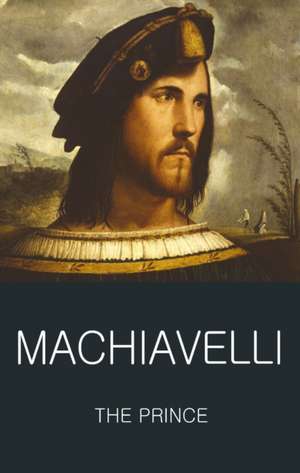
Prince: Classics of World Literature
Autor Niccolò Machiavelli Traducere de C. E. Detmolden Limba Engleză Paperback – 5 ian 1993
Observăm că, în ciuda abundenței de tratate etice din perioada Renașterii, literatura academică a vremii suferea de o lacună majoră: absența unei analize pragmatice a puterii, decuplată de moralitatea creștină. The Prince a venit să umple acest gol, devenind fundamentul filosofiei politice moderne prin prioritizarea rezultatelor concrete în fața idealurilor abstracte. Suntem de părere că această ediție din seria Collins Classics reușește să păstreze forța brută a argumentației lui Niccolo Machiavelli, oferind cititorului acces direct la mecanismele conducerii de stat. Textul extinde cadrul propus de Machiavelli: Selected Political Writings cu date noi din contextul istoric al Italiei secolului al XVI-lea, punând accent pe distincția dintre conducerea prin „virtù” și cea dobândită prin noroc sau „cruzime criminală”. Remarcăm structura riguroasă a capitolelor, care deconstruiește calitățile necesare unui principe — de la gestionarea armatelor până la arta de a fi temut fără a fi urât. Această lucrare se raportează la Discourses on Livy (Discorsi) ca o piesă complementară: dacă în Discorsi autorul își exprima preferința pentru republică, în The Prince el analizează anatomia monarhiei și a statelor noi, tratând ambele forme de guvernare ca structuri de putere ce necesită prudență și calcul strategic. Stilul este unul tăios, cu o logică liniară ce refuză eufemismele, reflectând experiența diplomatică a autorului în misiuni pentru Republica Florentină. Față de alte ediții, precum The Prince (Special Student Edition), volumul de față se concentrează pe textul clasic, oferind o poartă de intrare esențială în studiul științelor politice și al constituționalismului european.
Din seria Classics of World Literature
-
 Preț: 44.39 lei
 -
 Preț: 43.91 lei
 -
 Preț: 46.25 lei
 -
 Preț: 44.86 lei
 -
 Preț: 44.51 lei
 -
 Preț: 43.10 lei
 -
 Preț: 45.09 lei
 -
 Preț: 46.55 lei
 -
 Preț: 49.05 lei
 -
 Preț: 50.72 lei
 -
 Preț: 50.05 lei
 -
 Preț: 48.77 lei
 -
 Preț: 46.92 lei
 -
 Preț: 45.48 lei
 -
 Preț: 47.64 lei
 -
 Preț: 44.09 lei
 -
 Preț: 44.98 lei
 -
 Preț: 55.43 lei
 -
 Preț: 47.42 lei
 -
 Preț: 50.52 lei
 -
 Preț: 53.85 lei
 -
 Preț: 44.08 lei
 -
 Preț: 43.46 lei
 -
 Preț: 42.36 lei
 -
 Preț: 43.47 lei
 -
 Preț: 42.78 lei
 -
 Preț: 45.89 lei
 -
 Preț: 42.87 lei
 -
 Preț: 44.16 lei
 -
 Preț: 45.05 lei
 -
 Preț: 47.32 lei
 -
 Preț: 46.41 lei
 -
 Preț: 47.21 lei
 -
 Preț: 48.52 lei
 -
 Preț: 42.93 lei
 -
 Preț: 42.25 lei
Preț: 42.81 lei
Carte disponibilă
Livrare economică 09-23 noiembrie
Livrare express 23-29 octombrie pentru 14.68 lei
Specificații
ISBN-10: 1853267759
Pagini: 176
Dimensiuni: 127 x 198 x 10 mm
Greutate: 0.1 kg
Ediția:New
Editura: WORDSWORTH EDITIONS LTD
Colecția Classics of World Literature
Seria Classics of World Literature
Locul publicării:United Kingdom
V-ar putea interesa
-
 House of CardsMichael DobbsPreț: 79.56 lei
 -
 Algorithms to Live ByBrian ChristianPreț: 79.66 lei
 -
 Purple CowSeth Godin-20%Preț: 62.24 lei77.87 lei
 -
 Fooled by RandomnessNassim Nicholas TalebPreț: 93.74 lei
 -
 Thinking, Fast and SlowDaniel Kahneman-27%Preț: 90.79 lei123.57 leiRecomandat
 -
 World OrderKissingerPreț: 94.27 lei
 -
 Games People PlayEric Berne-26%Preț: 62.47 lei84.96 lei
 -
 The Importance of Being EarnestOscar Wilde-19%Preț: 20.14 lei24.93 lei
 -
 Preț: 24.96 lei
 -
 Romeo & JulietWilliam Shakespeare-19%Preț: 20.29 lei24.96 lei
 -
 Preț: 38.44 lei
 -
 100 Best-Loved PoemsPhilip Smith-18%Preț: 23.62 lei28.88 lei
 -
 Today Everything ChangesAndy McNab-35%Preț: 22.99 lei35.16 lei
 -
 The Catcher in the Rye. InterpretationshilfeNigel TookeyPreț: 45.75 lei
 -
 What I Know Now about SuccessEllyn SpraginsPreț: 73.68 lei
 -
 -25%Preț: 60.79 lei80.55 lei
 -
 -25%Preț: 60.45 lei80.33 lei
 -
 Preț: 43.80 lei
 -
 Doyle Brunson's Super SystemDoyle BrunsonPreț: 175.17 lei
 -
 RumiJonathan StarPreț: 59.24 lei
 -
 Tools of TitansTimothy Ferriss-22%Preț: 152.86 lei195.99 lei
 -
 UlyssesJames JoycePreț: 41.38 lei
 -
 Finnegans WakeJames JoycePreț: 40.75 lei
 -
 A Portrait of the Artist as a Young ManJames JoycePreț: 36.70 lei
 -
 Preț: 159.88 lei
 -
 Les Fleurs du MalCharles BaudelairePreț: 54.46 lei
De ce să citești această carte
Recomandăm această carte oricărui student la științe politice sau lider în devenire care dorește să înțeleagă rădăcinile realismului politic. Prin The Prince, cititorul câștigă o perspectivă lucidă asupra modului în care se exercită influența și autoritatea, învățând să distingă între imaginea publică și necesitatea strategică. Este o lectură fundamentală pentru a înțelege cum s-a format gândirea politică occidentală modernă, dincolo de mitul „machiavelismului” vulgar.
Despre autor
Niccolo Machiavelli (1469-1527) a fost un diplomat, filosof și istoric florentin, considerat astăzi părintele științei politice moderne. Cariera sa în serviciul public al Florenței i-a permis să observe direct manevrele politice ale unor figuri precum Cesare Borgia sau Ludovic al XII-lea, experiențe care au cristalizat viziunea sa asupra pragmatismului de stat. După revenirea familiei Medici la putere, Machiavelli s-a retras la ferma sa, unde a redactat cele mai importante lucrări ale sale, inclusiv The Prince și Discorsi, redefinind pentru totdeauna modul în care societatea raportează etica la exercițiul puterii.
Descriere scurtă
Written in 1513 for the Medici, following their return to power in Florence, The Prince is a handbook on ruling and the exercise of power. It remains as relevant today as it was in the sixteenth century. Widely quoted in the Press and in academic publications, The Prince has direct relevance to the issues of business and corporate governance confronting global corporations as they enter a new millennium.
Much of what Machiavelli wrote has become the common currency of realpolitik, yet still his ideas retain the power to shock and annoy. In the words of Norman Stone, The Prince is 'a manual of man-management that would suit a great many parts of the modern world'.
Textul de pe ultima copertă
Descriere
'A prince must not have any other object nor any other thought...but war, its institutions, and its discipline; because that is the only art befitting one who commands.'When Machiavelli's brief treatise on Renaissance statecraft and princely power was posthumously published in 1532, it generated a debate that has raged unabated until the present day. Based upon Machiavelli's first-hand experience as an emissary of the Florentine Republic to the courts of Europe, The Prince analyses the usually violent means by which men seize, retain, and lose political power. Machiavelli added a dimension of incisive realism to one of the major philosophical and political issues of his time, especially the relationship between public deeds and private morality. His book provides a remarkably uncompromising picture of the true nature of power, no matter in what era or by whom it is exercised.This fluent new translation is accompanied by comprehensive notes and an introduction that considers the true purpose of The Prince and dispels some of the myths associated with it. ABOUT THE SERIES: For over 100 years Oxford World's Classics has made available the widest range of literature from around the globe. Each affordable volume reflects Oxford's commitment to scholarship, providing the most accurate text plus a wealth of other valuable features, including expert introductions by leading authorities, helpful notes to clarify the text, up-to-date bibliographies for further study, and much more.
Recenzii
“Manuela Scarci’s excellent translation of Machiavelli’s most (in)famous work is accessible while at the same time respectful of his stylistic dignity. Welcome are this edition’s copious explanatory notes and helpful cross-references. Pleasing too are the accompanying extensive selections from the Discourses, along with ample portions of the Florentine Histories, The Art of War, and various literary works—all thoughtfully curated to substantiate the editor’s injunction against reliance solely on The Prince for an understanding of its author. And Jason Blahuta provides a provocative and learned introduction. He deftly places The Prince in the context of Machiavelli’s Renaissance, of his city, of his other works, and of his persistent themes. A great resource for a curious intellect, as well as for a university course in political thought.” — Timothy J. Lukes, Santa Clara University
“Scarci’s translation is clear and elegant, and it provokes the experienced reader with several subtle and intriguing choices. Blahuta includes relevant selections from eight of Machiavelli’s other works, as well as three letters, such that key themes of The Prince emerge more visibly within the context of Machiavelli’s overall project (and in sometimes surprising ways). This edition will be a useful resource for beginners and specialists alike.” — Kevin S. Honeycutt, Mercer University
“The book is meticulously structured…. [Its] centerpiece is a detailed analysis of The Prince, complemented by carefully selected appendices that include passages from “Discourses on Livy,” “Florentine Histories,” and other lesser-known works by Machiavelli.… This book is a comprehensive and accessible guide to Machiavelli’s works, offering a multifaceted view of his contributions to political theory and their enduring impact.” — Sevgican Akça, Teaching Philosophy
Cuprins
A Note on the Translation
Chronology
Map
The Prince
Dedicatory Letter
I: How Many Are the Kinds of Principalities and in What Modes They Are Acquired
II: Of Hereditary Principalities
III: Of Mixed Principalities
IV: Why the Kingdom of Darius Which Alexander Seized Did Not Rebel from His Successors after Alexander's Death
V: How Cities or Principalities Which Lived by Their Own Laws before They Were Occupied Should Be Administered
VI: Of New Principalities That Are Acquired through One's Own Arms and Virtue
VII: Of New Principalities That Are Acquired by Others' Arms and Fortune
VIII: Of Those Who Have Attained a Principality through Crimes
IX: Of the Civil Principality
X: In What Mode the Forces of All Principalities Should Be Measured
XI: Of Ecclesiastical Principalities
XII: How Many Kinds of Military There Are and Concerning Mercenary Soldiers
XIII: Of Auxiliary, Mixed, and One's Own Soldiers
XIV: What a Prince Should Do Regarding the Military
XV: Of Those Things for Which Men and Especially Princes Are Praised or Blamed
XVI: Of Liberality and Parsimony
XVII: Of Cruelty and Mercy, and Whether It Is Better to Be Loved Than Feared, or the Contrary
XVIII: In What Mode Faith Should Be Kept by Princes
XIX: Of Avoiding Contempt and Hatred
XX: Whether Fortresses and Many Other Things Which Are Made and Done by Princes Every Day Are Useful or Useless
XXI: What a Prince Should Do to Be Held in Esteem
XXII: Of Those Whom Princes Have as Secretaries
XXIII: In What Mode Flatterers Are to Be Avoided
XXIV: Why the Princes of Italy Have Lost Their States
XXV: How Much Fortune Can Do in Human Affairs, and in What Mode It May Be Opposed
XXVI: Exhortation to Seize Italy and to Free Her from the Barbarians
App: Machiavelli's Letter of December 10, 1513
Glossary
Bibliography
Index of Proper Names