
Artificial Intelligence in HCI: Lecture Notes in Computer Science, cartea 13336
Editat de Helmut Degen, Stavroula Ntoaen Limba Engleză Paperback – 15 mai 2022
A total of 1271 papers and 275 posters included in the 39 HCII 2022 proceedings volumes. AI-HCI 2022 includes a total of 39 papers; they are grouped thematically as follows: Human-Centered AI; Explainable and Trustworthy AI; UX Design and Evaluation of AI-Enabled Systems; AI Applications in HCI.
Din seria Lecture Notes in Computer Science
- 20%
 Preț: 558.53 lei
 - 20%
 Preț: 571.88 lei
 - 20%
 Preț: 675.83 lei
 - 20%
 Preț: 1020.28 lei
 - 20%
 Preț: 620.33 lei
 - 20%
 Preț: 560.93 lei
 - 20%
 Preț: 633.70 lei
 - 20%
 Preț: 678.21 lei
 - 20%
 Preț: 1359.66 lei
 - 20%
 Preț: 560.93 lei
 - 20%
 Preț: 733.68 lei
 - 20%
 Preț: 828.44 lei
 - 15%
 Preț: 558.12 lei
 - 20%
 Preț: 793.92 lei
 - 20%
 Preț: 560.93 lei
 - 20%
 Preț: 748.63 lei
 - 20%
 Preț: 562.49 lei
 - 20%
 Preț: 1246.46 lei
 - 20%
 Preț: 449.81 lei
 - 20%
 Preț: 556.96 lei
 - 20%
 Preț: 562.49 lei
 - 20%
 Preț: 851.78 lei
 - 20%
 Preț: 313.10 lei
 - 18%
 Preț: 945.44 lei
 - 20%
 Preț: 314.86 lei
 - 20%
 Preț: 560.93 lei
 - 20%
 Preț: 313.87 lei
 - 20%
 Preț: 1033.45 lei
 - 20%
 Preț: 563.29 lei
 - 20%
 Preț: 733.68 lei
 - 20%
 Preț: 1137.10 lei
 - 20%
 Preț: 735.28 lei
 - 20%
 Preț: 1079.23 lei
 - 20%
 Preț: 584.42 lei
 - 20%
 Preț: 791.54 lei
 - 15%
 Preț: 672.87 lei
 - 20%
 Preț: 1032.47 lei
 - 20%
 Preț: 617.17 lei
 - 20%
 Preț: 1022.15 lei
 - 20%
 Preț: 984.64 lei
 - 20%
 Preț: 620.33 lei
 - 20%
 Preț: 402.28 lei
 - 20%
 Preț: 316.28 lei
 - 20%
 Preț: 663.69 lei
 - 20%
 Preț: 320.24 lei
 - 20%
 Preț: 343.12 lei
 - 20%
 Preț: 606.22 lei
Preț: 666.87 lei
Preț vechi: 833.58 lei
-20%
Puncte Express: 1000
Carte tipărită la comandă
Livrare economică 19 noiembrie-03 decembrie
Livrare prin curier în România Termenul estimat este afișat lângă disponibilitate.
Transport gratuit pentru acest produs Plată online sau ramburs, în funcție de opțiunile comenzii.
Retur gratuit în 14 zile Comandă securizată și suport în română.
Specificații
ISBN-13: 9783031056420
ISBN-10: 3031056426
Pagini: 636
Ilustrații: XXIII, 612 p. 45 illus.
Dimensiuni: 155 x 235 x 34 mm
Greutate: 0.95 kg
Ediția:1st edition 2022
Editura: Springer
Colecția Lecture Notes in Computer Science
Seria Lecture Notes in Computer Science
Locul publicării:Cham, Switzerland
ISBN-10: 3031056426
Pagini: 636
Ilustrații: XXIII, 612 p. 45 illus.
Dimensiuni: 155 x 235 x 34 mm
Greutate: 0.95 kg
Ediția:1st edition 2022
Editura: Springer
Colecția Lecture Notes in Computer Science
Seria Lecture Notes in Computer Science
Locul publicării:Cham, Switzerland
V-ar putea interesa
-
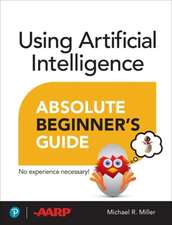 Using Artificial Intelligence Absolute Beginner's GuideMichael Miller-20%Preț: 194.58 lei243.22 lei
 -
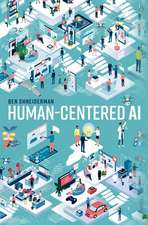 Human-Centered AIBen Shneiderman-31%Preț: 107.71 lei155.14 lei
 -
 If Anyone Builds It, Everyone DiesEliezer Yudkowsky-20%Preț: 130.65 lei163.30 lei
 -
 -20%Preț: 413.80 lei517.25 lei
 -
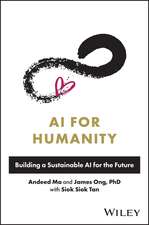 -20%Preț: 199.03 lei248.80 lei
 -
 AI + the New Human FrontierErica OrangePreț: 162.50 lei
 -
 Agentic AI For DummiesPam Baker-20%Preț: 145.74 lei182.17 lei
 -
 The Essential Book of AIAnne Rooney-20%Preț: 74.61 lei93.27 lei
 -
 Preț: 137.81 lei
 -
 The AI ConEmily M. BenderPreț: 151.96 lei
 -
 Preț: 77.59 lei
 -
 HCI International 2020 - PostersConstantine Stephanidis-20%Preț: 512.24 lei640.30 lei
 -
 Human Interface and the Management of InformationHirohiko Mori-20%Preț: 790.92 lei988.64 lei
 -
 Human-Computer InteractionMasaaki Kurosu-20%Preț: 403.85 lei504.82 lei
 -
 HCI in Business, Government and OrganizationsFiona Fui-Hoon Nah-20%Preț: 1498.97 lei1873.70 lei
 -
 HCI International 2024 PostersConstantine Stephanidis-20%Preț: 573.09 lei716.37 lei
 -
 Human-Centered Software EngineeringMarta Kristín Lárusdóttir-20%Preț: 708.60 lei885.75 lei
 -
 Explainable and Transparent AI and Multi-Agent SystemsDavide Calvaresi-20%Preț: 389.77 lei487.21 lei
 -
 Empire of AIKaren HaoPreț: 144.98 lei
Cuprins
Ethics, Trust and Explainability.- Can you Trust the Black Box? The Effect of Personality Traits on Trust in AI-Enabled User Interfaces.- Towards Design Principles for User-Centric Explainable AI in Fraud Detection.- Disentangling Trust and Anthropomorphism Toward the Design of Human-Centered AI Systems.- Designing a Gender-Inclusive Conversational Agent for Pair Programming: An Empirical Investigation.- The Challenge of Digital Education and Equality in Taiwan.- Morality Beyond the Lines: Detecting Moral Sentiment using AI-generated Synthetic Context.- Whoops! Something Went Wrong: Errors, Trust, and Trust Repair Strategies in Human Agent Teaming.- What Does it Mean to Explain? A User-Centered Study on AI Explainability.- Human-Centered AI.- How Intuitive Is It? Comparing Metrics for Attitudes in Argumentation with a Human Baseline.- A Contextual Bayesian User Experience Model for Scholarly Recommender Systems.- From a Workshop to a Framework for Human-Centered Artificial Intelligence.- Collaborative Human-AI Sensemaking for Intelligence Analysis.- Design Intelligence - Taking Further Steps Towards New Methods and Tools for Designing in the Age of AI.- Towards Incorporating AI into the Mission Planning Process.- Putting a Face on Algorithms: Personas for Modelling Artificial Intelligence.- Tool or Partner: The Designer’s Perception of an AI-style Generating Service.- Human-Centered Artificial Intelligence Considerations and Implementations: A Case Study from Software Product Development.- Sage Advice? The Impacts of Explanations for Machine Learning Models on Human Decision-Making in Spam Detection.- HCD3A: An HCD Model to Design Data-Driven Apps.- AI applications in HCI.- Visual Prediction Based on Photorealistic Style Transfer.- Automatic Generation of Machine Learning Synthetic Data using ROS.- A Questionnaire Data Clustering Method Based on Optimized K-Modes Algorithm.- A Deep Learning Based Multi-modal Approach for Images and Texts Recommendation.- Pet Dogs’ and Their Owners’ Reactions toward Four Differently Shaped Speaking Agents: A Report on Qualitative Results in a Pilot Test.- Investigating Viewer’s Reliance on Captions Based on Gaze Information.- KLSI Methods for Human Simultaneous Interpretation and Towards Building a Simultaneous Machine Translation System Reflecting the KLSI Methods.- Development of Real Environment Datasets Creation Method for Deep Learning to Improve Quality of Depth Image.- Assisting Text Localization and Transcreation Tasks Using AI-based Masked Language Modeling.- A Preliminary Study for Identification of Additive Manufactured Objects with Transmitted Images.- AI Applications in Smart Environments.- A Tactile User Device to Interact with Smart Environments.- Towards an Ambient Smart City: Using Augmented Reality to Geospatially Filter the Right Airbnb via Artificial Intelligence.- Why Developing Simulation Capabilities Promotes Sustainable Adaptation to Climate Change.- Natural Interaction with Traffic Control Cameras through Multimodal Interfaces.- Building Conversational Agents for Military Training: Towards a Virtual Wingman.- Toward Automated Mixed Reality Interface Design: An Evolutionary Optimization Approach.- Estimation of Learners’ Engagement Using Face and Body Features by Transfer Learning.