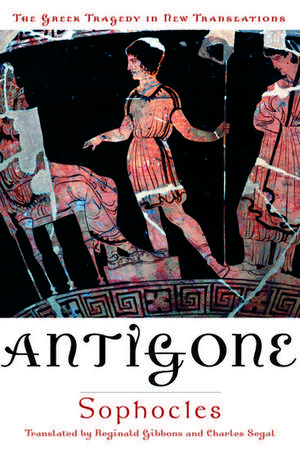
Antigone
Autor Sophocles Reginald Gibbons, Charles Segalen Limba Engleză Paperback – 18 oct 2007
Tragedia clasică Antigone de Sophocles reprezintă un pilon fundamental al literaturii universale, explorând tensiunea insurmontabilă dintre legea cetății și legile nescrise ale divinității și familiei. Suntem de părere că această ediție din seria Penguin Little Black Classics oferă o poartă de acces ideală către teatrul antic, reușind să condenseze într-un format compact esența dramei tebane. Premisa este una de o intensitate brutală: după un război civil fratricid, noul rege Creon interzice îngroparea lui Polyneices, lăsându-l pradă vulturilor, în timp ce Antigone alege să sfideze moartea pentru a-și onora fratele.
Putem afirma că ceea ce distinge acest volum este structura sa didactică riguroasă. Spre deosebire de The Complete Sophocles de Peter Burian, care oferă o perspectivă de ansamblu asupra întregului ciclu teban, acest volum se concentrează pe analiza profundă a contextului original al reprezentației din anul 441 î.Hr. și pe evoluția textului către formele sale moderne. Reținem integrarea unor secțiuni dedicate temelor filosofice abordate de Hegel sau Butler, dar și referințele la producții contemporane, precum cea a Teatrului Național din 2012. Ca și Sophocles' Antigone de Diane J. Rayor, lucrarea urmărește să facă textul accesibil pentru studii academice, însă ediția de față pune un accent deosebit pe dispozitivele dramatice și pe funcția corului, elemente pe care Sophocles le-a revoluționat în cariera sa.
În contextul operei sale, Antigone se situează alături de The Theban Plays și Oedipus the King and Other Tragedies, fiind piesa în care autorul demonstrează cea mai mare măiestrie în conturarea unor caractere complexe, care nu sunt simple arhetipuri, ci ființe dominate de pasiuni și dileme etice profunde.
Preț: 89.38 lei
Carte disponibilă
Livrare economică 16-30 noiembrie
Specificații
ISBN-10: 0195143108
Pagini: 208
Dimensiuni: 132 x 201 x 18 mm
Greutate: 0.23 kg
Editura: Oxford University Press
Colecția OUP USA
Locul publicării:New York, United States
V-ar putea interesa
-
 Pride and PrejudiceJane AustenPreț: 28.01 lei
 -
 Sense and SensibilityJane AustenPreț: 28.01 lei
 -
 Great ExpectationsCharles DickensPreț: 28.01 lei
 -
 Tess of the D'UrbervillesThomas HardyPreț: 28.01 lei
 -
 The Portrait of a LadyHenry JamesPreț: 28.01 lei
 -
 EducatedTara Westover-24%Preț: 65.75 lei86.88 leiRecomandat
 -
 UlyssesJames Joyce-39%Preț: 69.49 lei113.40 lei
 -
 Cannery RowJohn Steinbeck-26%Preț: 57.74 lei78.07 lei
 -
 Vanity FairWilliam Makepeace Thackeray-20%Preț: 68.02 lei84.52 lei
 -
 Sense and SensibilityJane Austen-25%Preț: 49.62 lei66.16 lei
 -
 MiddlemarchGeorge Eliot-19%Preț: 68.34 lei84.69 lei
 -
 Ethan FromeEdith WhartonPreț: 63.80 lei
 -
 Preț: 58.99 lei
 -
 VisitFriedrich Durrenmatt-35%Preț: 50.59 lei77.46 lei
 -
 Preț: 38.44 lei
 -
 Three Books of Occult PhilosophyHenry C Agrippa-16%Preț: 452.62 lei540.78 lei
 -
 Preț: 255.44 lei
 -
 Oedipus RexSophoclesPreț: 52.99 lei
 -
 The Complete Plays of Jean RacineJean RacinePreț: 207.64 lei
 -
 Naruto: Kakashi's Story--Lightning in the Frozen SkyMasashi Kishimoto-18%Preț: 53.51 lei64.92 lei
 -
 Goodnight Punpun, Vol. 1Inio AsanoPreț: 122.22 lei
 -
 -19%Preț: 81.81 lei100.63 lei
 -
 to drink coffee with a ghostAmanda Lovelace-16%Preț: 61.73 lei73.45 lei
 -
 Talking HeadsAlan Bennett-19%Preț: 63.58 lei78.67 lei
 -
 LilithGeorge MacdonaldPreț: 96.23 lei
 -
 Far from the Madding CrowdThomas HardyPreț: 28.01 lei
 -
 Death and the MaidenAriel DorfmanPreț: 77.37 lei
De ce să citești această carte
Recomandăm această ediție oricărui cititor pasionat de literatură clasică sau filosofie politică. Veți câștiga o înțelegere clară a mecanismelor tragediei grecești și a modului în care un text vechi de peste două milenii continuă să influențeze dezbaterile actuale despre drepturile omului și autoritatea statului. Este un instrument de studiu esențial datorită aparatului critic bogat care explică contextul istoric și teatral al Atenei antice.
Despre autor
Sophocles (c. 497–406 î.Hr.) este unul dintre cei trei mari autori de tragedie ai Greciei Antice a căror operă a supraviețuit timpului. De-a lungul unei cariere de peste cincizeci de ani în Atena, a scris peste 120 de piese, câștigând 24 de competiții dramatice la festivalurile Dionysia și Lenaea. Inovațiile sale, precum introducerea celui de-al treilea actor și reducerea rolului corului în favoarea dialogului dintre personaje, au transformat fundamental structura dramei. Cele mai cunoscute lucrări ale sale rămân piesele tebane, centrate pe destinele tragice ale lui Oedip și ale copiilor săi, Sophocles fiind recunoscut pentru profunzimea psihologică oferită personajelor sale.
Descriere
Recenzii
"These two new additions to Oxford's 'Greek Tragedy in New Translations' series only add to the luster of the previous releases. Each is firmly packed with insightful introductions, comprehensive and numbered notes, glossaries, and up-to-date bibliographies (the plays' texts take up about half of each volume). The collaboration of poet and scholar in each volume produces a language that is easy to read and easy to speak (compare, for instance, the Watchman's first lines in Shapiro and Burian's Agamemnon with those in Lattimore's 1947 translation). Each volume's introduction presents the play's action and themes with some detail. The translators' notes describe the linguistic twists and turns involved in rendering the text into a modern poetic language. Both volumes are enthusiastically recommended for academic libraries, theatre groups, and theatre departments."--Library Journal [starred review of Oresteia and Antigone]
"Sophocles' text is inexhaustibly actual. It is also, at many points, challenging and remote from us. The Gibbons-Segal translation, with its rich annotations, conveys both the difficulties and the formidable immediacy. The choral odes, so vital to Sophocles' purpose, have never been rendered with finer energy and insight. Across more than two thousand years, a great dark music sounds for us."--George Steiner, Churchill College, Cambridge
Notă biografică
Cuprins
Introduction
Sophocles in his time
Antigone as Tragedy
Antigone as Performance
Antigone in the Modern World
Further exploration
ANTIGONE
Notes on the play-text
Textul de pe ultima copertă
The sons of Oedipus have killed each other on the battlefield, but Thebes' new ruler, their uncle Kreon, decrees that only Eteokles will be granted a hero's burial; Polyneikes, who attacked his own city, is left to rot in dishonor. Their sister Antigone, enraged by the king's heartlessness, defies him by burying Polyneikes' body herself. That decision dooms her, and the consequences destroy Kreon's wife and son. A play that begins with a woman's defiance of a tyrant ends in the havoc caused by Eros, the god of love. A drama abounding with moral conundrums, Antigone is presented in an extraordinary new translation by Robert Bagg, modern in idiom while faithful to the original Greek. Ideally suited for reading, teaching, or performing, this is Sophocles for a new generation to discover and admire.