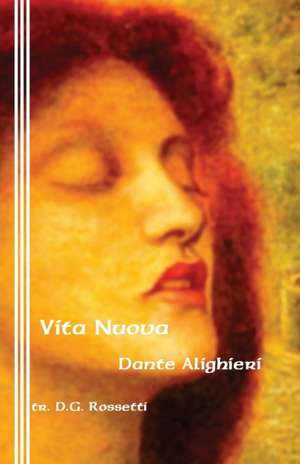
Vita Nuova: The New Life
Autor Dante Alighieri Traducere de Dante Gabriel Rossetti Design de Sasha Newbornen Limba Engleză Paperback – 31 aug 2011
Preț: 62.84 lei
Puncte Express: 94
Carte disponibilă
Livrare economică 12-26 noiembrie
Livrare prin curier în România Termenul estimat este afișat lângă disponibilitate.
Transport gratuit de la 400.00 lei Plată online sau ramburs, în funcție de opțiunile comenzii.
Retur gratuit în 14 zile Comandă securizată și suport în română.
Specificații
ISBN-13: 9780942208474
ISBN-10: 0942208471
Pagini: 104
Dimensiuni: 140 x 216 x 6 mm
Greutate: 0.14 kg
Editura: BANDANNA BOOKS
ISBN-10: 0942208471
Pagini: 104
Dimensiuni: 140 x 216 x 6 mm
Greutate: 0.14 kg
Editura: BANDANNA BOOKS
V-ar putea interesa
-
 InfernoDante AlighieriPreț: 28.01 lei
 -
 The Portable DanteDante AlighieriPreț: 145.01 lei
 -
 The Divine Comedy of Dante Alighieri: Volume 1: InfernoDante Alighieri-14%Preț: 117.47 lei136.51 lei
 -
 -16%Preț: 204.45 lei244.14 lei
 -
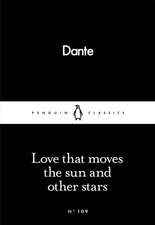 Love That Moves the Sun and Other StarsDante Alighieri-39%Preț: 17.49 lei28.48 lei
 -
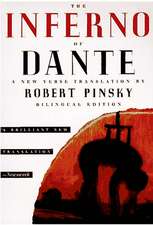 The Inferno of DanteDantePreț: 112.11 lei
 -
 The Birth of Tragedy and The Case of WagnerFriedrich NietzschePreț: 78.08 lei
 -
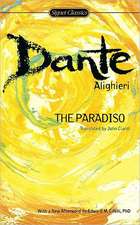 The ParadisoDante AlighieriPreț: 49.82 lei
 -
 First Italian ReaderStanley Applebaum-19%Preț: 71.42 lei88.48 lei
 -
 Ezra PoundEzra PoundPreț: 69.31 lei
 -
 The Divine ComedyDante AlighieriPreț: 192.67 lei
 -
 Why Dante Matters: An Intelligent Person's GuideProfessor John Took-27%Preț: 103.96 lei142.65 lei
 -
 RimeRichard Lansing-8%Preț: 487.69 lei530.10 lei
 -
 PurgatoryDante AlighieriPreț: 49.79 lei
 -
 The ProphetKahlil GibranPreț: 27.21 lei
 -
 La Vita NuovaDante Alighieri-35%Preț: 50.32 lei77.87 lei
 -
 DanteErich AuerbachPreț: 119.21 lei
 -
 Divine Comedy InfernoDante AlighieriPreț: 56.62 lei
 -
 Dante's New LivesElisa Brilli-14%Preț: 212.78 lei248.10 lei
 -
 The Divine ComedyDante AlighieriPreț: 46.55 lei
 -
 Complete Poems: Dual LanguageGuido Cavalcanti-20%Preț: 82.30 lei102.59 lei
 -
 Rime: Dual Language and New Verse TranslationDante AlighieriPreț: 78.14 lei
 -
 Wilson, A: Dante in LoveA. N. (Author) Wilson-16%Preț: 61.74 lei73.67 lei
Descriere
Descriere de la o altă ediție sau format:
The Vita Nuova, with its unusual blend of prose and poetry, is universally recognized as Dante's early masterpiece and provides an indispensable prequel to The Divine Comedy. Set in thirteenth-century Florence, part autobiography and part religious allegory, it traces Dante's quest to find a poetic idiom worthy of Beatrice, whom he had loved since boyhood. Her premature death plunges him into an emotional turmoil that finds release only through his faith in her continuing spiritual influence and through his determination "to write of her what has never been written of any woman". The Vita Nuova remains a central document in European culture's examination of love and the self. It is a hundred and fifty years since Dante Gabriel Rossetti's groundbreaking version of the Vita Nuova. Now Anthony Mortimer, already acclaimed as translator of Cavalcanti, Petrarch and Michelangelo, produces a verse translation that avoids Rossetti's disturbing archaisms but preserves a lyric immediacy worthy of the original. This is a Vita Nuova for the twenty-first century.
The Vita Nuova, with its unusual blend of prose and poetry, is universally recognized as Dante's early masterpiece and provides an indispensable prequel to The Divine Comedy. Set in thirteenth-century Florence, part autobiography and part religious allegory, it traces Dante's quest to find a poetic idiom worthy of Beatrice, whom he had loved since boyhood. Her premature death plunges him into an emotional turmoil that finds release only through his faith in her continuing spiritual influence and through his determination "to write of her what has never been written of any woman". The Vita Nuova remains a central document in European culture's examination of love and the self. It is a hundred and fifty years since Dante Gabriel Rossetti's groundbreaking version of the Vita Nuova. Now Anthony Mortimer, already acclaimed as translator of Cavalcanti, Petrarch and Michelangelo, produces a verse translation that avoids Rossetti's disturbing archaisms but preserves a lyric immediacy worthy of the original. This is a Vita Nuova for the twenty-first century.
Recenzii
'the Vita Nuova calls for a bold translator ... Mark Musa, who has published a well-known translation of the Divine Comedy, is much better qualified than most for the task.'Times LIterary Supplement
Notă biografică
Dante Alighieri (1265-1321), Italy's greatest poet, was born in Florence and belonged to a noble but impoverished family. His life was divided between political duties and poetry, the most of famous of which was inspired by his meeting with Bice Portinari, whom he called Beatrice, including the Vita Nuova and The Divine Comedy. Virginia Jewiss (translator/introducer) is a Dante scholar and a translator with a Ph.D. in Italian literature from Yale, where she taught for many years before joining the faculty at Johns Hopkins. Her translations include works by Luigi Pirandello, Roberto Saviano, Melania Mazzucco, Paolo Sorrentino, and Matteo Garrone. She lives in Rome and Washington, DC.
Textul de pe ultima copertă
“Cervigni and Vasta are to be complimented for their laborious and successful undertaking. This edition will be extremely useful, for it presents us with a version of the Vita nuova that will open up new interpretive and pedagogical avenues.” —Italica
“Whatever reputation this translation will gain for its scholarly accomplishments, its excellent overall design, and general ease of use is sure to reclaim a large body of lay readers and experts alike to this lesser known of Dante’s major works.” —Crisis
“An important contribution for Dante specialists.” —Library Journal
“Students and scholars of Dante and medieval philology will find much to ponder in the material so painstakingly assembled here.” —Choice
DINO S. CERVIGNI is professor of Italian at the University of North Carolina at Chapel Hill. He is the author of numerous books, as well as founder and editor of the journal Annali d’Italianistica.
EDWARD VASTA is professor emeritus of English and a fellow of the Medieval Institute at the University of Notre Dame.
“Whatever reputation this translation will gain for its scholarly accomplishments, its excellent overall design, and general ease of use is sure to reclaim a large body of lay readers and experts alike to this lesser known of Dante’s major works.” —Crisis
“An important contribution for Dante specialists.” —Library Journal
“Students and scholars of Dante and medieval philology will find much to ponder in the material so painstakingly assembled here.” —Choice
DINO S. CERVIGNI is professor of Italian at the University of North Carolina at Chapel Hill. He is the author of numerous books, as well as founder and editor of the journal Annali d’Italianistica.
EDWARD VASTA is professor emeritus of English and a fellow of the Medieval Institute at the University of Notre Dame.
“Cervigni and Vasta are to be complimented for their laborious and successful undertaking. This edition will be extremely useful, for it presents us with a version of the Vita nuova that will open up new interpretive and pedagogical avenues.” —Italica
“Whatever reputation this translation will gain for its scholarly accomplishments, its excellent overall design, and general ease of use is sure to reclaim a large body of lay readers and experts alike to this lesser known of Dante’s major works.” —Crisis
“An important contribution for Dante specialists.” —Library Journal
“Students and scholars of Dante and medieval philology will find much to ponder in the material so painstakingly assembled here.” —Choice
DINO S. CERVIGNI is professor of Italian at the University of North Carolina at Chapel Hill. He is the author of numerous books, as well as founder and editor of the journal Annali d’Italianistica.
EDWARD VASTA is professor emeritus of English and a fellow of the Medieval Institute at the University of Notre Dame.
“Whatever reputation this translation will gain for its scholarly accomplishments, its excellent overall design, and general ease of use is sure to reclaim a large body of lay readers and experts alike to this lesser known of Dante’s major works.” —Crisis
“An important contribution for Dante specialists.” —Library Journal
“Students and scholars of Dante and medieval philology will find much to ponder in the material so painstakingly assembled here.” —Choice
DINO S. CERVIGNI is professor of Italian at the University of North Carolina at Chapel Hill. He is the author of numerous books, as well as founder and editor of the journal Annali d’Italianistica.
EDWARD VASTA is professor emeritus of English and a fellow of the Medieval Institute at the University of Notre Dame.