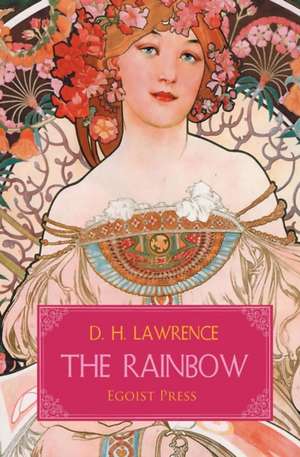
The Rainbow
Autor D. H. Lawrenceen Limba Engleză Paperback – 28 aug 2018
Suntem de părere că puține romane reușesc să captureze atât de visceral miza emancipării individuale precum o face The Rainbow. În centrul acestei saga de familie se află Ursula Brangwen, a cărei luptă pentru a-și afirma identitatea la granița dintre tradiția rurală și modernitatea urbană devine o căutare a „triumfului infinitului”. Lawrence nu scrie doar o cronică socială, ci o explorare psihologică profundă a modului în care legăturile de sânge și pasiunile erotice modelează spiritul uman pe parcursul a trei generații.
Merită menționat că autorul sfidează convențiile lingvistice ale epocii sale, integrând o imagistică biblică densă într-o narațiune despre dorință și conflict generațional. Ritmul lecturii este unul contemplativ, dar încărcat de o tensiune latentă, reflectând tranziția Angliei de la o societate agrară la una industrială. Această ediție de la WORDSWORTH EDITIONS LTD păstrează forța brută a textului care, în 1915, a fost considerat prea subversiv pentru rafturile librăriilor.
The Rainbow amintește de Rainbow Rainbow de Mary J. Greene prin structura sa genealogică și focusul pe familia de fermieri din Midlands, dar se diferențiază prin intensitatea poetică a prozei și prin radicalismul cu care Lawrence analizează fuziunea dintre fizic și spiritual. Față de Sons and Lovers, unde explorarea relațiilor mamă-fiu este aproape sufocantă, acest roman lărgește perspectiva, pregătind terenul pentru temele din Women in Love. Este o operă fundamentală pentru a înțelege viziunea lui D. H. Lawrence asupra vitalității umane strivite de mecanismele civilizației moderne.
Preț: 181.55 lei
Carte tipărită la comandă
Livrare economică 26 octombrie-09 noiembrie
Specificații
ISBN-10: 1787248518
Pagini: 446
Dimensiuni: 133 x 203 x 26 mm
Greutate: 0.56 kg
Editura: Egoist Press
V-ar putea interesa
-
 A Portrait of the Artist as a Young ManJames JoycePreț: 28.01 lei
 -
 CLASSICS RED BADGE OF COURAGEStephen CranePreț: 28.01 lei
 -
 Lady Chatterley's LoverD. H. LawrencePreț: 28.01 lei
 -
 Mrs DallowayVirginia WoolfPreț: 28.01 lei
 -
 AtonementIan McEwan-17%Preț: 59.44 lei72.04 lei
 -
 Flaubert's ParrotJulian Barnes-20%Preț: 56.14 lei70.09 lei
 -
 The House of MirthEdith Wharton-33%Preț: 48.43 lei71.79 lei
 -
 The War of the WorldsH. G. Wells-27%Preț: 46.13 lei63.60 lei
 -
 English Reformations: Religion, Politics, and Society under the TudorsChristopher Haigh-22%Preț: 396.96 lei509.91 lei
 -
 The AmbassadorsHenry JamesPreț: 57.02 lei
 -
 HamletWilliam Shakespeare-18%Preț: 23.44 lei28.60 lei
 -
 Aristotle and Dante Discover the Secrets of the UniverseBenjamin Alire SáenzPreț: 85.34 lei
 -
 BrimstoneDouglas PrestonPreț: 70.01 lei
 -
 UlyssesJames JoycePreț: 40.06 lei
 -
 Wuthering HeightsEmily BrontePreț: 30.41 lei
 -
 Women in LoveD. H. LawrencePreț: 37.47 lei
 -
 Moby DickHerman MelvillePreț: 38.63 lei
 -
 The Picture of Dorian GrayOscar WildePreț: 30.11 lei
 -
 Jane EyreCharlotte BrontePreț: 31.95 lei
 -
 Call of the Wild & White FangJack LondonPreț: 36.26 lei
 -
 Lord JimJoseph ConradPreț: 28.01 lei
 -
 Great GatsbyF. Scott FitzgeraldPreț: 29.85 lei
 -
 Robinson CrusoeDaniel DefoePreț: 36.06 lei
 -
 Sons and LoversD. H. LawrencePreț: 28.01 lei
 -
 To the LighthouseVirginia WoolfPreț: 35.64 lei
 -
 The Best Short StoriesGuy de MaupassantPreț: 36.06 lei
 -
 The Age of InnocenceEdith WhartonPreț: 28.01 lei
 -
 Hard TimesCharles DickensPreț: 28.01 lei
De ce să citești această carte
Recomandăm această carte cititorilor care apreciază literatura clasică de introspecție și marile saga de familie. The Rainbow oferă o perspectivă fascinantă asupra evoluției rolului femeii în societate și a luptei pentru autonomie într-o lume în schimbare. Este un câștig cert pentru cei care doresc să descopere un stil narativ care îmbină realismul social cu un misticism senzorial unic, specific unuia dintre cei mai controversați autori britanici.
Despre autor
D. H. Lawrence (1885–1930) a fost un scriitor și poet englez a cărui operă reprezintă o critică extinsă la adresa efectelor dezumanizante ale industrializării. Printre cele mai cunoscute romane ale sale se numără Sons and Lovers, The Rainbow și Lady Chatterley's Lover. Din cauza explorării oneste a sexualității și a instinctelor umane, Lawrence a fost adesea ținta cenzurii și a persecuțiilor oficiale, trăind o mare parte din viață în exil. Deși la moartea sa era văzut de mulți ca un autor controversat, critici precum E. M. Forster l-au reevaluat drept cel mai mare romancier imaginativ al generației sale.
Descriere scurtă
Set in the rural Midlands, The Rainbow chronicles the lives of three generations of the Brangwen family over a period of more than 60 years, setting them against the emergence of modern England. When Tom Brangwen marries a Polish widow, Lydia Lensky, and adopts her daughter Anna as his own, he is unprepared for the conflict and passion that erupts between them. All are seeking individual fulfilment, but it is Ursula, Anne's spirited daughter, who in her search for self-knowedge, becomes the focus of Lawrence's examination of relationships and the conflicts they bring, and the inextricable mingling of the physical and the spiritual. Suffused with Biblical imagery, The Rainbow addresses searching human issues in a setting of precise and vivid detail.
In his introduction James Wood discusses Lawrence's writing style and the tensions and themes of The Rainbow. This Penguin edition reproduces the Cambridge text, which provides a text as close as possible to Lawrence's original. It also includes suggested further reading, a fragment of 'The Sisters II' from his first draft, and chronologies of Lawrence's life and of The Rainbow's Brangwen family.
D.H. Lawrence (1885-1930), English novelist, storywriter, critic, poet and painter, one of the greatest figures in 20th-century English literature. Lawrence published Sons and Lovers in 1913, but The Rainbow, completed in 1915, was declared obscene and banned two months after first publication; and for three years he could not find a publisher for Women in Love, which he completed in 1917. His last novel, Lady Chatterley's Lover, was published in 1928, but banned in England and America.
If you enjoyed The Rainbow, you might like Lawrence's Women in Love, also available in Penguin Classics.
'A brave and important book, passionate and wildly ambitious'
Independent on Sunday
Textul de pe ultima copertă
Notă biografică
David Herbert Lawrence was born 11 September 1885 in Eastwood, Nottinghamshire. His father was a miner and his mother was a schoolteacher. In 1906 he took up a scholarship at Nottingham University to study to be a teacher. His first novel, The White Peacock, was published in 1911. Lawrence gave up teaching in 1911 due to illness. In 1912 he met and fell in love with a married woman, Frieda Weekley, and they eloped to Germany together. They were married in 1914 and spent the rest of their lives together travelling around the world. In 1915 Lawrence published The Rainbow which was banned in Great Britain for obscenity. Women in Love continues the story of the Brangwen family begun in The Rainbow and was finished by Lawrence in 1916 but not published until 1920. Another of Lawrence's most famous works, Lady Chatterley's Lover, was privately printed in Florence in 1928 but was not published in Britain until 1960, when it was the subject of an unsuccessful court case brought against it for obscenity. As well as novels, Lawrence also wrote in a variety of other genres and his poetry, criticism and travel books remain highly regarded. He was also a keen painter. D.H. Lawrence died in France on 2 March 1930.
Rachel Cusk (Introducer)
Rachel Cusk was born in Canada in 1967 and moved to the United Kingdom in 1974. She is the author of nine novels and three works of non-fiction. She has won and been shortlisted for numerous prizes: Outline (2014) was shortlisted for the Folio Prize, the Goldsmiths Prize, the Baileys Prize, the Giller Prize and the Canadian Governor General's Award. It was also picked by the New York Times as one of the top ten books of the year. Its follow-up, Transit (2016), was chosen as a book of the year by the Observer, New Statesman, Guardian and Spectator. In 2003, Rachel Cusk was nominated by Granta magazine as one of 20 'Best of Young British Novelists'. In 2015 her version of Euripides' Medea was put on at the Almeida Theatre with Rupert Goold directing and was shortlisted for the Susan Smith Blackburn Prize.
Recenzii
Descriere
To be oneself was a supreme, gleaming triumph of infinity This is the insight that flashes upon Ursula as she struggles to assert her individuality and to stand separate from her family and her surroundings on the brink of womanhood and the modern world. In The Rainbow (1915) Lawrence challenged the customary limitations of language and convention to carry into the structure of his prose the fascination with boundaries and space that characterize the entire novel. Condemned and suppressed on its first publication for its open treatment of sexuality and its `unpatriotic' spirit, the novel chronicles the lives of three generations of the Brangwen family over a period of more than 60 years, setting them against the emergence of modern England. The central figure of ursula becomes the focus of Lawrence's examination of relationships and the conflicts they bring, and the inextricable mingling of the physical and the spiritual. Suffused with biblical imagery, The Rainbow addresses searching human issues in a setting of precise and vivid detail. In her introduction to this edition Kate Flint illuminates Lawrence's aims and achievements against the background of the burgeoning century. ABOUT THE SERIES: For over 100 years Oxford World's Classics has made available the widest range of literature from around the globe. Each affordable volume reflects Oxford's commitment to scholarship, providing the most accurate text plus a wealth of other valuable features, including expert introductions by leading authorities, helpful notes to clarify the text, up-to-date bibliographies for further study, and much more.