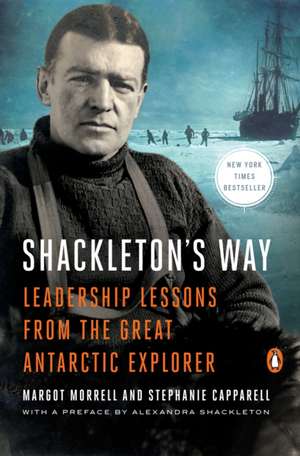
Shackleton's Way
Autor Margot Morrell, Stephanie Capparellen Limba Engleză Paperback – aug 2002
Subliniem faptul că, spre deosebire de Leading at The Edge de Dennis Perkins, care utilizează povestea expediției Endurance pentru a extrage principii generale de reziliență, Shackleton's Way realizează o transpunere mult mai pragmatică și structurată a metodelor de lucru în contextul corporației moderne. Cititorul care a aplicat ideile din Leading at The Edge va găsi aici o metodologie detaliată despre selecția personalului și menținerea moralului în condiții de resurse limitate, elemente care lipsesc adesea din literatura de management teoretică. Notăm cu interes colaborarea dintre Margot Morrell, cercetător dedicat operei lui Shackleton, și Stephanie Capparell, jurnalist la The Wall Street Journal, care reușesc să transforme o epopee a supraviețuirii într-un manual tactic de leadership umanist. Reținem că volumul nu se rezumă la relatarea faptelor eroice, ci analizează succesul prin prisma 'punerii oamenilor pe primul loc', o abordare care contrastează cu stilurile de comandă autoritare. În contextul operei autorului, Margot Morrell continuă explorarea modelelor de succes istoric începută în Reagan's Journey, însă aici se concentrează pe leadership-ul de criză și pe ingeniozitatea în fața colapsului iminent. Structura cărții este riguros organizată pe capitole ce urmăresc evoluția unui lider: de la 'Calea spre leadership' (formarea valorilor) până la 'Angajarea unui echipaj remarcabil'. Fiecare lecție este ancorată în realitatea istorică prin fotografiile lui Frank Hurley și este completată de perspectivele unor executivi contemporani care au integrat metodele lui Shackleton în organizațiile lor. Este o resursă esențială pentru cei care navighează prin 'ghețurile' incertitudinii economice actuale.
Preț: 99.17 lei
Carte disponibilă
Livrare economică 17 noiembrie-01 decembrie
Livrare express 03-07 noiembrie pentru 40.04 lei
Specificații
ISBN-10: 0142002364
Pagini: 256
Dimensiuni: 136 x 203 x 17 mm
Greutate: 0.23 kg
Editura: Penguin LLC US
Colecția Penguin Books
Locul publicării:New York, NY, United States
V-ar putea interesa
-
 Predictably IrrationalDan ArielyPreț: 79.92 lei
 -
 The Paradox of Choice: Why More Is LessBarry SchwartzPreț: 83.74 lei
 -
 Louder Than WordsJoe NavarroPreț: 86.81 lei
 -
 Good to GreatJim CollinsPreț: 208.77 lei
 -
 The Seven-Day WeekendRicardo Semler-18%Preț: 76.49 lei93.76 lei
 -
 The Black SwanNassim Nicholas Taleb-45%Preț: 59.27 lei108.67 lei
 -
 The Invisible GorillaChristopher ChabrisPreț: 105.22 lei
 -
 Outliers: The Story of SuccessMalcolm GladwellPreț: 80.36 lei
 -
 Great People DecisionsClaudio Fernández-AráozPreț: 238.07 lei
 -
 The Silent Language of LeadersCarol Kinsey GomanPreț: 150.12 lei
 -
 ExecutionLarry BossidyPreț: 203.52 lei
 -
 -30%Preț: 73.89 lei105.31 lei
 -
 The Art of PossibilityRosamund Stone ZanderPreț: 207.61 lei
 -
 Management F-LawsRussell Lincoln AckoffPreț: 195.57 lei
 -
 The Future of ManagementBill BreenPreț: 213.20 lei
 -
 Preț: 208.47 lei
 -
 -15%Preț: 450.08 lei529.50 lei
 -
 Appreciative Inquiry: A Positive Revolution in ChangeDavid CooperriderPreț: 120.41 lei
 -
 -18%Preț: 64.87 lei79.03 lei
 -
 Mojo: How to Get It, How to Keep It, How to Get It Back If You Lose ItMarshall Goldsmith-21%Preț: 55.91 lei70.37 lei
De ce să citești această carte
Recomandăm această carte liderilor și managerilor care doresc să învețe cum să mențină coeziunea unei echipe sub presiune extremă. Veți câștiga un set de instrumente practice pentru gestionarea crizelor, bazate pe optimism, umor și integritate. Este un ghid de leadership autentic care demonstrează că succesul nu înseamnă doar atingerea destinației, ci salvarea și dezvoltarea echipei pe parcursul călătoriei.
Despre autor
Margot Morrell este un reprezentant financiar cu o experiență de peste 24 de ani în mediul corporate american și deține un master în biblioteconomie. Este o autoritate recunoscută în viața lui Sir Ernest Shackleton, studiu căruia i-a dedicat peste 15 ani. Stephanie Capparell este jurnalist de peste două decenii și editor pentru secțiunea 'Marketplace' a publicației The Wall Street Journal. Împreună, cele două autoare combină rigoarea cercetării istorice cu experiența practică din lumea afacerilor internaționale.
Notă biografică
Margot Morrell, a twenty-year veteran of corporate America, has worked in financial services and consulting. Her research into Shackleton's leadership has taken her to such far-flung destinations as Antarctica, Australia, and Argentina.
Stephanie Capparrell, a journalist for more than twenty years, is an editor for the Wall Street Journal's Marketplace page.
Descriere
Sir Ernest Shackleton has been called "the greatest leader that ever came on God's earth, bar none" for saving the lives of the twenty-seven men stranded with him in the Antarctic for almost two years. Today the public can't get enough of this once-forgotten explorer, and his actions have made him a model for great leadership and masterful crisis management. Now, through anecdotes, the diaries of the men in his crew, and Shackleton's own writing, Shackleton's leadership style and time-honored principles are translated for the modern business world. Written by two veteran business observers and illustrated with ship photographer Frank Hurley's masterpieces and other rarely seen photos, this practical book helps today's leaders follow Shackleton's triumphant example.
Recenzii
Cuprins
Introduction
Shackleton resonates with executives in today's business world. His people-centered approach to leadership can be a guide for anyone in a position of authority. Some of today's leaders are successfully applying Shackleton's methods to their own work situations. 1. The Path to Leadership
The values Shackleton learned from his family helped form his uniquely progressive leadership style. He worked his way into the forefront of a new field. He turned bad experiences into valuable work lessons. He insisted on respectful competition in a business climate that often demanded cooperation.
Former U.S. Secretary of the Navy Richard Danzig sees Shackleton's broad cultural interests as a main ingredient of thoughtful leadership.
2. Hiring an Outstanding Crew
Shackleton built a crew around a core of experienced workers. He conducted unconventional interviews to find unique talent. His second in command was his most important hire. He looked for optimism and cheerfulness in the people he hired. He gave his staff the best compensation and equipment he could afford.
James Cramer credits Shackleton's optimistic example with saving his hedge fund and TheStreet.com from an early demise.
3. Creating a Spirit of Camaraderie
Shackleton made careful observations before acting. He established order and routine so all workers knew where they stood. He broke down traditional hierarchies. He was fair in his dealings with his staff. He used informal gatherings to build espirit de corps.
Eric Miller, a senior adviser at Donaldson, Lufkin & Jenrette, sees Shackleton's strategy as fitting well into today's workplace.
4. Getting the Best from Each Individual
Shackleton led by example. He understood and accepted his crewmen's quirks and weaknesses. He used informal one-on-one talks to build a bond with his men. He was always willing to help others get their work done. He helped each man reach his potential.
Luke O'Neill runs Shackleton Schools in New England to put into practice Shackleton's message about individual achievement.
5. Leading Effectively in a Crisis
Shackleton let everyone know that he was in charge and confident of success. He inspired optimism in everyone. He put down dissent by keeping the malcontents close to him. He got everyone to let go of the past and focus on the future. He worked to keep spirits high. He sometimes led by doing nothing.
Jeremy Larken of Octo Ltd. uses Shackleton as a model for intelligent leadership facing a crisis.
6. Forming Teams for Tough Assignments
Shackleton balanced talent and expertise in each team. He ensured all his groups were keeping pace. He remained visible and vigilant. He shored up the weakest links. He got teams to help each other.
Apollo 13 commander James Lovell sees similarities in how Shackleton and he led their crews through crises.
7. Overcoming Obstacles to Reach a Goal
Shackleton took responsibility for getting the whole job done. Even "Old Cautious" sometimes took big risks. He found the inspiration to continue. He kept sight of the big picture. He stepped outside his work to help others.
Jaguar's retired chief of North American operations, Mike Dale, used Shackleton's story to spur his sales crew to new heights.
8. Leaving a Legacy
Shackleton's leadership had a lifelong impact on his crew. His appeal spans generations. His lasting contributions to leadership. He influenced a pioneer project in space. Using his example to promote social change. How we view Shackleton's success today.
Shackleton's Crews
Bibliography
Acknowledgments
Index