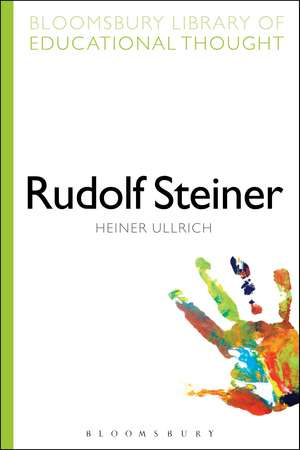
Rudolf Steiner: Bloomsbury Library of Educational Thought
Autor Professor Heiner Ullrich Professor Richard Baileyen Limba Engleză Paperback – 23 oct 2014
Heiner Ullrich paints a concise and well-grounded portrait of the creator of the anthroposophic doctrine and Waldorf pedagogy. The text describes a wide arc from the intellectual biography of Rudolf Steiner, across his basic ideas on human development and education, to include discussion of the organisation, curriculum, methods and success of the Waldorf Schools.
Din seria Bloomsbury Library of Educational Thought
- 15%
 Preț: 277.21 lei
 - 15%
 Preț: 278.74 lei
 - 17%
 Preț: 257.73 lei
 - 16%
 Preț: 276.68 lei
 - 16%
 Preț: 270.09 lei
 - 15%
 Preț: 278.24 lei
 - 15%
 Preț: 280.89 lei
 - 16%
 Preț: 278.18 lei
 - 15%
 Preț: 283.51 lei
 - 16%
 Preț: 278.68 lei
 - 15%
 Preț: 277.21 lei
 - 23%
 Preț: 272.05 lei
 - 23%
 Preț: 277.21 lei
 - 23%
 Preț: 270.57 lei
 - 24%
 Preț: 259.81 lei
 -
 Preț: 332.11 lei
 - 25%
 Preț: 258.55 lei
 - 24%
 Preț: 258.99 lei
 - 24%
 Preț: 258.81 lei
Preț: 272.31 lei
Preț vechi: 353.87 lei
-23%
Puncte Express: 408
Carte disponibilă
Livrare economică 16-30 noiembrie
Livrare prin curier în România Termenul estimat este afișat lângă disponibilitate.
Transport gratuit de la 400.00 lei Plată online sau ramburs, în funcție de opțiunile comenzii.
Retur gratuit în 14 zile Comandă securizată și suport în română.
Specificații
ISBN-13: 9781472518897
ISBN-10: 1472518896
Pagini: 278
Dimensiuni: 154 x 232 x 10 mm
Greutate: 0.42 kg
Editura: Bloomsbury Publishing
Colecția Bloomsbury Academic
Seria Bloomsbury Library of Educational Thought
Locul publicării:London, United Kingdom
ISBN-10: 1472518896
Pagini: 278
Dimensiuni: 154 x 232 x 10 mm
Greutate: 0.42 kg
Editura: Bloomsbury Publishing
Colecția Bloomsbury Academic
Seria Bloomsbury Library of Educational Thought
Locul publicării:London, United Kingdom
V-ar putea interesa
-
 Edgar Cayce's Story of JesusJeffrey FurstPreț: 59.01 lei
 -
 GenesisEmil BockPreț: 229.69 lei
 -
 BeesRudolf SteinerPreț: 139.03 lei
 -
 The Fourth DimensionRudolf SteinerPreț: 143.72 lei
 -
 The Secret DoctrineH. P. BlavatskyPreț: 104.34 lei
 -
 Madame BlavatskyGary LachmanPreț: 152.49 lei
 -
 Spiritual Life Now and After DeathRudolf SteinerPreț: 95.37 lei
 -
 The Representative of HumanityJohn WilkesPreț: 204.06 lei
 -
 The Philosophy of FreedomRudolf SteinerPreț: 101.66 lei
 -
 MusicRudolf SteinerPreț: 100.32 lei
 -
 THE Rose Cross MeditationRudolf SteinerPreț: 100.10 lei
 -
 The Appearance of Christ in the EthericSergei O. ProkofieffPreț: 150.04 lei
 -
 ManiRichard SeddonPreț: 83.53 lei
 -
 Kaspar HauserPeter TradowskyPreț: 129.18 lei
Cuprins
Series Editor's Preface
Foreword
Prologue
Part I: Intellectual Biography
1. Childhood and Youth Abroad: Scholastic Success and Intellectual Curiosity
2. Studies and Work as a Tutor in Vienna: The Basis for an Idealistic Overview
3. Archivist in Weimar: The Philosophy of Goethean Natural Science
4. Writer and Speaker in Berlin: The Free Spirit Converts to Theosophy
5. The Path to Geotheanum: The Elaboration of Anthroposophy as Science, Religion and Art
6. A New Era: The Wisdom Teacher's Move to Social Reform and Renewal of Education
Part II: Critical Exposition of Steiner's Philosophical and Educational Work
7. Goetheanism: The Epistomological Early Works
8. Anthroposophy: An Overview of Steiner's Basic Teachings
9. The Path of Cognition
10. Cosmology: Emanation of the Spirit and the World's Evolution
11. Anthropology: Man's Fourfold Architecture
12. Man's Functional Threefold Structure
13. Biography as Reincarnation and Destinal Chain ('Karma')
14. The Four Temperaments
15. Ages and the Development of the Human Person
16. The Concept of Education
17. The Free Waldorf School
18. A School in the Spirit of Anthorposophy?
19. The Waldorf Pre-School and the Anthroposophical Curative Education
Part III: The Reception and Influence of Steiner's Work
20. Anthroposophy as a Philosophy Without Boundaries
21. Anthroposophy as the Return of Mythical Thought Within Science
22. Anthroposophy - A Modernized Form of Gnosis
23. The Free Waldorf School: A School of Classic Progressive Education?
24. Between Prohibition and Continuation as Experimental State School: The Ambivalent Interest of NSDAP in Waldorf School Practice
25. The Importance of Waldorf Pedagogy for State Schools
26. Waldorf Schools: The Dubious Character of their Fundamentals and the Prerequisites of their Success
27. Learning from the Waldorf Schools - A New Dialogue and its Themes
Part IV: The Relevance of Steiner/Waldorf Schools Today
28. The Global Success of Rudolf Steiner's Pedagogy
29. How Successful are Waldorf Schools? - Evaluation Studies
30. What do Waldorf Pupils do after Graduation and how do they see their School in Retrospect? - Alumni Studies
31. How do Teachers and Pupils View the Waldorf School? - Attitude Studies
32. Class Teacher-Pupil Relationships at Waldorf Schools - A Current Research Contribution
Epilogue
Bibliography
Glossary
Index
Foreword
Prologue
Part I: Intellectual Biography
1. Childhood and Youth Abroad: Scholastic Success and Intellectual Curiosity
2. Studies and Work as a Tutor in Vienna: The Basis for an Idealistic Overview
3. Archivist in Weimar: The Philosophy of Goethean Natural Science
4. Writer and Speaker in Berlin: The Free Spirit Converts to Theosophy
5. The Path to Geotheanum: The Elaboration of Anthroposophy as Science, Religion and Art
6. A New Era: The Wisdom Teacher's Move to Social Reform and Renewal of Education
Part II: Critical Exposition of Steiner's Philosophical and Educational Work
7. Goetheanism: The Epistomological Early Works
8. Anthroposophy: An Overview of Steiner's Basic Teachings
9. The Path of Cognition
10. Cosmology: Emanation of the Spirit and the World's Evolution
11. Anthropology: Man's Fourfold Architecture
12. Man's Functional Threefold Structure
13. Biography as Reincarnation and Destinal Chain ('Karma')
14. The Four Temperaments
15. Ages and the Development of the Human Person
16. The Concept of Education
17. The Free Waldorf School
18. A School in the Spirit of Anthorposophy?
19. The Waldorf Pre-School and the Anthroposophical Curative Education
Part III: The Reception and Influence of Steiner's Work
20. Anthroposophy as a Philosophy Without Boundaries
21. Anthroposophy as the Return of Mythical Thought Within Science
22. Anthroposophy - A Modernized Form of Gnosis
23. The Free Waldorf School: A School of Classic Progressive Education?
24. Between Prohibition and Continuation as Experimental State School: The Ambivalent Interest of NSDAP in Waldorf School Practice
25. The Importance of Waldorf Pedagogy for State Schools
26. Waldorf Schools: The Dubious Character of their Fundamentals and the Prerequisites of their Success
27. Learning from the Waldorf Schools - A New Dialogue and its Themes
Part IV: The Relevance of Steiner/Waldorf Schools Today
28. The Global Success of Rudolf Steiner's Pedagogy
29. How Successful are Waldorf Schools? - Evaluation Studies
30. What do Waldorf Pupils do after Graduation and how do they see their School in Retrospect? - Alumni Studies
31. How do Teachers and Pupils View the Waldorf School? - Attitude Studies
32. Class Teacher-Pupil Relationships at Waldorf Schools - A Current Research Contribution
Epilogue
Bibliography
Glossary
Index
Notă biografică
Heiner Ullrich is Professor of Education at Johannes-Gutenberg-Universitat, Mainz, Germany.