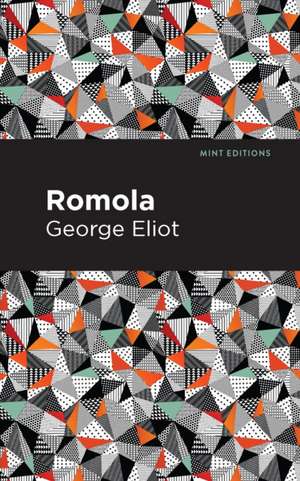
Romola: Mint Editions (Historical Fiction)
Autor George Elioten Limba Engleză Hardback – 26 ian 2021
Din seria Mint Editions (Historical Fiction)
-
 Preț: 78.79 lei
 -
 Preț: 118.14 lei
 -
 Preț: 124.64 lei
 -
 Preț: 135.36 lei
 -
 Preț: 103.45 lei
 -
 Preț: 208.55 lei
 -
 Preț: 117.50 lei
 -
 Preț: 169.49 lei
 -
 Preț: 142.06 lei
 -
 Preț: 162.65 lei
 -
 Preț: 150.89 lei
 -
 Preț: 118.66 lei
 -
 Preț: 169.89 lei
 -
 Preț: 195.23 lei
 -
 Preț: 156.64 lei
 -
 Preț: 127.12 lei
 -
 Preț: 124.68 lei
 -
 Preț: 111.06 lei
 -
 Preț: 105.59 lei
 -
 Preț: 98.25 lei
 -
 Preț: 145.24 lei
 -
 Preț: 110.91 lei
 -
 Preț: 116.88 lei
 -
 Preț: 162.47 lei
 -
 Preț: 194.78 lei
 -
 Preț: 138.72 lei
 -
 Preț: 288.51 lei
 -
 Preț: 165.38 lei
 -
 Preț: 169.39 lei
 -
 Preț: 207.85 lei
 -
 Preț: 138.48 lei
 -
 Preț: 151.44 lei
 -
 Preț: 86.44 lei
 -
 Preț: 86.79 lei
 -
 Preț: 208.05 lei
 -
 Preț: 52.48 lei
 -
 Preț: 155.98 lei
 -
 Preț: 169.59 lei
 -
 Preț: 118.65 lei
 -
 Preț: 144.16 lei
Preț: 209.80 lei
Puncte Express: 315
Carte disponibilă
Livrare economică 16-30 noiembrie
Livrare prin curier în România Termenul estimat este afișat lângă disponibilitate.
Transport gratuit de la 400.00 lei Plată online sau ramburs, în funcție de opțiunile comenzii.
Retur gratuit în 14 zile Comandă securizată și suport în română.
Specificații
ISBN-13: 9781513205564
ISBN-10: 1513205560
Pagini: 558
Dimensiuni: 132 x 209 x 36 mm
Greutate: 0.76 kg
Editura: Mint Editions
Colecția Mint Editions (Historical Fiction)
Seria Mint Editions (Historical Fiction)
ISBN-10: 1513205560
Pagini: 558
Dimensiuni: 132 x 209 x 36 mm
Greutate: 0.76 kg
Editura: Mint Editions
Colecția Mint Editions (Historical Fiction)
Seria Mint Editions (Historical Fiction)
V-ar putea interesa
-
 The Blue FlowerPenelope FitzgeraldPreț: 79.23 lei
 -
 Giving up the GhostHilary MantelPreț: 78.80 lei
 -
 The RomaMadeline PotterPreț: 157.22 lei
 -
 How to Win Friends and Influence PeopleDale CarnegiePreț: 63.37 lei
 -
 I, ClaudiusRobert Graves-35%Preț: 60.93 lei94.17 lei
 -
 EmmaJane Austen-24%Preț: 50.51 lei66.77 lei
 -
 Forged in RomeConn IgguldenPreț: 150.75 lei
 -
 Preț: 220.81 lei
 -
 The 5 Love LanguagesGary ChapmanPreț: 93.21 lei
 -
 -25%Preț: 85.95 lei115.08 lei
 -
 The ElopementGill HornbyPreț: 139.21 lei
 -
 How to Win Friends and Influence PeopleDale Carnegie-30%Preț: 64.61 lei92.93 lei
 -
 No Way BackTheodor FontanePreț: 79.80 lei
 -
 The Divine ComedyDante AlighieriPreț: 46.55 lei
 -
 Middlemarch (Collector's Edition)George EliotPreț: 76.75 lei
 -
 -10%Preț: 62.73 lei70.00 lei
 -
 The Mill on the FlossGeorge EliotPreț: 54.43 lei
 -
 UtopiaThomas MorePreț: 33.19 lei
Notă biografică
George Eliot, the pen name of Mary Ann Evans, was a prominent 19th-century English novelist celebrated for her psychological depth and realistic portrayal of human nature. Born in rural Warwickshire, Eliot's early life was shaped by the responsibilities of caring for her family after her mother's death. Following her father's passing, she moved to London and became involved in intellectual circles. Eliot began her literary career with Scenes of Clerical Life, and her first novel, Adam Bede, was a major success. To ensure her works were taken seriously, she used a male pen name, as female authors were often dismissed in her time. Her later works include The Mill on the Floss, Silas Marner, Romola, Middlemarch, Daniel Deronda, and the psychological novella The Lifted Veil, which explores themes of clairvoyance, fate, and despair. Despite personal controversies, including her relationship with the married George Henry Lewes, Eliot became a respected literary and intellectual figure.
Descriere
Descriere de la o altă ediție sau format:
The most exotic of George Eliot’s works, Romola recounts the story of the famous religious leader Savonarola in Florence at the time of Machiavelli and the Medicis. Of all her novels, this was the author’s favourite.
No other Eliot novel was illustrated in its first edition. Romola, however, was sought by George Smith for serialization in the prestigious illustrated Cornhill Magazine. Smith commissioned illustrations for the novel from the rising young artist Frederick Leighton, who had studied in Florence in the 1840s and had frequently painted Florentine Renaissance subjects. Romola was serialised with the Leighton illustrations in the magazine from July 1862 to August 1863. It was first published in book form in 1863; the first edition was published by Smith, Elder in three volumes, and a one-volume edition in two-column format with all but one of the Leighton illustrations was published later that year by Harper & Brothers in the United States. This facsimile reprint is of the one-volume 1863 Harper & Brothers edition, and includes 8 pages of original advertisements from the back of the book.
This is one of a series from Broadview Press of facsimile reprint editions—editions that provide readers with a direct sense of these works as the Victorians themselves experienced them.
The most exotic of George Eliot’s works, Romola recounts the story of the famous religious leader Savonarola in Florence at the time of Machiavelli and the Medicis. Of all her novels, this was the author’s favourite.
No other Eliot novel was illustrated in its first edition. Romola, however, was sought by George Smith for serialization in the prestigious illustrated Cornhill Magazine. Smith commissioned illustrations for the novel from the rising young artist Frederick Leighton, who had studied in Florence in the 1840s and had frequently painted Florentine Renaissance subjects. Romola was serialised with the Leighton illustrations in the magazine from July 1862 to August 1863. It was first published in book form in 1863; the first edition was published by Smith, Elder in three volumes, and a one-volume edition in two-column format with all but one of the Leighton illustrations was published later that year by Harper & Brothers in the United States. This facsimile reprint is of the one-volume 1863 Harper & Brothers edition, and includes 8 pages of original advertisements from the back of the book.
This is one of a series from Broadview Press of facsimile reprint editions—editions that provide readers with a direct sense of these works as the Victorians themselves experienced them.
Recenzii
The most exotic of George Eliot’s works, Romola recounts the story of the famous religious leader Savonarola in Florence at the time of Machiavelli and the Medicis. Of all her novels, this was the author’s favourite.
No other Eliot novel was illustrated in its first edition. Romola, however, was sought by George Smith for serialization in the prestigious illustrated Cornhill Magazine. Smith commissioned illustrations for the novel from the rising young artist Frederick Leighton, who had studied in Florence in the 1840s and had frequently painted Florentine Renaissance subjects. Romola was serialised with the Leighton illustrations in the magazine from July 1862 to August 1863. It was first published in book form in 1863; the first edition was published by Smith, Elder in three volumes, and a one-volume edition in two-column format with all but one of the Leighton illustrations was published later that year by Harper & Brothers in the United States. This facsimile reprint is of the one-volume 1863 Harper & Brothers edition, and includes 8 pages of original advertisements from the back of the book.
This is one of a series from Broadview Press of facsimile reprint editions—editions that provide readers with a direct sense of these works as the Victorians themselves experienced them.
No other Eliot novel was illustrated in its first edition. Romola, however, was sought by George Smith for serialization in the prestigious illustrated Cornhill Magazine. Smith commissioned illustrations for the novel from the rising young artist Frederick Leighton, who had studied in Florence in the 1840s and had frequently painted Florentine Renaissance subjects. Romola was serialised with the Leighton illustrations in the magazine from July 1862 to August 1863. It was first published in book form in 1863; the first edition was published by Smith, Elder in three volumes, and a one-volume edition in two-column format with all but one of the Leighton illustrations was published later that year by Harper & Brothers in the United States. This facsimile reprint is of the one-volume 1863 Harper & Brothers edition, and includes 8 pages of original advertisements from the back of the book.
This is one of a series from Broadview Press of facsimile reprint editions—editions that provide readers with a direct sense of these works as the Victorians themselves experienced them.