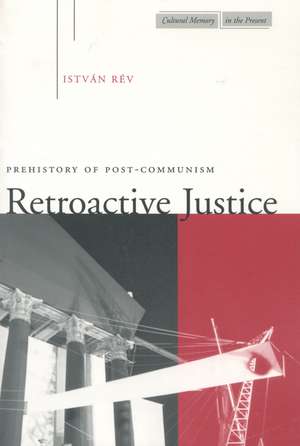
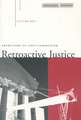
Retroactive Justice: Prehistory of Post-Communism: Cultural Memory in the Present
Autor István Réven Limba Engleză Hardback – 18 ian 2005
În Retroactive Justice, descoperim o metodologie de analiză istorică atipică, ce refuză cronologia liniară în favoarea unei disecții a „fantomelor” care bântuie posteritatea. Autorul, István Rév, propune o perspectivă în care prezentul nu doar reflectă, ci desfigurează activ imaginea timpului trecut, oferind o preistorie a post-comunismului scrisă din punctul terminus al colapsului regimului. Considerăm că forța acestui volum rezidă în structura sa fragmentară, dar coerentă, care transformă obiecte simbolice — precum relicva, panteonul sau numele — în lentile prin care observăm mecanismele justiției retroactive. Subliniem tonul marcat de o ironie întunecată, ce însoțește explorarea unor spații tensionate între istoria oficială și cea subterană.
Această lucrare publicată de Stanford University Press în seria Cultural Memory in the Present se distinge printr-o scriitură densă, care pendulează între analize de o precizie chirurgicală și perspective macro-istorice. Lucrarea completează volumul A Nation Divided by History and Memory de Gábor Gyáni, aducând o dimensiune mai teoretică și mai neortodoxă modului în care memoria colectivă maghiară se fragmentează. Dacă Twenty Years After Communism de Michael Bernhard oferă o perspectivă comparativă regională asupra politicii memoriei, Retroactive Justice se concentrează pe profunzimea psihologică și culturală a modului în care „morții” și „relicvele” sunt instrumentalizați pentru a legitima noi realități politice. Ritmul lecturii este unul reflexiv, impunând o reevaluare a modului în care înțelegem continuitatea istorică în Europa Centrală.
Din seria Cultural Memory in the Present
-
 Preț: 197.90 lei
 -
 Preț: 203.23 lei
 -
 Preț: 173.57 lei
 - 23%
 Preț: 776.60 lei
 -
 Preț: 194.38 lei
 -
 Preț: 270.62 lei
 -
 Preț: 156.33 lei
 -
 Preț: 208.61 lei
 - 19%
 Preț: 666.52 lei
 - 23%
 Preț: 727.13 lei
 -
 Preț: 201.43 lei
 -
 Preț: 207.49 lei
 -
 Preț: 156.69 lei
 -
 Preț: 161.65 lei
 -
 Preț: 172.54 lei
 -
 Preț: 195.70 lei
 -
 Preț: 237.77 lei
 - 19%
 Preț: 703.84 lei
 -
 Preț: 211.24 lei
 -
 Preț: 273.04 lei
 -
 Preț: 279.60 lei
 -
 Preț: 237.13 lei
 -
 Preț: 210.16 lei
 -
 Preț: 158.20 lei
 -
 Preț: 236.86 lei
 -
 Preț: 212.37 lei
 - 19%
 Preț: 590.04 lei
 -
 Preț: 244.32 lei
 -
 Preț: 194.76 lei
 -
 Preț: 152.77 lei
 -
 Preț: 170.67 lei
 -
 Preț: 227.84 lei
 -
 Preț: 196.13 lei
 -
 Preț: 518.94 lei
 -
 Preț: 195.70 lei
 -
 Preț: 171.73 lei
 -
 Preț: 200.85 lei
 -
 Preț: 201.64 lei
 - 19%
 Preț: 707.29 lei
 - 19%
 Preț: 560.54 lei
 - 23%
 Preț: 755.88 lei
 -
 Preț: 219.86 lei
 -
 Preț: 233.59 lei
 -
 Preț: 197.07 lei
 -
 Preț: 214.83 lei
 - 23%
 Preț: 726.86 lei
Preț: 729.89 lei
Preț vechi: 947.91 lei
-23%
Carte tipărită la comandă
Livrare economică 01-15 decembrie
Specificații
ISBN-10: 0804736421
Pagini: 360
Dimensiuni: 152 x 229 x 25 mm
Greutate: 0.59 kg
Ediția:1
Editura: Stanford University Press
Colecția Stanford University Press
Seria Cultural Memory in the Present
V-ar putea interesa
-
 -12%Preț: 122.77 lei140.15 lei
 -
 The Peloponnesian WarThucydides-16%Preț: 81.80 lei96.90 lei
 -
 Medieval Germany 1056-1273Alfred Haverkamp-27%Preț: 358.01 lei487.09 lei
 -
 The English ConstitutionWalter Bagehot-19%Preț: 52.70 lei64.76 lei
 -
 Food in Medieval England: Diet and NutritionC. M. Woolgar-32%Preț: 434.55 lei636.01 lei
 -
 Preț: 229.77 lei
 -
 Preț: 256.55 lei
 -
 Preț: 99.80 lei
 -
 Preț: 238.47 lei
 -
 Rewriting the Jew: Assimilation Narratives in the Russian EmpireGabriella SafranPreț: 523.09 lei
 -
 -19%Preț: 504.72 lei623.11 lei
 -
 -19%Preț: 450.15 lei555.74 lei
 -
 The Business of Identity: Jews, Muslims, and Economic Life in Medieval EgyptPhillip Ackerman-Lieberman-19%Preț: 456.54 lei563.64 lei
 -
 Preț: 261.41 lei
 -
 Sephardi Lives: A Documentary History, 1700–1950Julia CohenPreț: 220.92 lei
 -
 Mary TudorAnna Whitelock-27%Preț: 98.79 lei135.48 lei
 -
 Preț: 183.64 lei
 -
 -37%Preț: 858.09 lei1362.28 lei
De ce să citești această carte
Recomandăm această carte cercetătorilor și cititorilor pasionați de istoria mentalităților care doresc să înțeleagă cum se reconstruiește trecutul după dictatură. Cititorul câștigă o perspectivă critică asupra modului în care simbolurile și ritualurile politice sunt reinventate pentru a servi prezentului. Este o lectură esențială pentru a descifra complexitatea tranziției maghiare și mecanismele subtile ale memoriei culturale, dincolo de datele factuale ale manualelor de istorie.
Despre autor
István Rév este un reputat istoric și intelectual maghiar, cunoscut pentru contribuțiile sale deosebite în domeniul istoriei recente și al memoriei culturale. Profesor de istorie și politici publice, acesta a coordonat proiecte majore de arhivare a perioadei comuniste, fiind implicat direct în conservarea documentelor care atestă transformările politice din Europa de Est. Opera sa se concentrează pe intersecția dintre istorie, justiție și memorie, explorând modul în care societățile post-totalitare se raportează la propriul trecut traumatic. În Retroactive Justice, el își folosește expertiza pentru a deconstrui mitologiile naționale și politice ale Ungariei contemporane.
Descriere scurtă
Recenzii
Notă biografică
Textul de pe ultima copertă
“This is a beautifully written book....Rev is remarkable for his capacity somehow to reconcile his own history with the analytical detachment of a scholar of great brilliance.”—London Review of Books