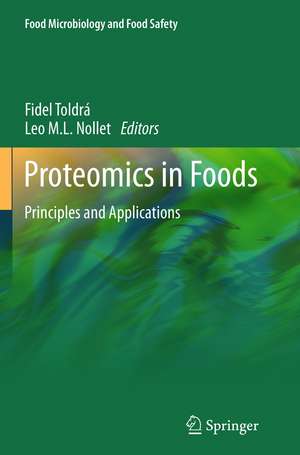
Proteomics in Foods: Food Microbiology and Food Safety
Editat de Fidel Toldrá, Leo M. L. Nolleten Limba Engleză Paperback – 28 ian 2015
Adresat specialiștilor, cercetătorilor și practicienilor din industria agroalimentară, volumul Proteomics in Foods constituie o resursă tehnică de referință pentru înțelegerea rolului proteinelor în siguranța și calitatea produselor de consum. Merită menționat că proteomica alimentară reprezintă unul dintre cele mai dinamice subdomenii ale științei alimentelor, oferind soluții precise acolo unde metodele tradiționale ating limitele de detecție. Dacă lucrarea Food Proteomics de Maria Lopez Pedrouso v-a oferit cadrul teoretic și tendințele tehnologice, această carte oferă instrumentele practice și protocoalele specifice necesare implementării în laborator. Notăm cu interes structura riguroasă a celor 608 pagini. Prima parte a volumului pune bazele metodologice, analizând tehnici critice de fracționare, digestie proteică și utilizarea bazelor de date pentru identificarea peptidelor. Cea de-a doua parte, mult mai extinsă, trece în revistă aplicații concrete: de la marcatorii biologici pentru frăgezimea cărnii de vită și calitatea vinului, până la proteomica cerealelor și a produselor lactate. Putem afirma că rigoarea cu care sunt tratate procesele post-mortem la animale și identificarea peptidelor bioactive oferă o perspectivă utilă nu doar pentru controlul calității, ci și pentru nutriția avansată. Poziționată în contextul operei editorilor, cartea completează expertiza acestora expusă în Handbook of Analysis of Active Compounds in Functional Foods sau Safety of Meat and Processed Meat. În timp ce lucrările anterioare se concentrau pe compuși activi sau siguranță generală, titlul de față rafinează analiza la nivel de proteom, oferind o rezoluție superioară în autentificarea alimentelor și detectarea alergenilor, aspecte esențiale pentru conformitatea cu reglementările actuale.
Din seria Food Microbiology and Food Safety
- 18%
 Preț: 1342.01 lei
 - 18%
 Preț: 793.02 lei
 - 18%
 Preț: 1074.44 lei
 -
 Preț: 377.04 lei
 - 18%
 Preț: 1199.26 lei
 - 15%
 Preț: 682.03 lei
 - 18%
 Preț: 698.15 lei
 - 18%
 Preț: 1180.51 lei
 - 18%
 Preț: 1428.89 lei
 - 18%
 Preț: 1170.04 lei
 - 18%
 Preț: 1064.66 lei
 - 18%
 Preț: 611.00 lei
 - 5%
 Preț: 694.22 lei
 -
 Preț: 377.04 lei
 - 5%
 Preț: 384.74 lei
 - 18%
 Preț: 1075.27 lei
 - 18%
 Preț: 857.79 lei
 -
 Preț: 368.05 lei
 - 18%
 Preț: 1330.32 lei
 - 18%
 Preț: 914.35 lei
 - 18%
 Preț: 1334.56 lei
 - 23%
 Preț: 976.60 lei
 - 18%
 Preț: 989.50 lei
Preț: 689.58 lei
Preț vechi: 811.27 lei
-15%
Carte tipărită la comandă
Livrare economică 09-23 iunie
Specificații
ISBN-10: 1489996311
Pagini: 608
Ilustrații: XVIII, 590 p.
Dimensiuni: 155 x 235 x 33 mm
Greutate: 0.91 kg
Ediția:2013
Editura: Springer
Colecția Food Microbiology and Food Safety
Seria Food Microbiology and Food Safety
Locul publicării:New York, NY, United States
V-ar putea interesa
-
 Adventures in FermentationJohnny DrainPreț: 138.78 lei
 -
 -25%Preț: 258.76 lei343.62 lei
 -
 From Proteins to Proteomics: Basic Concepts, Techniques, and ApplicationsSanjeeva SrivastavaPreț: 411.13 lei
 -
 Culinary Nutrition: The Science and Practice of Healthy CookingJacqueline B. Marcus-32%Preț: 547.71 lei800.14 lei
 -
 Principles of ProteomicsRichard Twyman-9%Preț: 638.24 lei701.36 lei
 -
 Food Safety: Quality Control and ManagementMohammed Kuddus-8%Preț: 408.69 lei444.23 lei
 -
 Microbes in the Food IndustryAnil Panghal-23%Preț: 1278.39 lei1660.25 lei
 -
 Haccp System Auditing for Food SafetyLuis Couto Lorenzo-23%Preț: 909.90 lei1181.68 lei
 -
 Microbial Control and Food Preservation: Theory and PracticeVijay K. Juneja-18%Preț: 1342.01 lei1636.61 lei
 -
 Handbook of Food Microbiological Analytical MethodsIsmail Mohamed Al Bulushi Ph.D.-26%Preț: 710.44 lei955.11 lei
 -
 Encyclopedia of Food Science Research: 3 Volume SetCatherine L Turner-30%Preț: 2372.41 lei3373.80 lei
 -
 Advances in Food Science & TechnologyA K Haghi-30%Preț: 1421.14 lei2038.30 lei
 -
![Primal Cuts: A Butcher's Guide to Selecting, Preparing, and Perfecting Beef [A Cookbook]](https://i4.books-express.ro/bt/9781628605990/primal-cuts.jpg) Preț: 207.65 lei
Preț: 207.65 lei -
 Advances in Food Analysis ResearchAnita Haynes-26%Preț: 1600.56 lei2151.66 lei
 -
 Handbook of Research on Food Science and Technology: Volume 2: Food Biotechnology and MicrobiologyMonica Lizeth Chavez-Gonzalez-15%Preț: 559.46 lei658.20 lei
 -
 FermentTim Spector-5%Preț: 111.56 lei117.43 lei
 -
 Food Contact Materials AnalysisMichele Suman-26%Preț: 1025.38 lei1385.66 lei
 -
 Food MicrobiologyMartin R Adams-7%Preț: 403.34 lei433.30 lei
 -
 Nielsen's Food AnalysisB. Pam Ismail-18%Preț: 692.90 lei845.00 lei
 -
 Agricultural Proteomics Volume 1: Crops, Horticulture, Farm Animals, Food, Insect and MicroorganismsGhasem Hosseini Salekdeh-24%Preț: 863.87 lei1136.67 lei
Public țintă
Professional/practitionerDe ce să citești această carte
Această lucrare este indispensabilă inginerilor chimiști și cercetătorilor care doresc să utilizeze spectrometria de masă și cromatografia pentru a garanta autenticitatea și siguranța produselor alimentare. Cititorul câștigă acces la metodologii verificate pentru analiza proteinelor în diverse matrice, de la carne și pește la lactate și vin, transformând datele moleculare în indicatori de calitate comercială.
Despre autor
Fidel Toldrá și Leo M. L. Nollet sunt figuri proeminente în chimia alimentară globală. Fidel Toldrá este recunoscut pentru cercetările sale în biochimia cărnii și a enzimelor, editând lucrări fundamentale precum Handbook of Fermented Meat and Poultry. Leo M. L. Nollet are o experiență vastă în analiza alimentelor, fiind editorul seriilor Food Analysis & Properties. Împreună, aceștia au coordonat zeci de manuale și enciclopedii tehnice, contribuind la standardizarea metodelor analitice în industria alimentară modernă prin publicații la edituri de prestigiu precum Springer Us.
Descriere scurtă
Cuprins
Textul de pe ultima copertă
Editors
Fidel Toldrá is a Research Professor at the Instituto de Agroquímica y Tecnología de Alimentos (CSIC), Valencia, Spain
Leo M. L. Nollet is a Professor at the University College Ghent (Hogeschool Gent), Belgium