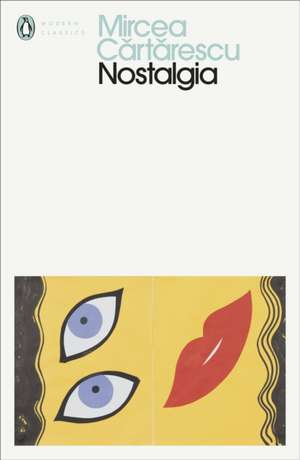
Nostalgia: Penguin Modern Classics
Autor Mircea Cartarescu Traducere de Julian Semilianen Limba Engleză Paperback – 27 mai 2021
Pășind în paginile volumului Nostalgia, simțim imediat acea stare de vertij caracteristică unei imaginații care refuză să fie îngrădită de realitatea imediată. Observăm cum Mircea Cartarescu transformă Bucureștiul cenușiu al anilor '80 într-un spațiu mitologic, unde blocurile dărăpănate devin decorul unor experiențe metafizice profunde. Nu este doar un roman, ci un flux de conștiință care spală orice preconcepție despre structura narativă clasică, invitându-ne într-o explorare a memoriei și a oniricului. Structura celor cinci capitole, deși independente, creează o rezonanță magnetică prin recurența unor motive precum jocurile copilăriei sau cosmogoniile personale. Găsim aici o preocupare intensă pentru legătura dintre micro-universul individului și macro-universul sferelor cerești. Stilul este dens, senzorial și vizual, amintind de Youth Without Youth de Mircea Eliade prin împletirea supranaturalului cu fundalul istoric bucureștean, dar se diferențiază printr-o forță lingvistică brută și o aplecare către grotesc și sublim pe care Eliade o aborda mult mai temperat. Această lucrare ocupă un loc central în opera autorului, fiind piatra de temelie pe care s-au construit ulterior arhitecturi literare complexe precum Solenoid. Dacă în lucrările mai recente observăm o sistematizare a obsesiilor sale, în Nostalgia notăm puritatea și exuberanța unui scriitor care descoperă posibilitățile infinite ale limbajului. Este o lectură care solicită abandonul total în fața unui „val mareic” al fanteziei, unde dictatura comunistă nu este doar un context politic, ci un catalizator pentru evadarea în mit.
Din seria Penguin Modern Classics
-
 Preț: 57.35 lei
 -
 Preț: 80.02 lei
 -
 Preț: 62.95 lei
 -
 Preț: 59.42 lei
 - 25%
 Preț: 59.29 lei
 - 25%
 Preț: 59.39 lei
 - 28%
 Preț: 50.90 lei
 - 30%
 Preț: 66.18 lei
 - 26%
 Preț: 57.58 lei
 - 26%
 Preț: 57.60 lei
 - 25%
 Preț: 59.19 lei
 - 28%
 Preț: 51.26 lei
 - 33%
 Preț: 65.20 lei
 -
 Preț: 107.89 lei
 - 26%
 Preț: 58.75 lei
 - 27%
 Preț: 56.92 lei
 - 27%
 Preț: 56.90 lei
 - 27%
 Preț: 57.22 lei
 - 24%
 Preț: 61.03 lei
 - 19%
 Preț: 75.77 lei
 - 33%
 Preț: 64.11 lei
 - 26%
 Preț: 58.40 lei
 - 26%
 Preț: 58.53 lei
 - 26%
 Preț: 53.60 lei
 - 26%
 Preț: 57.69 lei
 - 27%
 Preț: 57.17 lei
 - 28%
 Preț: 45.82 lei
 - 28%
 Preț: 50.19 lei
 - 26%
 Preț: 52.82 lei
 - 26%
 Preț: 53.57 lei
 - 28%
 Preț: 50.94 lei
 - 28%
 Preț: 51.26 lei
 - 20%
 Preț: 55.59 lei
 - 26%
 Preț: 57.93 lei
 - 25%
 Preț: 59.66 lei
 - 18%
 Preț: 88.47 lei
 - 25%
 Preț: 59.03 lei
 - 26%
 Preț: 58.06 lei
 - 27%
 Preț: 56.95 lei
 - 20%
 Preț: 56.39 lei
 - 26%
 Preț: 58.70 lei
 - 36%
 Preț: 60.43 lei
 - 29%
 Preț: 49.73 lei
 - 26%
 Preț: 53.47 lei
 - 20%
 Preț: 50.90 lei
 - 25%
 Preț: 59.09 lei
 - 25%
 Preț: 54.06 lei
 - 27%
 Preț: 57.19 lei
 - 20%
 Preț: 62.70 lei
 - 18%
 Preț: 76.38 lei
Preț: 59.68 lei
Preț vechi: 79.56 lei
-25%
Carte disponibilă
Livrare economică 06-18 noiembrie
Livrare express 23-29 octombrie pentru 41.76 lei
Specificații
ISBN-10: 0241448913
Pagini: 352
Dimensiuni: 124 x 193 x 24 mm
Greutate: 0.25 kg
Editura: Penguin Books
Colecția Penguin Modern Classics
Seria Penguin Modern Classics
Locul publicării:London, United Kingdom
V-ar putea interesa
-
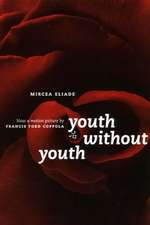 Youth Without YouthMircea EliadePreț: 119.97 lei
 -
 Blinding: The Left WingMircea CartarescuPreț: 123.33 lei
 -
 Exiled ShadowNorman ManeaPreț: 134.32 lei
 -
 The Bridge Over The Neroch And Other WorksLeonid TsypkinPreț: 71.57 lei
 -
 And Other StoriesGeorgi GospodinovPreț: 172.90 lei
 -
 Adventures In Immediate IrrealityMax BlecherPreț: 97.01 lei
 -
 -26%Preț: 59.27 lei79.65 lei
 -
 Preț: 133.44 lei
 -
 -26%Preț: 83.73 lei113.55 lei
 -
 Time Shelter: WINNER OF THE INTERNATIONAL BOOKER 2023Georgi Gospodinov-25%Preț: 59.51 lei79.76 lei
 -
 A Manual for ManuelJulio CortazarPreț: 78.68 lei
 -
 Burying the TypewriterCarmen BuganPreț: 85.96 lei
 -
 Letters From An Imaginary CountryTheodora Goss-19%Preț: 99.76 lei122.73 lei
 -
 Walter Benjamin Stares at the SeaC.D. Rose-20%Preț: 101.02 lei126.15 lei
 -
 The Eleventh HourSalman RushdiePreț: 105.72 lei
 -
 House of Day, House of NightOlga TokarczukPreț: 106.85 lei
 -
 Reminiscences of Tolstoy, Chekhov and AndreevMaxim GorkyPreț: 105.54 lei
 -
 Fox Was Ever the HunterHerta MüllerPreț: 70.45 lei
 -
 CeilingsZuzana BrabcováPreț: 97.19 lei
De ce să citești această carte
Recomandăm această carte cititorilor care caută în literatură mai mult decât o poveste liniară: o experiență senzorială totală. Este poarta de intrare perfectă în universul lui Mircea Cartarescu, oferind o viziune unică asupra Bucureștiului de altădată, metamorfozat prin lentila realismului magic. Veți câștiga o perspectivă nouă asupra modului în care memoria și imaginația pot rescrie o realitate opresivă, totul sub egida prestigioasei colecții Penguin Modern Classics.
Despre autor
Mircea Cartarescu, născut în 1956, este cel mai important romancier și poet român contemporan, o figură centrală a generației optzeciste. Opera sa, tradusă în numeroase limbi europene, explorează adesea limitele realității, oniricul și arhitectura memoriei. Critic literar și eseist deopotrivă, a fost distins cu numeroase premii internaționale, fiind o prezență constantă pe listele marilor distincții literare, inclusiv pentru Solenoid. Prin Nostalgia, el se impune ca un maestru al prozei scurte care funcționează ca un organism unitar, consolidându-și statutul de scriitor de talie mondială.
Notă biografică
Mircea Cartarescu was born in Bucharest in 1956. His novels and poetry are widely considered to be the best writing to emerge from post-communist Romania. His books have been translated into fourteen languages and he has received many awards, including most recently the Thomas Mann Prize and the Prix Formentor.
Julian Semilian (Translator)
Julian Semilian is a translator, poet and filmmaker. He currently teaches at the North Carolina School of the Arts, after a twenty-four-year career as a film editor in Hollywood.
Recenzii
A Danubian Narnia. . . his writing delivers a rainbow-hued riot of fantasy, imagination and invention. . . If you looked for the perfect director to film Nostalgia, a joint effort by Guillermo del Toro and Terry Gilliam might just do the trick
Fiendishly clever, devilishly humorous and stunningly ambitious. . . one of Romania's most eminent novelists has finally reached Britain. It's been long overdue
Of a rare and wondrous brilliance . . . Julian Semilian's translation of this masterpiece is a heroic achievement
Cartarescu is not only a sophisticated, compelling storyteller but a first-class wordsmith . . . Between them these stories bring forth a fabulous narrative universe, a place where the ordinary and extraordinary intermingle and miracles are a matter of routine
Visionary and tormented. . . mixes history, autobiography and magic realism. There are hints of Bulgakov as well as an aura of Donald Cammell's and Nicolas Roeg's cult 1970 film Performance; a whirlwind of seedy glamour and despair that is itself a reflection of a nightmarish totalitarian state, as well as a scintillatingly detailed portrait of adolescence and retrospective longing
A timeless invitation to dream and embrace the comforting power of personal memory, the only sure bulwark against the effects of totalitarian control. . . Gripping, impassioned, unexpected -- the qualities that the best in literature possesses
If mind-warping literature is your thing, read this book, then read it again
A bright star on the firmament of European literature
Creator of a universe that's caught between dream and reality, Cartarescu is a revelation
Romania's leading novelist and poet. . . Cartarescu's phantasmagorical world is similar to Dalí's dreamscapes
Descriere scurtă
'A Danubian Narnia. . . his writing delivers a rainbow-hued riot of fantasy, imagination and invention' Boyd Tonkin, Spectator
A dreamlike novel of memory and magic, Nostalgia turns the dark world of Communist Bucharest into a place of strange enchantments. Here a man plays increasingly death-defying games of Russian Roulette, a child messiah works his magic in the tenements, a young man explores gender boundaries, a woman relives her youth and an architect becomes obsessed with the sound of his new car horn - with unexpected consequences.
Blending reality and symbolism, time and myth, this is a cult masterwork from Romania's most celebrated writer.