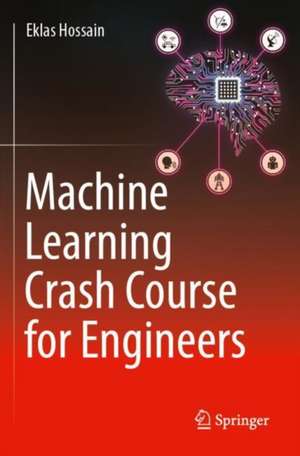
Machine Learning Crash Course for Engineers
Autor Eklas Hossainen Limba Engleză Paperback – 4 ian 2025
Considerăm că principala barieră pentru inginerii care doresc să adopte tehnologiile de învățare automată nu este lipsa resurselor, ci decalajul dintre teoria abstractă și implementarea practică în domenii precum robotica sau sistemele energetice. Machine Learning Crash Course for Engineers abordează direct această problemă, fiind conceput ca un ghid tehnic accelerat care prioritizează aplicațiile în detrimentul demonstrațiilor matematice exhaustive. Apreciem structura logică a volumului, care debutează cu criteriile de selecție a modelelor și progresează sistematic spre studii de caz complexe. Cuprinsul indică o tranziție clară de la algoritmi fundamentali la implementări specifice în procesarea semnalelor, imagistică și sisteme de control. Complementar lui Machine Learning for Engineers de Ryan G. McClarren, care oferă o perspectivă asupra sistemelor fizice analogice, volumul de față acoperă zona de programare efectivă în Python, oferind demonstrații pas cu pas pentru rezolvarea problemelor din lumea reală. Credem că experiența anterioară a autorului, Eklas Hossain, reflectată în lucrări precum MATLAB and Simulink Crash Course for Engineers sau Photovoltaic Systems, este esențială aici. Această expertiză se traduce printr-o abordare pragmatică a învățării automate, privită nu ca o disciplină teoretică, ci ca un instrument de optimizare a infrastructurii energetice și a sistemelor autonome. Volumul reușește să sintetizeze concepte de ultimă oră într-un format accesibil profesioniștilor care au nevoie de rezultate imediate în proiectele lor de inginerie.
Preț: 425.75 lei
Preț vechi: 532.19 lei
-20%
Carte tipărită la comandă
Livrare economică 30 noiembrie-05 decembrie
Specificații
ISBN-10: 3031469925
Pagini: 476
Dimensiuni: 155 x 235 x 26 mm
Greutate: 0.72 kg
Editura: Springer
V-ar putea interesa
-
 Machine Learning with Python for EveryoneMark Fenner-20%Preț: 270.86 lei338.57 lei
-
 Just Enough Data Science and Machine LearningMark LevenePreț: 352.28 lei
-
 Machine LearningKevin P. Murphy-20%Preț: 731.65 lei918.37 lei
-
 Pattern Recognition and Machine LearningChristopher M Bishop-20%Preț: 646.10 lei807.62 lei
-
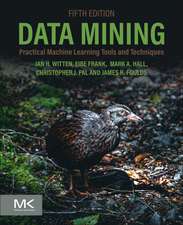 -39%Preț: 394.79 lei646.62 lei
-
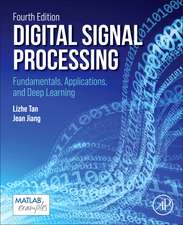 -39%Preț: 622.57 lei1028.93 lei
-
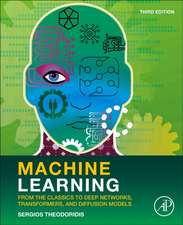 -31%Preț: 607.05 lei885.58 lei
-
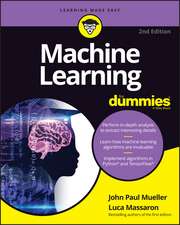 Mueller, J: Machine Learning For DummiesJohn Paul Mueller-20%Preț: 176.20 lei220.25 lei
-
 Machine Learning For DummiesLuca Massaron-20%Preț: 149.88 lei187.36 lei
-
 Machine Learning: An Algorithmic Perspective, Second EditionStephen Marsland-20%Preț: 625.22 lei781.53 lei
-
 Grokking Machine LearningLuis Serrano-20%Preț: 354.46 lei443.07 lei
-
 Optimization AlgorithmsAlaa Khamis-20%Preț: 405.89 lei507.37 lei
-
 -20%Preț: 242.09 lei302.62 lei
-
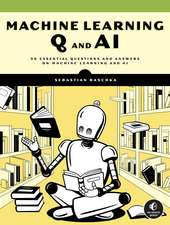 -20%Preț: 249.08 lei311.36 lei
-
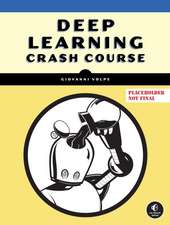 Deep Learning Crash CourseGiovanni Volpe-35%Preț: 290.92 lei445.81 lei
-
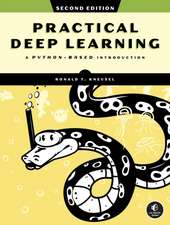 Practical Deep Learning, 2nd Edition: A Python-Based IntroductionRonald T. Kneusel-35%Preț: 333.73 lei515.68 lei
-
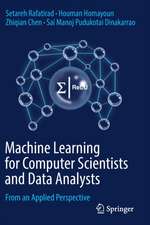 Machine Learning for Computer Scientists and Data AnalystsSetareh Rafatirad-15%Preț: 498.22 lei586.15 lei
-
 Preț: 462.84 lei
-
 Materials Data ScienceStefan Sandfeld-15%Preț: 601.09 lei707.16 lei
-
 -15%Preț: 549.22 lei646.13 lei
De ce să citești această carte
Recomandăm această lucrare inginerilor și studenților care au nevoie de o tranziție rapidă spre inteligența artificială aplicată. Cititorul câștigă competențe directe de programare în Python și învață să selecteze algoritmii potriviți pentru robotică sau sisteme energetice. Este un instrument practic care elimină complexitatea inutilă, oferind soluții verificate pentru probleme tehnice curente, fiind ideal pentru cei care preferă învățarea bazată pe exemple de execuție.
Despre autor
Eklas Hossain este un autor și cercetător recunoscut, specializat în aplicații practice ale informaticii în inginerie. Expertiza sa vastă este documentată în lucrări de referință precum MATLAB and Simulink Crash Course for Engineers și Photovoltaic Systems, unde pune accent pe modelarea și simularea sistemelor complexe. În prezentul volum, Hossain își folosește experiența în sisteme energetice și energie regenerabilă — teme explorate și în The Sun, Energy, and Climate Change — pentru a oferi o perspectivă aplicată asupra algoritmilor de învățare automată. Abordarea sa pedagogică este definită prin claritate și orientare către soluții industriale.
Cuprins
Notă biografică
Textul de pe ultima copertă
- A concise guide to the basics of algorithms, building models, and performance evaluation;
- Offers highly illustrated, step-by-step guidelines with Python programming examples;
- Provides examples and exercises related to signal and image processing, energy systems, and robotics.