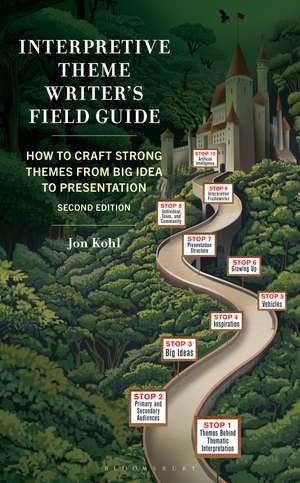
Interpretive Theme Writer's Field Guide: How to Craft Strong Themes from Big Idea to Presentation: National Association for Interpretation
Autor Jon Kohlen Limba Engleză Hardback – 30 apr 2026
Din seria National Association for Interpretation
- 18%
 Preț: 130.84 lei
 - 17%
 Preț: 143.37 lei
 - 17%
 Preț: 142.12 lei
 - 25%
 Preț: 177.58 lei
 -
 Preț: 178.24 lei
 - 21%
 Preț: 143.97 lei
 - 21%
 Preț: 142.12 lei
 - 25%
 Preț: 141.66 lei
 - 19%
 Preț: 224.80 lei
 - 19%
 Preț: 101.24 lei
 -
 Preț: 133.23 lei
 -
 Preț: 107.53 lei
 - 15%
 Preț: 254.76 lei
 - 22%
 Preț: 107.80 lei
 - 21%
 Preț: 179.69 lei
Preț: 726.41 lei
Preț vechi: 1022.43 lei
-29%
Puncte Express: 1090
Carte disponibilă
Livrare economică 06-20 noiembrie
Livrare prin curier în România Termenul estimat este afișat lângă disponibilitate.
Transport gratuit pentru acest produs Plată online sau ramburs, în funcție de opțiunile comenzii.
Retur gratuit în 14 zile Comandă securizată și suport în română.
Specificații
ISBN-13: 9798881807498
Pagini: 272
Ilustrații: 37 b/w photos; 20 tables
Dimensiuni: 160 x 232 x 20 mm
Greutate: 0.52 kg
Ediția:2nd edition
Editura: Bloomsbury Publishing
Colecția Bloomsbury Academic
Seria National Association for Interpretation
Locul publicării:New York, United States
Pagini: 272
Ilustrații: 37 b/w photos; 20 tables
Dimensiuni: 160 x 232 x 20 mm
Greutate: 0.52 kg
Ediția:2nd edition
Editura: Bloomsbury Publishing
Colecția Bloomsbury Academic
Seria National Association for Interpretation
Locul publicării:New York, United States
V-ar putea interesa
-
 Preț: 114.43 lei
 -
 Brilliant CopywritingRoger HorberryPreț: 79.81 lei
 -
 The Art and Craft of Feature WritingWilliam E BlundellPreț: 114.60 lei
 -
 MeditationsMarcus AureliusPreț: 34.00 lei
 -
 Interpreting Our HeritageFreeman TildenPreț: 134.73 lei
 -
 Preț: 384.83 leiRecomandat
 -
 Preț: 379.65 leiRecomandat
 -
 The Bloomsbury Handbook of Oral HistoryProfessor Alexander Freund-32%Preț: 843.19 lei1247.30 lei
 -
 Reflective Teaching in Higher EducationPaul Ashwin-13%Preț: 275.14 lei317.75 lei
 -
 -9%Preț: 113.10 lei124.79 lei
 -
 -17%Preț: 67.00 lei80.66 leiRecomandat
 -
 Preț: 300.31 lei
 -
 Harley Parker: The McLuhan of the MuseumGary Genosko-18%Preț: 160.06 lei194.61 lei
 -
 The Culture Box: Museums as MediaHarley Parker-18%Preț: 160.38 lei194.79 lei
 -
 The Crime Writers Casebook: Third EditionStuart Gibbon-17%Preț: 72.32 lei87.45 lei
 -
 Interpreting Themes in Textile ArtCherilyn Martin-9%Preț: 153.42 lei169.37 lei
 -
 The Storytellers WaySue HollingsworthPreț: 145.30 lei
 -
 Late-Stage BabylonAngie SpeaksPreț: 78.30 lei
 -
 Preț: 61.56 lei
Cuprins
Contents
Foreword by Sam Ham: "Why I agreed to support this Field Guide"
Pre-Tour Warmup: This Field Guide Originates in the 1990s
Natural-Cultural History of the Second Edition
Acknowledgments
Trailhead: This Is How You Use This Field Guide
Stop 1: The Theme that Lurks Behind Thematic Interpretation
Stop 2: We Write Themes for Primary and Secondary Audiences
Stop 3: Strong Interpretive Themes Embody Big Ideas and Vehicles to Deliver Them
Stop 4: Interpreters Must Ignite Their Inspiration for the Big Idea, Not Just Write It
Stop 5: The Big Idea Develops within the Audience's Mind via a Vehicle
Stop 6: Themes Are Written for and by People Growing Up
Stop 7: Construction of a Presentation Structure Begins with a Theme
Stop 8: Theme Writing Can be Individual, Team-, or Community-Based
Stop 9: Interpretive Frameworks Leverage the Power of Community for Interpretation
Stop 10: To Be with or Not to Be with AI Theme Writing Generators, That Is the Question
Field Notes
Suggested Answers to Exercises
Verbs for Stronger Themes and More Engaging Commentaries
Field Inventory of Strong Themes in this Field Guide
Themes of Best-selling Novels of All Time
Interpretive Theme Writer's Worksheet
Critique of Themes from Real Webinar Participants
Oh, My Box!
Field Guidelines for Interpretive Theme Writing
References
Quote Sources
Glossary
Index
Voices from the Field
1 Floating the Tigris: Harnessing the Light of Thematic Interpretation by Shelton Johnson
2 Crafting Themes Guided by Indigenous and Traditional Culturales by Kylie Christian and Leanne Redpath
3 Voices from the Field by Thorsten Ludwig
4 I Want to Create Brilliant Big Ideas and Compelling Themes but. by Judy Fort Brenneman
5 A Grand Theme Doesn't Ensure a Great Program-or Even a Good One by Don Enright
6 Themes Contribute to Traveler Transformation atop Maslow's Hierarchy of Needs by Colby Brokvist
7 Thematic Zone of Tolerance in a Theater Setting by Angela Pfenniger
8 Tablets of Stone or Statements of Accord by Michael Hamish Glen
9 Colombia Is the First Country to Adopt the Interpretive Framework by Clara Osorio and Carlos Rosero
10 Theme Writing: A Trail that Never Ends by Ted Cable
Theme Spotlights
Theme Spotlight Pre-Tour Warmup. Message vs. Theme
Theme Spotlight Natural-Cultural History of the Second Edition: Why Evolution Permeates this Field Guide
Theme Spotlight Trailhead: Themes of Themes
Theme Spotlight 2.1: Secondary Themes vs. Sub-Themes
Theme Spotlight 3.1. Theme = Object + Big Idea
Theme Spotlight 3.2. Big Idea vs. Interpretive Theme
Theme Spotlight 4.1. Connecting Unlike Points to Cast New Light
Theme Spotlight 4.2. Themes Should Present an Argument
Theme Spotlight 5.1. Can a Theme Have More than One Sentence?
Theme Spotlight 5.2. Transformative Themes Tap Deep Truths
Theme Spotlight 5.3. Adding Humanity to Non-Human Phenomena
Theme Spotlight 8.1. All Three Levels Can Interact
Theme Spotlight 9.1. Historical Scan Supports Theme Identification
Foreword by Sam Ham: "Why I agreed to support this Field Guide"
Pre-Tour Warmup: This Field Guide Originates in the 1990s
Natural-Cultural History of the Second Edition
Acknowledgments
Trailhead: This Is How You Use This Field Guide
Stop 1: The Theme that Lurks Behind Thematic Interpretation
Stop 2: We Write Themes for Primary and Secondary Audiences
Stop 3: Strong Interpretive Themes Embody Big Ideas and Vehicles to Deliver Them
Stop 4: Interpreters Must Ignite Their Inspiration for the Big Idea, Not Just Write It
Stop 5: The Big Idea Develops within the Audience's Mind via a Vehicle
Stop 6: Themes Are Written for and by People Growing Up
Stop 7: Construction of a Presentation Structure Begins with a Theme
Stop 8: Theme Writing Can be Individual, Team-, or Community-Based
Stop 9: Interpretive Frameworks Leverage the Power of Community for Interpretation
Stop 10: To Be with or Not to Be with AI Theme Writing Generators, That Is the Question
Field Notes
Suggested Answers to Exercises
Verbs for Stronger Themes and More Engaging Commentaries
Field Inventory of Strong Themes in this Field Guide
Themes of Best-selling Novels of All Time
Interpretive Theme Writer's Worksheet
Critique of Themes from Real Webinar Participants
Oh, My Box!
Field Guidelines for Interpretive Theme Writing
References
Quote Sources
Glossary
Index
Voices from the Field
1 Floating the Tigris: Harnessing the Light of Thematic Interpretation by Shelton Johnson
2 Crafting Themes Guided by Indigenous and Traditional Culturales by Kylie Christian and Leanne Redpath
3 Voices from the Field by Thorsten Ludwig
4 I Want to Create Brilliant Big Ideas and Compelling Themes but. by Judy Fort Brenneman
5 A Grand Theme Doesn't Ensure a Great Program-or Even a Good One by Don Enright
6 Themes Contribute to Traveler Transformation atop Maslow's Hierarchy of Needs by Colby Brokvist
7 Thematic Zone of Tolerance in a Theater Setting by Angela Pfenniger
8 Tablets of Stone or Statements of Accord by Michael Hamish Glen
9 Colombia Is the First Country to Adopt the Interpretive Framework by Clara Osorio and Carlos Rosero
10 Theme Writing: A Trail that Never Ends by Ted Cable
Theme Spotlights
Theme Spotlight Pre-Tour Warmup. Message vs. Theme
Theme Spotlight Natural-Cultural History of the Second Edition: Why Evolution Permeates this Field Guide
Theme Spotlight Trailhead: Themes of Themes
Theme Spotlight 2.1: Secondary Themes vs. Sub-Themes
Theme Spotlight 3.1. Theme = Object + Big Idea
Theme Spotlight 3.2. Big Idea vs. Interpretive Theme
Theme Spotlight 4.1. Connecting Unlike Points to Cast New Light
Theme Spotlight 4.2. Themes Should Present an Argument
Theme Spotlight 5.1. Can a Theme Have More than One Sentence?
Theme Spotlight 5.2. Transformative Themes Tap Deep Truths
Theme Spotlight 5.3. Adding Humanity to Non-Human Phenomena
Theme Spotlight 8.1. All Three Levels Can Interact
Theme Spotlight 9.1. Historical Scan Supports Theme Identification
Recenzii
With this impressive volume, Jon Kohl has extended thirty years of my research and practice to new and promising places. he has illuminated the potential of thematic interpretation, if delivered at a high level of competency, to achieve its most fundamental outcome-to provoke audience thinking and to make a purposeful difference in support of heritage preservation. I could not be more pleased. May heritage interpreters across the world magnify their impact by following his sound advice.
This book is for devotees of thematic writing. Grounded in progressivism and traditional principles of interpretation, it is most useful for people who practise forms of interpretation in environmental and community settings. Jon Kohl and a range of prominent interpreters skillfully outline a number of theories relating to thematic writing and heritage interpretation in general, together with providing a wide range of exercises and practical tips. It is a great addition to any library and anyone involved in thematic writing can benefit from its insights.
This is a broad, ambitious text balanced between practical ideas and philosophical context that can be useful for several audiences. This would be an excellent teaching tool for students looking to understand the nuts and bolts of interpretive writing, as the practice exercises really allow beginners to demonstrate their learning and engage with Kohl's broader ideas. It's also useful for early career practitioners or experienced interpretation professionals looking to think more thoroughly about their process.
For practitioners or aficionados of interpretive writing, this book would likely be a valuable resource.
[The guide] is packed full of useful content, from Ham's list of 3000 useful verbs to the themes of the world's great literature. Well worth diving into and having on your virtual shelf for inspiration.
This book is for devotees of thematic writing. Grounded in progressivism and traditional principles of interpretation, it is most useful for people who practise forms of interpretation in environmental and community settings. Jon Kohl and a range of prominent interpreters skillfully outline a number of theories relating to thematic writing and heritage interpretation in general, together with providing a wide range of exercises and practical tips. It is a great addition to any library and anyone involved in thematic writing can benefit from its insights.
This is a broad, ambitious text balanced between practical ideas and philosophical context that can be useful for several audiences. This would be an excellent teaching tool for students looking to understand the nuts and bolts of interpretive writing, as the practice exercises really allow beginners to demonstrate their learning and engage with Kohl's broader ideas. It's also useful for early career practitioners or experienced interpretation professionals looking to think more thoroughly about their process.
For practitioners or aficionados of interpretive writing, this book would likely be a valuable resource.
[The guide] is packed full of useful content, from Ham's list of 3000 useful verbs to the themes of the world's great literature. Well worth diving into and having on your virtual shelf for inspiration.