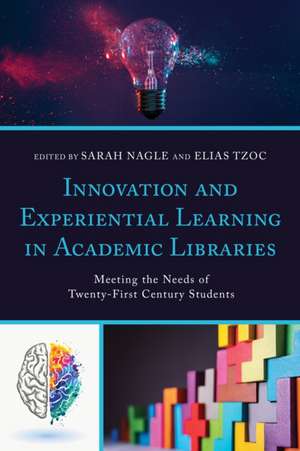
Innovation and Experiential Learning in Academic Libraries: Meeting the Needs of Today's Students: Innovations in Information Literacy
Autor Sarah Nagle, Elias Tzocen Limba Engleză Paperback – 15 mar 2022
Descoperim în volumul Innovation and Experiential Learning in Academic Libraries un ghid metodologic esențial pentru bibliotecarii universitari, administratori și practicienii din domeniul alfabetizării informaționale care urmăresc adaptarea serviciilor la exigențele secolului XXI. Lucrarea, publicată de Bloomsbury Publishing sub egida Rowman & Littlefield, propune o tranziție necesară de la simpla instruire tehnică spre dezvoltarea unor competențe durabile: gândire critică, creativitate și lucru în echipă. Notăm cu interes modul în care autorii Sarah Nagle și Elias Tzoc ancorează discuția în realitatea post-pandemice, oferind soluții concrete pentru integrarea învățării experiențiale în curriculumul universitar.
Textul extinde cadrul propus de The Experiential Library de Pete McDonnell prin adăugarea unor date recente despre impactul tehnologiilor emergente, precum inteligența artificială, și prin focalizarea pe parteneriatele interdisciplinare. Dacă lucrările anterioare ale autorilor, precum Librarians as Researchers, se concentrau pe identitatea academică a bibliotecarului, prezentul titlu mută accentul pe rolul acestuia de facilitator al inovației. Structura este riguros organizată în trei secțiuni: prima analizează rolul liderilor în susținerea creativității, a doua prezintă studii de caz fascinante — de la utilizarea seturilor LEGO până la studiul vestigiilor paleontologice în laborator — iar ultima secțiune oferă previziuni asupra transformărilor digitale iminente.
Subliniem rigoarea celor 13 fotografii și 4 tabele care documentează transformarea spațiilor fizice în centre de cercetare activă. Volumul nu se limitează la teorie, ci oferă o foaie de parcurs pentru bibliotecile care doresc să devină parteneri strategici în succesul academic al studenților, depășind simplul rol de depozit de resurse.

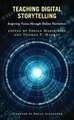
Preț: 391.19 lei
Preț vechi: 578.00 lei
-32%
Carte tipărită la comandă
Livrare economică 13-27 iunie
Specificații
ISBN-10: 1538151847
Pagini: 160
Ilustrații: 13 b/w photos; 4 tables
Dimensiuni: 146 x 226 x 16 mm
Greutate: 0.34 kg
Editura: Bloomsbury Publishing
Colecția Rowman & Littlefield
Seria Innovations in Information Literacy
Locul publicării:New York, United States
V-ar putea interesa
-
 -9%Preț: 693.07 lei761.62 lei
 -
 -23%Preț: 483.29 lei627.66 lei
 -
 BiblioTech: ReReading the Post-digital LibraryNathan Jones-28%Preț: 116.59 lei162.25 lei
 -
 -11%Preț: 447.59 lei502.91 lei
 -
 Preț: 351.45 leiRecomandat
 -
 Creating Significant Learning ExperiencesL. Dee FinkPreț: 300.94 lei
 -
 Reflective Teaching in Higher EducationCamille Kandiko Howson-20%Preț: 257.25 lei323.37 lei
 -
 The Reinvention of the U.S. Academic LibraryDonald A Barclay-17%Preț: 133.90 lei160.97 lei
 -
 -18%Preț: 157.21 lei191.96 lei
 -
 Library Technical Services: Future ForwardMary Beth Weber-18%Preț: 158.03 lei192.40 lei
 -
 -19%Preț: 517.05 lei638.33 lei
 -
 -8%Preț: 429.58 lei466.93 lei
 -
 Librarianship: An IntroductionG. G. Chowdhury-19%Preț: 441.06 lei544.51 lei
 -
 The 21st Century School Library: A Model for Innovative Teaching & LearningRyan Bani TahmasebPreț: 113.74 lei
 -
 -18%Preț: 366.52 lei448.46 lei
 -
 Leading from the Library, Second EditionShannon McClintock MillerPreț: 169.63 lei
 -
 Innovative Library Workplaces: Transformative Human Resource StrategiesLisa Kallman Hopkins-18%Preț: 628.32 lei766.24 lei
De ce să citești această carte
Această lucrare este indispensabilă bibliotecarilor care coordonează makerspaces sau laboratoare de digital humanities. Cititorul câștigă o perspectivă aplicată asupra modului în care învățarea activă poate fi integrată în serviciile de referință, primind exemple validate de parteneriate cu facultățile. Este un instrument practic pentru transformarea bibliotecii dintr-un spațiu de studiu pasiv într-un motor al inovației studențești, pregătind absolvenții pentru o piață a muncii în continuă schimbare.
Descriere
As technology advances and the skills required for the future workforce continue to change rapidly, academic libraries have begun to expand the definition of information literacy and the type of library services they provide to better prepare students for the constantly-developing world they will face upon graduation. More than teaching the newest technologies, information literacy is expanding to help students develop enduring skills such as critical thinking, creativity, problem solving, communication, teamwork, and more. Innovation and Experiential Learning in Academic Libraries: Meeting the Needs of 21st Century Students addresses the multitude of ways that academic librarians are collaborating with faculty and helping students develop these enduring skills by developing and integrating active and experiential learning approaches into teaching activities. This book is divided into three sections. The first section explores the role that library leaders play in supporting and advocating for innovation in information literacy and library services. The second section features case studies from librarians who are implementing novel and multidisciplinary approaches to information literacy and innovative services, such as maker scholarship, digital humanities, undergraduate research experiences, and new active learning strategies. These case studies also highlight how the COVID-19 pandemic has transformed teaching and learning in academic libraries. The final section looks to the future, providing guidance to information professionals on the issues and technologies that will drive transformations of information literacy in the coming years, such as artificial intelligence and new information literacy applications. As such, library administrators, academic librarians, information literacy practitioners, and technologists will benefit from this book.
Cuprins
Introduction - Jerome Conley
Section 1: Innovation and Leadership
Chapter 1: Planning, Advocating and Fostering Creativity and Innovation - Elías Tzoc
Chapter 2: Leadership for Innovation: Strategies and Considerations - Bohyun Kim
Chapter 3: Bringing Experiential Learning to Campus: How to Develop Partnerships and Implement Immersive Learning Experiences - Andrew See and Chris Holthe
Section 2: Examples and Case Studies
Chapter 4: Leading by Design: Building an Experiential Studio to Support Interdisciplinary Learning - Emily S. Darowski, Matt Armstrong, and Leanna Fry
Chapter 5: Creative Deconstruction: Using Zines to Teach the ACRL Framework - Stefanie Hilles
Chapter 6: LEGOTM, the Library, and a Mastodon Tusk: Undergraduate Research Partnerships in Chemistry - Anne Marie Gruber and Dr. Joshua Sebree
Chapter 7: Out of the Archives: Making Collections Accessible through the Implementation of a 3D Scanning Lab - Kristi Wyatt and Dr. Zenobie S. Garrett
Chapter 8: Collaborative Implementation of a Semi-Automated 3D Printing Service - Amy Van Epps, Matt Cook, and Susan Berstler
Chapter 9: Making Space for Non-Traditional Makers - Annalise Philips and Jen Brown
Section 3: Future Literacy Developments
Chapter 10: Maker Literacy, Metaliteracy, and the ACRL Framework - Sarah Nagle
Chapter 11: Off the Cutting Edge: Lessons Learned From Centering People in Creative Technology Spaces - Kelsey Sheaffer, Oscar K. Keyes, Eric Johnson, Jason Evans Groth, Vanessa Rodriguez, and Emily Thompson
Chapter 12: Developing an Engati-based Library Chatbot to Improve Reference Services - Shu Wan
About the Editors and the Contributors
Recenzii
In this timely and worthy read, the authors share diverse cases of library services and programs through innovation, creativity, experimentation, and interdisciplinary collaboration. Their insights and case studies from different types of libraries, from undergraduate to research-focused institutions, confirm leadership as a critical ingredient of innovative organizational changes.
This pragmatic, insightful book highlightsa wide spectrum of experiments and experiences - guiding readers across the thematic landscapes of ideation, outreach, and program building. Recommended for library practitioners looking to wade out into the waters of innovation.
If you are looking for ways to reimagine library instruction for the 21st century, Sarah Nagle and Elias Tzoc gathered some of the most innovative practitioners to share their ideas and experiences - including obstacles and how they overcame them - for this book. I'm excited to act on what I learned!
This is an essential book for our field. Nagle and Tzoc remind us that our conversations on making technologies is limited without talk about information literacy -- we need to focus on community building and the urgent need to further develop critical skills and information literacy."
This is a great resource for library leaders and staff on the role an academic library can play in innovation, disruption, and in creating programs and services that make an academic library the intellectual center of campus for today's college students.
This is a great primer for someone just dipping their toe into the active learning pool, and the case studies are a great resource if you're looking to develop a similar program.
This title would be useful to anyone who creates learning experiences in academic libraries, most particularly to anyone involved with makerspaces and creative technology spaces. I found it personally useful as a sciences liaison librarian in a mid-sized public institution, especially since I work closely with our campus makerspace. But there is a case study for any member of an academic library in this book, whether they are a traditional liaison, a makerspace coordinator, a functional expert, a library director, or a student working in creative spaces. There are case studies for high-technology and high-budget environments, high-tech but low-budget, low-tech and no-budget, and any other permutation. This is a slight exaggeration - but it does feel like the book intentionally includes a huge variety of programs in different stages of execution, success, assessment, and expansion. With its focus on sustainability and the diversity of programs that can fall under the umbrella of innovation and experiential learning, I find it hard to fault the broad title - this is a broad topic, the authors in this book truly do work to meet the needs of learners in sustainable ways, and many roles in academic libraries can benefit from this text and learn from their efforts.