
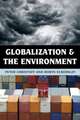
Globalization and the Environment: Globalization
Autor Peter Christoff, Robyn Eckersleyen Limba Engleză Hardback – 8 aug 2013
Notăm cu interes acest manual academic, Globalization and the Environment, care propune prima analiză sistematică a intersecției dintre procesele de globalizare și integritatea ecosistemelor, acoperind un arc temporal extins din perioada modernă până în contemporaneitate. Autorii Peter Christoff și Robyn Eckersley reușesc să construiască un cadru conceptual solid prin care explică de ce răspunsul politic internațional rămâne adesea fragmentat și ineficient în fața degradării accelerate a naturii.
Reținem structura riguroasă a volumului, organizată în cinci capitole ce facilitează o progresie logică de la fundamentele istorice către problemele sistemice actuale. După o introducere conceptuală, capitolul al doilea reconstituie istoria relației om-mediu, pregătind terenul pentru analizele detaliate din „An Overheated Planet” și „Remaking Nature”. Aceste secțiuni centrale izolează schimbările climatice și pierderea biodiversității ca piloni ai crizei ecologice actuale. Credem că elementul distinctiv al lucrării este modul în care autorii corelează expansiunea capitalismului global cu dificultatea statelor suverane de a institui o guvernanță eficientă, oferind în final nu doar critici, ci și alternative instituționale.
Lucrarea completează perspectiva oferită de The Globalization of Environmental Crisis de Jan Oosthoek. În timp ce volumul lui Oosthoek funcționează ca o colecție de eseuri multidisciplinare despre crizele recente, Globalization and the Environment oferă o sinteză teoretică mai unitară și un cadru normativ precis pentru reformă. În contextul operei autorilor, volumul se situează între analizele tehnice ale lui Peter Christoff din Four Degrees of Global Warming și abordările politice ale lui Robyn Eckersley, sintetizând datele științifice cu teoria relațiilor internaționale.
Din seria Globalization
- 25%
 Preț: 220.55 lei
 - 53%
 Preț: 175.09 lei
 - 24%
 Preț: 224.01 lei
 - 25%
 Preț: 219.74 lei
 - 23%
 Preț: 255.81 lei
 -
 Preț: 329.34 lei
 - 23%
 Preț: 257.89 lei
 - 23%
 Preț: 258.39 lei
 - 23%
 Preț: 258.70 lei
 - 23%
 Preț: 257.70 lei
 - 16%
 Preț: 224.82 lei
 - 27%
 Preț: 221.03 lei
 - 24%
 Preț: 257.28 lei
 - 23%
 Preț: 256.79 lei
 - 24%
 Preț: 254.41 lei
 - 23%
 Preț: 256.41 lei
 - 23%
 Preț: 257.72 lei
 - 26%
 Preț: 171.25 lei
 - 23%
 Preț: 256.41 lei
 - 25%
 Preț: 221.62 lei
 - 23%
 Preț: 256.31 lei
 -
 Preț: 313.40 lei
 -
 Preț: 332.87 lei
 - 24%
 Preț: 255.50 lei
 - 24%
 Preț: 255.53 lei
 - 30%
 Preț: 576.90 lei
 -
 Preț: 293.54 lei
Preț: 632.87 lei
Preț vechi: 913.89 lei
-31%
Carte tipărită la comandă
Livrare economică 07-21 decembrie
Specificații
ISBN-10: 0742556581
Pagini: 268
Ilustrații: 4 b/w illustrations; 1 table
Dimensiuni: 160 x 232 x 24 mm
Greutate: 0.48 kg
Ediția:New.
Editura: Bloomsbury Publishing
Colecția Rowman & Littlefield
Seria Globalization
Locul publicării:New York, United States
V-ar putea interesa
-
 The World is FlatThomas L. Friedman-18%Preț: 101.96 lei123.79 lei
 -
 In Defense of Globalization: With a New AfterwordJagdish Bhagwati-17%Preț: 97.48 lei116.85 lei
 -
 A Handbook of International Trade in ServicesAaditya Mattoo-26%Preț: 435.72 lei585.66 lei
 -
 China, Asia, and the New World EconomyBarry Eichengreen-6%Preț: 241.52 lei255.81 lei
 -
 -29%Preț: 509.45 lei713.89 lei
 -
 Global Justice: Defending CosmopolitanismCharles Jones-27%Preț: 370.51 lei509.32 lei
 -
 Regions, Globalization, and the Knowledge-Based EconomyJohn H. Dunning-31%Preț: 753.93 lei1098.66 lei
 -
 Global City-Regions: Trends, Theory, PolicyAllen J. Scott-31%Preț: 542.96 lei782.64 lei
 -
 A Tale of Three Cities: Or the Glocalization of City ManagementBarbara Czarniawska-18%Preț: 361.69 lei442.59 lei
 -
 -26%Preț: 364.39 lei490.90 lei
 -
 -22%Preț: 391.23 lei501.90 lei
 -
 The Sociolinguistics of GlobalizationJan BlommaertPreț: 370.87 lei
 -
 -15%Preț: 98.24 lei115.12 lei
 -
 -18%Preț: 1250.55 lei1525.06 lei
 -
 Preț: 269.18 lei
 -
 Globalization, Institutions and GovernanceJames A. CaporasoPreț: 481.76 lei
 -
 Real EnglandPaul KingsnorthPreț: 79.82 lei
De ce să citești această carte
Această carte se adresează studenților și cercetătorilor din domeniul științelor politice, sociologiei și studiilor de mediu care caută o înțelegere sistemică a crizei ecologice. Cititorul câștigă o perspectivă clară asupra modului în care economia globală forțează limitele planetare și, mai important, obține instrumentele teoretice necesare pentru a evalua critic politicile de mediu actuale. Este un instrument esențial pentru a înțelege de ce soluțiile politice întârzie să apară.
Despre autor
Peter Christoff și Robyn Eckersley sunt cadre didactice la Universitatea din Melbourne, fiind recunoscuți internațional pentru expertiza lor în politici climatice și relații internaționale. Peter Christoff s-a specializat în managementul resurselor și geografia mediului, contribuind la lucrări de referință despre impactul incendiilor de vegetație, precum The Fires Next Time. Robyn Eckersley este o voce influentă în teoria politică verde, explorând modul în care instituțiile democratice și suveranitatea statelor pot fi adaptate pentru a răspunde provocărilor globale. Împreună, cei doi autori combină rigoarea academică cu o viziune pragmatică asupra guvernanței globale.
Descriere
Cuprins
Chapter 2: A Short History of Globalization and the Environment
Chapter 3: An Overheated Planet
Chapter 4: Remaking Nature: Biodiversity in Peril
Chapter 5: Governing the Planet
Recenzii
Highly accessible and concise, Globalization and the Environment is a welcome addition to the literature examining the forces that have given rise to the Anthropocene. Focusing their narrative around climate change and biodiversity loss, the authors offer a historical exposé which is rich in detail yet broad in its theoretical ambition. Readers of Environmental Values are likely to find much of their worldview validated as the book chronicles the destructive forces of capitalism since the early Modern period before ending in a plea for more reflexive, deliberative forms of environmental governance.
In all aspects of Globalization and the Environment, the authors make a detailed and convincing case. They are perhaps at their strongest and most subtle in discussing the long process of modernization and globalization. Global economic integration is in some ways environmentally problematic, but the process of modernization is also cultural and includes the spread of science and the creation and spread of environmentalism itself. A global economy can facilitate the spread of capacity to recognize and a will to resolve environmental concerns, as well as the spread of the technologies that are necessary to do that.
There is much to praise in this book. The authors have achieved what they set out to do: clarify the complexities of globalization, by putting it into a wider historical context and reminding us of the futility of dogmatic dualisms. Their analysis is conciliatory without denying the incompatibility of neoliberalism and ecology. Globalization and the Environment is a valuable addition to the literature.
[An] incisive study on the relationship between globalization and the environment..Globalization and the Environment is a thorough examination of the origins and nature of the environmental crisis. The authors' concept of an 'accountability deficit,' in particular, is highly useful to understanding why a constructive response to the crisis is so hard to galvanize. As academics describing and dissecting a social phenomenon, Christoff and Eckersley succeed masterfully.
Christoff and Eckersley, two of the most prominent scholars in environmental politics, provide a brilliantly lucid account of the relationship between globalization and environmental change. Managing to go way beyond simplistic accounts of globalization as either the 'menace' or the 'savior,' they show in detail how the multifaceted aspects of the phenomenon shape the dynamics of both environmental degradation and political responses to it. For an introduction to these complex issues, it is hard to beat.
Modernization and globalization are often dismissed as fundamental causes of our global environmental crisis. Peter Christoff and Robyn Eckersley, in contrast, convincingly argue for a radical and reflexive ecological modernization strategy to effectively mitigate climate change and global biodiversity loss. A magnificent book: superb in its thorough and in-depth theoretical analysis and highly original in its global environmental reform ideas.
Highly accessible and concise, Globalization and the Environment is a welcome addition to the literature examining the forces that have given rise to the Anthropocene. Focusing their narrative around climate change and biodiversity loss, the authors offer a historical exposé which is rich in detail. . . .I am very likely to include the book in the reading list next time I offer a course on global environmental governance or a similar topic.