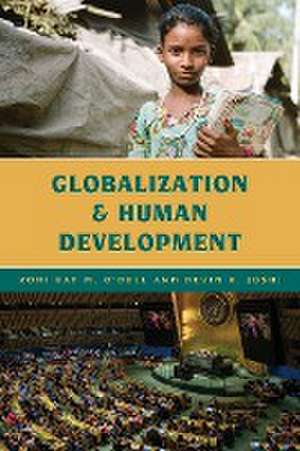
Globalization and Human Development: Globalization
Autor Roni Kay M. O'Dell, Devin K. Joshien Limba Engleză Paperback – 29 ian 2024
This book is the first to examine the globalization of the human development and capability approach (HDCA) as an ideology of international development and an ideology of globalization. It explores the relationship between HDCA and globalization, and the extent to which the HDCA has been globalizing. Further, the authors' analysis looks at:
How certain HDCA ideas are promoted, discussed, and cited more often than those stemming from neoliberalism and other development paradigms How the HDCA was influenced by development thinking in the Global South during the Cold War, along with mobilizations to end all forms of colonialism, neocolonialism, and imperialismWhy the HDCA has re-oriented global development thinking and practice away from state-centric and profit-focused development models fixated on GDP growth to prioritize individual well-being and freedoms.
Din seria Globalization
- 25%
 Preț: 220.55 lei
 - 53%
 Preț: 175.09 lei
 - 24%
 Preț: 224.01 lei
 - 25%
 Preț: 219.74 lei
 - 23%
 Preț: 255.81 lei
 -
 Preț: 329.34 lei
 - 23%
 Preț: 257.89 lei
 - 23%
 Preț: 258.39 lei
 - 23%
 Preț: 258.70 lei
 - 23%
 Preț: 257.70 lei
 - 16%
 Preț: 224.82 lei
 - 27%
 Preț: 221.03 lei
 - 24%
 Preț: 257.28 lei
 - 23%
 Preț: 256.79 lei
 - 24%
 Preț: 254.41 lei
 - 23%
 Preț: 256.41 lei
 - 23%
 Preț: 257.72 lei
 - 23%
 Preț: 256.41 lei
 - 25%
 Preț: 221.62 lei
 - 23%
 Preț: 256.31 lei
 -
 Preț: 313.40 lei
 -
 Preț: 332.87 lei
 - 24%
 Preț: 255.50 lei
 - 24%
 Preț: 255.53 lei
 - 30%
 Preț: 576.90 lei
 -
 Preț: 293.54 lei
Preț: 171.25 lei
Preț vechi: 231.90 lei
-26%
Puncte Express: 257
Carte tipărită la comandă
Livrare economică 01-15 decembrie
Livrare prin curier în România Termenul estimat este afișat lângă disponibilitate.
Transport gratuit de la 400.00 lei Plată online sau ramburs, în funcție de opțiunile comenzii.
Retur gratuit în 14 zile Comandă securizată și suport în română.
Specificații
ISBN-13: 9781538164150
ISBN-10: 1538164159
Pagini: 276
Ilustrații: 11 Graphs, 1 Maps, 18 Tables, 3 Textboxes
Dimensiuni: 150 x 227 x 20 mm
Greutate: 0.37 kg
Editura: Bloomsbury Publishing
Colecția Rowman & Littlefield
Seria Globalization
Locul publicării:New York, United States
ISBN-10: 1538164159
Pagini: 276
Ilustrații: 11 Graphs, 1 Maps, 18 Tables, 3 Textboxes
Dimensiuni: 150 x 227 x 20 mm
Greutate: 0.37 kg
Editura: Bloomsbury Publishing
Colecția Rowman & Littlefield
Seria Globalization
Locul publicării:New York, United States
Cuprins
List of Figures and Tables
List of Acronyms
Chapter 1: Introducing Globalization and Human Development
Our Contribution to Understanding Human Development and Globalization
Theories and History of Globalization
The Contemporary Era of Globalization
A Short Overview of Human Development
Historical Development Thinking and Practice
Human Development as an Alternative Theoretical and Practical Approach
Human Development Globalized
Globalization and Human Development (Cause and Effect)
Globalization as Human Development (Linking or Equivalence of the Concepts)
Globalization with Human Development (Capabilities Globalism)
The Dimensions and Processes of Globalization through which Human Development is Globalizing
Chapter Organization
Chapter 2: Human Development as an Ideology of Globalization
Defining and Explaining Ideology
Competing Ideologies of Globalization
Human Development as an Ideology of Globalization
Particularism and the Concern for Capabilities, Freedom, and Democracy
Universalism, Human Flourishing, and Capabilities
Locating the Human Development Paradigm as an Ideology
Comparing Human Development to Neoliberalism
Human Development as a Forward-Looking Ideology
Chapter 3: The Role of Intellectuals in Globalizing Human Development
Academics on the Human Development and Capability Approach
Amartya Sen
Martha Nussbaum
Mahbub ul Haq
Assessing the Academic Globalizing of the HDCA by Sen, Nussbaum, and ul Haq
The Human Development and Capability Association
The Dramatic Rise in Academic Publications on Human Development
Publications on the Human Development Reports and Index
Publications on HDCA Themes and Development Concepts
The Significance of Intellectuals in Globalizing the Human Development Ideology
Chapter 4: The Role of Mass Media in Globalizing Human Development
Who's Reporting on Human Development? Coverage of the HDRs and HDIs
Political Communication on the HD Ideology (Framing and Agenda Setting)
The Dramatic Rise in Media Reporting on the HDRs and HDI
Credibility and Resonance in Media Reporting
Persistence in Reporting
Decentralization in Reporting: Local and Global Newspaper Audiences
Reflections on the Human Development Paradigm and the Mass Media
Chapter 5: The United Nations and the Globalization of Human Development
Human Development from the League of Nations to the United Nations
Conference Diplomacy and Human Development Ideas, Concepts, and Theoretical Foundations
Human Development and UN Conferences to Support the Environment
Human Development and UN Conferences to Support Women
Human Development and UN Conferences to Support the Least Developed Countries
The UNDP Defines Human Development through the Human Development Reports
The Human Development Reports Office at the UNDP
Dimensions of Globalization Addressed in the HDRs
Next Steps for Human Development and International Cooperation
Chapter 6: The Role of the Global South in Globalizing Human Development
The Global South and Human Development
International Development and the Global South
The Global South and the United Nations
The Global South and the Non-Aligned Movement
Postcolonialism and the Human Development Ideology
Progress, Setbacks, Possibilities on Achieving Human Development in the Global South
Education
Life Expectancy
Income and Inequality
Multidimensional Poverty
Gender Equality
Global South Progress on MDGs and SDGs
The Future of Global South and Human Development
Chapter 7: Globalizing Human Development: A Success Story or a Work in Progress?
Reviewing Human Development Worldwide: Growths and Gaps
Human Development Compared to Alternative Approaches
Locating the Human Development Approach on the Left-Right Spectrum
Evaluating the Human Development Approach as an Ideology
Strengths of the Human Development Ideology
Weaknesses of the Human Development Ideology
Human Development in the Present and Future
Bibliography
About the Authors
List of Acronyms
Chapter 1: Introducing Globalization and Human Development
Our Contribution to Understanding Human Development and Globalization
Theories and History of Globalization
The Contemporary Era of Globalization
A Short Overview of Human Development
Historical Development Thinking and Practice
Human Development as an Alternative Theoretical and Practical Approach
Human Development Globalized
Globalization and Human Development (Cause and Effect)
Globalization as Human Development (Linking or Equivalence of the Concepts)
Globalization with Human Development (Capabilities Globalism)
The Dimensions and Processes of Globalization through which Human Development is Globalizing
Chapter Organization
Chapter 2: Human Development as an Ideology of Globalization
Defining and Explaining Ideology
Competing Ideologies of Globalization
Human Development as an Ideology of Globalization
Particularism and the Concern for Capabilities, Freedom, and Democracy
Universalism, Human Flourishing, and Capabilities
Locating the Human Development Paradigm as an Ideology
Comparing Human Development to Neoliberalism
Human Development as a Forward-Looking Ideology
Chapter 3: The Role of Intellectuals in Globalizing Human Development
Academics on the Human Development and Capability Approach
Amartya Sen
Martha Nussbaum
Mahbub ul Haq
Assessing the Academic Globalizing of the HDCA by Sen, Nussbaum, and ul Haq
The Human Development and Capability Association
The Dramatic Rise in Academic Publications on Human Development
Publications on the Human Development Reports and Index
Publications on HDCA Themes and Development Concepts
The Significance of Intellectuals in Globalizing the Human Development Ideology
Chapter 4: The Role of Mass Media in Globalizing Human Development
Who's Reporting on Human Development? Coverage of the HDRs and HDIs
Political Communication on the HD Ideology (Framing and Agenda Setting)
The Dramatic Rise in Media Reporting on the HDRs and HDI
Credibility and Resonance in Media Reporting
Persistence in Reporting
Decentralization in Reporting: Local and Global Newspaper Audiences
Reflections on the Human Development Paradigm and the Mass Media
Chapter 5: The United Nations and the Globalization of Human Development
Human Development from the League of Nations to the United Nations
Conference Diplomacy and Human Development Ideas, Concepts, and Theoretical Foundations
Human Development and UN Conferences to Support the Environment
Human Development and UN Conferences to Support Women
Human Development and UN Conferences to Support the Least Developed Countries
The UNDP Defines Human Development through the Human Development Reports
The Human Development Reports Office at the UNDP
Dimensions of Globalization Addressed in the HDRs
Next Steps for Human Development and International Cooperation
Chapter 6: The Role of the Global South in Globalizing Human Development
The Global South and Human Development
International Development and the Global South
The Global South and the United Nations
The Global South and the Non-Aligned Movement
Postcolonialism and the Human Development Ideology
Progress, Setbacks, Possibilities on Achieving Human Development in the Global South
Education
Life Expectancy
Income and Inequality
Multidimensional Poverty
Gender Equality
Global South Progress on MDGs and SDGs
The Future of Global South and Human Development
Chapter 7: Globalizing Human Development: A Success Story or a Work in Progress?
Reviewing Human Development Worldwide: Growths and Gaps
Human Development Compared to Alternative Approaches
Locating the Human Development Approach on the Left-Right Spectrum
Evaluating the Human Development Approach as an Ideology
Strengths of the Human Development Ideology
Weaknesses of the Human Development Ideology
Human Development in the Present and Future
Bibliography
About the Authors
Recenzii
Globalization and Human Development: From Counter-Ideology to the SDGs by Roni Kay M. O'Dell and Devin K. Joshi is a timely contribution to an important area. This book offers a critical and engaged discussion of the relationship between globalization and human development. It also provides a comprehensive overview of the history and current practice of human development as it interacts with and is driven by multiple facets of globalization. The book deserves attention from researchers and students of globalization and development.
This book offers a novel approach to understanding the evolving nature of the human development paradigm in the context of globalization. By analyzing multiple actors including the Global South as a rich source of information, O'Dell and Joshi persuasively demonstrate their impacts on framing development ideas, which in turn facilitates the process of globalizing this normative paradigm. This is a commendable read for those who want to comprehend a dynamic mechanism for development goal setting in the contemporary world.
In this enlightening book, Roni Kay O'Dell and Devin Joshi show convincingly that by putting people first, the ideology of human development offers a powerful alternative to mainstream approaches to development and globalization. Their analysis provides a thorough examination of the significant impact that human development has already had across space and time. It also suggests that as a global imaginary emphasizing individual dignity and empowerment, human development is likely to assume an increasingly prominent role in the years ahead.
This book offers a novel approach to understanding the evolving nature of the human development paradigm in the context of globalization. By analyzing multiple actors including the Global South as a rich source of information, O'Dell and Joshi persuasively demonstrate their impacts on framing development ideas, which in turn facilitates the process of globalizing this normative paradigm. This is a commendable read for those who want to comprehend a dynamic mechanism for development goal setting in the contemporary world.
In this enlightening book, Roni Kay O'Dell and Devin Joshi show convincingly that by putting people first, the ideology of human development offers a powerful alternative to mainstream approaches to development and globalization. Their analysis provides a thorough examination of the significant impact that human development has already had across space and time. It also suggests that as a global imaginary emphasizing individual dignity and empowerment, human development is likely to assume an increasingly prominent role in the years ahead.
Notă biografică
Roni Kay M. O'Dell is Associate Professor of Political Science and Coordinator of the Political Science and Global Studies Programs at Seton Hill University (SHU). Her recent book is Global Politics: A Toolkit for Learners, written with Sasha Breger Bush. Her published peer reviewed articles appear in International Studies Perspectives, Journal of Human Rights Practice, and Global Governance: A Review of Multilateralism and IOs, among others. She is the main advisor for SHU's award-winning Model UN program and is actively involved in organizations that support the UN, which currently includes positions on the ACUNS Board (Co-Treasurer) and the Human Development and Capabilities Association Executive Council (Director at Large).