
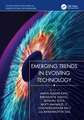
Emerging Trends in Evolving Technology: Taylor and Francis Proceedings in Computer Science and Engineering
Editat de Amiya Kumar Rath, Bibhudatta Sahoo, Srinivas Sethi, Mufti Mahmud, D. Chandrasekhar Rao, Bikramaditya Dasen Limba Engleză Hardback – 25 ian 2027
The proceedings present contemporary research on intelligent, connected, and sustainable technologies, bringing together contributions across computer science, electrical and electronics engineering, mechanical and metallurgical engineering, management, and the basic sciences. The volume covers artificial intelligence and machine learning, data science, IoT, cloud and edge computing, quantum and neuromorphic computing, cybersecurity, 5G, blockchain and Web3, robotics, autonomous systems, smart materials, electrical and communication systems, renewable energy, electric vehicles, microgrids, environmental engineering, structural health monitoring, and sustainable technologies. The contributions demonstrate how emerging computational and engineering approaches can improve efficiency, connectivity, automation, resource management, and resilience. Particular emphasis is placed on interdisciplinary solutions, responsible deployment of intelligent systems, energy efficiency, reduced environmental impact, and technology-enabled approaches to evolving societal and industrial needs.
The volume will be a valuable resource to scholars and researchers, scientists, industry professionals as well as policymakers and government officials who are interested in the latest trends and research in computer science, intelligent systems and data science.
Din seria Taylor and Francis Proceedings in Computer Science and Engineering
- 20%
 Preț: 433.51 lei
 - 20%
 Preț: 470.09 lei
 - 20%
 Preț: 439.92 lei
 - 20%
 Preț: 441.41 lei
 - 30%
 Preț: 1225.58 lei
 - 20%
 Preț: 438.78 lei
 - 18%
 Preț: 1362.23 lei
 - 20%
 Preț: 393.36 lei
 - 20%
 Preț: 394.16 lei
 - nou
 Preț: 343.23 lei
 - 20%
 Preț: 1370.51 lei
 - 29%
 Preț: 2060.42 lei
 - nou
 Preț: 365.06 lei
 - nou
 Preț: 362.04 lei
 - nou
 Preț: 360.63 lei
 - nou
 Preț: 368.88 lei
 - nou
 Preț: 359.93 lei
 - nou
 Preț: 352.13 lei
 - nou
 Preț: 363.92 lei
 - nou
 Preț: 357.28 lei
Preț: 1132.98 lei
Preț vechi: 1603.11 lei
-29% Precomandă
Puncte Express: 1699
Carte nepublicată încă
Livrare prin curier în România Precomanda se expediază când titlul devine disponibil.
Transport gratuit pentru acest produs Plată online sau ramburs, în funcție de opțiunile comenzii.
Retur gratuit în 14 zile Comandă securizată și suport în română.
Doresc să fiu notificat când acest titlu va fi disponibil:
Se trimite...
Specificații
ISBN-13: 9781041447184
ISBN-10: 1041447183
Pagini: 456
Dimensiuni: 210 x 280 mm
Ediția:1
Editura: CRC Press
Colecția CRC Press
Seria Taylor and Francis Proceedings in Computer Science and Engineering
ISBN-10: 1041447183
Pagini: 456
Dimensiuni: 210 x 280 mm
Ediția:1
Editura: CRC Press
Colecția CRC Press
Seria Taylor and Francis Proceedings in Computer Science and Engineering
Public țintă
Academic and GeneralCuprins
Session-1: Society, Informatics and Sustainability 1. Sustainable Waste Water Treatment for Future Generation 2. Quantitative Assessment of Functional Parameters Governing Electric Vehicle Dynamics 3. Leveraging Social Media for Promoting Sustainable Practices in Urban Communities 4. The Role of Fintech and Financial Inclusion in Bridging the Financial Divide: An Empirical Study on Access, Trust, and Technology in India 5. Trends in Evolving Technology for Long Term Sustainability in Supply Chain Management with the Implementation of AI: A Choice of Today and Tomorrow 6. Optimal Scheduling of Photovoltaic-Based Electric Vehicle Charging in Distribution Systems 7. Sustainable Concrete: Partial Replacement of Sand and Coarse Aggregate Using Stone Dust and Recycled Concrete Aggregate 8. A Systematic Review of Big Data Analytics in Healthcare: Exploring Uses, Methods and Persistent Challenges in the Evolving Landscape 9. Deriving the Expected Spot Price from the Forward Price Under the Condition of Risk Neutrality – A Case Study Approach 10. Optimization of Process Parameters in Co-Processing of Biomass and Plastic Wastes During Pyrolysis Session-2: Intelligent Information and Computing Systems – Health Monitoring 11. Automated Diabetic Retinopathy Detection Using CNN EfficientNet-B4: A Deep Learning Approach 12. Global Trends and Research Patterns in CAD-Based Robotic Prosthetic Hand Development: A Bibliometric Insight 13. Fuzzy Logic-Driven EEG Model for Real-Time Cognitive Profiling in Adaptive Learning 14. Development of an IoT Based Battery Performance Monitoring System Using EV Motor Test Rig Session-3: Intelligent Information and Computing Systems – Image Processing 15. An Efficient Video Summarization Using Spatio-Temporal Feature Fusion and Spectral Clustering 16. Comprehensive Insights into Color Image Equalization: Models, Methods, and Challenges 17. Enhancing Biomedical Image Processing Through Stochastic Models 18. Bird Species Enumeration Using Image Captioning Techniques with Visual Attention Session-4: Physical, Environmental, and Computational Sciences 19. Enhanced DVR Performance of Power Quality Improvement for Voltage Dips & Rises in Grid-Connected Power Systems 20. Close-Loop Controlled Solar Power Fed Boost Converter Having Reverse Power Recovery 21. Modeling of 3-Phase Induction Motor in Synchronous, Stationary and Arbitrary Reference Frame: A Review 22. A Comparative Study on Organic Compound Removal from Dairy Waste Water Using Adsorbents 23. A Synchrophasor Based Under Frequency Load Shedding Scheme During Disturbances for Interconnected Power Grids 24. Determination of Sub-Transient Reactance of a Salient-Pole Alternator Using Matlab/Simulink 25. Spatial Variation in Microplastic Contamination in Syllabus Olivacea: A Baseline Study from Ganjam Coast, Odisha 26. Suppression of Iron Ore Mine Dust with Biomass-Based Dust Suppressant – A Case Study Session-5: Intelligent Information and Computing Systems – Cloud, Security & IoT 27. A Multi-Layered IoT Security Framework for End-To-End Encryption and Anomaly Detection 28. A Comparative Evaluation of Cloud Models for Secure and Cost-Effective EHR Management 29. Safe and Effective Task Offloading in Multi-Access Edge Computing Using Blockchain and Deep Reinforcement Learning 30. IoT-Based Smart Energy Monitoring and Control System for Real Time Load Management 31. Hybrid ACO-RF Model: Advanced Task Scheduling and Load Balancing in Cloud Environments Using Ant Colony Optimization and Random Forest 32. FA-SVM: A Novel Hybrid Model for Dynamic Task Scheduling and Load Balancing in Cloud Environments 33. Botnet Attack Detection Using Optimized Weighted Ensemble Learning Framework 34. CAO-DTI: Context-Aware Offloading Using Digital Twin Intelligence for Efficient Edge-Cloud Computing 35. Revolutionizing Biometric Attendance with Wi-Fi Proximity, Face Recognition, and Voice Authentication 36. Performance Evaluation of Hybrid A* Algorithm in Path Planning of AUV in Real Time Underwater Environment Session-6: Intelligent Information and Computing Systems – Deep Learning 37. Deep Learning-Based Health Status Prediction of Industrial Machinery Using Hybrid LSTM-Attention Approach 38. An Optimized Deep Learning Scheme for Attack Detection in Fog Computing Using EAOA and UNSW-NB15 Dataset 39. Deep Learning-Based Equalization for MIMO Wireless Communication Systems: A Reliable Approach to ISI Mitigation 40. Supervised Machine Learning Driven Models for Software Defect Prediction Session-7: Smart Materials, Composites, and Structures 41. Influence of TiB2 Particle Reinforcement on Mechanical and Machining Properties of AA5083/B4C/TiB2 Hybrid Composites 42. Improving the Shear Behavior of SDRC Deep Beams Through GFRP Wrapping and Anchor Support 43. Artificial Neural Network-Based Design and Optimization of Si/4H-SiC HS-IMPATT Diodes for 300 GHz Applications 44. Sustainable Application of Coal Mine Overburden as a Road Embankment Material 45. Tribomechanical Characterization and Simulation Study of GrNP/Al 6053 Composites for Its Promising Application in Automobiles 46. Finite Element Simulation of Tribological Behaviour in SiC-Reinforced Al7075 Metal Matrix Composites 47. Quality Assessment of Groundwater of Bhograi Block in Balasore District of Odisha 48. Fabrication and Performance Evaluation of Jute-Glass Hybrid Composites 49. Synthesis, Structural and Microstructural Properties of Mg Doped TiO2 Nanoparticles 50. Mechanical and Sustainability Assessment of Fly Ash Based Ferrochrome Slag Aggregate Concrete: Particle Packing Optimization Technique 51. Restoration of Aged Asphalt Binder Properties Using Kusum Oil as a Sustainable Rejuvenating Agent Session-8: Intelligent Information and Computing Systems – Electrical & Electronics Engineering 52. A State of the Art Review on Spectrum Sensing in Cognitive Radio Network 53. Performance Analysis of Envelope-Tracking Power Amplifier for 6G mmWave Mobile Communications 54. A Broadband Dual-Polarized Antenna for Smart Power Grid Communication 55. A Hybrid Analytical Evolutionary Framework for High-Precision Characterization of Photovoltaic Modules 56. PV Battery Storage System Based on GWO Algorithm to Maximize Self Consumption 57. Design and Real-Time Simulation Validation of Passive Power Filters for Harmonic Mitigation and Reactive Power Compensation in Three-Phase Distribution Systems Using OPAL-RT 58. AODV for Adaptive Target Detection in Energy-Sensitive WSNs 59. Optimal Allocation of Fast Charging Stations with G2V and V2G Integration and D-STATCOMs in a Grid-Tied Microgrid Using Snow Ablation Optimizer 60. Bit-Transformation Analysis of a Frequency Domain 6-Bit Passive RFID Tag 61. Maximizing PV Power Efficiency Using Seagull Optimization Algorithm MPPT Using High-Gain Voltage-Multiplier Quadratic Boost Converter (HGVM-QBC) Session-9: Intelligent Information and Computing Systems – Machine Learning 62. Intelligent Power Quality Management in Microgrids: Reinforcement Learning Approach for UPQC Control 63. Statistical Validation of Hybrid Machine Learning and Fuzzy Logic Ensemble for Software Defect Prediction 64. Integrating Fuzzy AHP for Criteria Selection in the Development of Artificial Robotic Prosthetic Limb 65. Integration of Hybrid Machine Learning Approach for IoT Security 66. Smart Parking: An Optimized Solution Using ML and TCPS for Urban Areas 67. Optimized Explainable Federated Learning with Swarm Optimization for Secure Skin Lesion Classification
Notă biografică
Amiya Kumar Rath assumed the esteemed position of Vice Chancellor at the Biju Patnaik University of Technology, Odisha, in April 2023. With an impressive career spanning several roles, he brings a wealth of experience and expertise to his current leadership role. Prior to his appointment as Vice Chancellor, Prof. Rath served as the Adviser (ICT) at the National Assessment and Accreditation Council (NAAC), Bengaluru, India, for an esteemed tenure of nearly four and a half years. His academic and administrative contributions have been widely recognized by governmental and private bodies, underscoring his profound impact on the field of education.
Bibhudatta Sahoo is a distinguished Computer Science professor at the National Institute of Technology Rourkela (NIT Rourkela), whose research and teaching focus on several emerging and fundamental areas of computer science. His primary areas of specialization include Algorithmic Engineering, Distributed Systems, Cloud Computing, Fog and Edge Computing, Internet of Things (IoT), and Software Defined Networks (SDN) and Network Function Virtualization (NFV). Dr. Sahoo’s work explores the design and optimization of distributed systems and computing architectures, particularly in the context of cloud, fog, and edge environments.
Srinivas Sethi is a Professor in the Department of Computer Science Engineering & Applications at Indira Gandhi Institute of Technology, Sarang (IGIT, Sarang), India. He has been actively engaged in teaching and research since 1997, contributing significantly to the fields of computer science and emerging communication technologies. Prof. Sethi received his Ph.D. with a specialization in routing algorithms for Mobile Ad Hoc Networks (MANETs). His research interests have since expanded to several contemporary areas, including Wireless Sensor Networks, Cognitive Radio Networks, Cloud Computing, Big Data, Brain-Computer Interface (BCI), and Cognitive Science. His research focuses on addressing complex challenges in networking, intelligent computing, and next-generation technological systems.
Mufti Mahmud is a Professor in the Information and Computer Science Department at King Fahd University of Petroleum and Minerals (KFUPM), Saudi Arabia. He holds a Ph.D. in Information Engineering (Bioengineering Curriculum) from the University of Padova, Italy, and has more than 20 years of academic and industry experience across the UK, Italy, Belgium, Bangladesh, and India. Dr. Mahmud is widely regarded as a giant and highly influential figure in the research field, particularly in Artificial Intelligence, Cognitive Computing, Brain Informatics, and AI-enabled healthcare.
D. Chandrasekhar Rao is a distinguished academician and researcher in Computer Science and Engineering, with over 20 years of teaching and 15 years of research experience. He currently serves as an Associate Professor in the Department of Computer Science & Engineering, Centre for UG & PG Studies, BPUT, Rourkela. Prior to this, he served as an Assistant Professor in Information Technology at VSSUT, Burla, from August 2011 to April 2024. Dr. Rao’s research interests encompass navigation planning for wheeled mobile robots, cloud and fog computing, blockchain technology, machine learning, intrusion detection systems, and the Internet of Things (IoT). His research reflects a strong commitment to developing innovative and practical technological solutions.
Bikramaditya Das is a distinguished academician and researcher in the field of Electronics and Communication Engineering. He currently serves as an Associate Professor in the Department of Electronics and Communication Engineering at the Centre for UG & PG Studies (CUPGS), Biju Patnaik University of Technology (BPUT), Rourkela, Odisha. With extensive experience in teaching and research, Dr. Das has made significant contributions to robotics, wireless communication, and autonomous vehicle control. His research interests include formation control of autonomous underwater vehicles, robotics, wireless communication, and autonomous systems.
Bibhudatta Sahoo is a distinguished Computer Science professor at the National Institute of Technology Rourkela (NIT Rourkela), whose research and teaching focus on several emerging and fundamental areas of computer science. His primary areas of specialization include Algorithmic Engineering, Distributed Systems, Cloud Computing, Fog and Edge Computing, Internet of Things (IoT), and Software Defined Networks (SDN) and Network Function Virtualization (NFV). Dr. Sahoo’s work explores the design and optimization of distributed systems and computing architectures, particularly in the context of cloud, fog, and edge environments.
Srinivas Sethi is a Professor in the Department of Computer Science Engineering & Applications at Indira Gandhi Institute of Technology, Sarang (IGIT, Sarang), India. He has been actively engaged in teaching and research since 1997, contributing significantly to the fields of computer science and emerging communication technologies. Prof. Sethi received his Ph.D. with a specialization in routing algorithms for Mobile Ad Hoc Networks (MANETs). His research interests have since expanded to several contemporary areas, including Wireless Sensor Networks, Cognitive Radio Networks, Cloud Computing, Big Data, Brain-Computer Interface (BCI), and Cognitive Science. His research focuses on addressing complex challenges in networking, intelligent computing, and next-generation technological systems.
Mufti Mahmud is a Professor in the Information and Computer Science Department at King Fahd University of Petroleum and Minerals (KFUPM), Saudi Arabia. He holds a Ph.D. in Information Engineering (Bioengineering Curriculum) from the University of Padova, Italy, and has more than 20 years of academic and industry experience across the UK, Italy, Belgium, Bangladesh, and India. Dr. Mahmud is widely regarded as a giant and highly influential figure in the research field, particularly in Artificial Intelligence, Cognitive Computing, Brain Informatics, and AI-enabled healthcare.
D. Chandrasekhar Rao is a distinguished academician and researcher in Computer Science and Engineering, with over 20 years of teaching and 15 years of research experience. He currently serves as an Associate Professor in the Department of Computer Science & Engineering, Centre for UG & PG Studies, BPUT, Rourkela. Prior to this, he served as an Assistant Professor in Information Technology at VSSUT, Burla, from August 2011 to April 2024. Dr. Rao’s research interests encompass navigation planning for wheeled mobile robots, cloud and fog computing, blockchain technology, machine learning, intrusion detection systems, and the Internet of Things (IoT). His research reflects a strong commitment to developing innovative and practical technological solutions.
Bikramaditya Das is a distinguished academician and researcher in the field of Electronics and Communication Engineering. He currently serves as an Associate Professor in the Department of Electronics and Communication Engineering at the Centre for UG & PG Studies (CUPGS), Biju Patnaik University of Technology (BPUT), Rourkela, Odisha. With extensive experience in teaching and research, Dr. Das has made significant contributions to robotics, wireless communication, and autonomous vehicle control. His research interests include formation control of autonomous underwater vehicles, robotics, wireless communication, and autonomous systems.
Descriere
This book explores the advancement of machine learning along with evolving AI systems, with a focus on addressing environmental and societal challenges. It brings together interdisciplinary perspectives on computing, sustainability, and intelligent technologies, highlighting approaches and research for sustainable solutions.