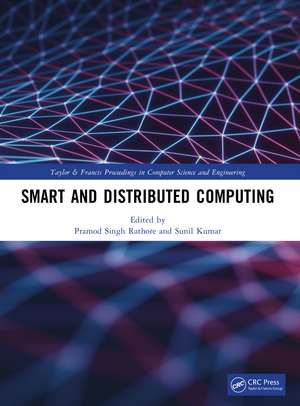
Smart and Distributed Computing: Taylor and Francis Proceedings in Computer Science and Engineering
Editat de Pramod Singh Rathore, Sunil Kumaren Limba Engleză Paperback – 8 sep 2026
A prominent feature of ICSDC 2025 is its emphasis on Digital Twin technologies. These virtual counterparts of physical systems allow for continuous monitoring, simulation, and lifecycle management of assets. They are increasingly being adopted in sectors such as industrial automation, infrastructure development, environmental monitoring, and healthcare. By providing real-time feedback and scenario modeling, digital twins promote more informed decision-making and efficient use of energy, materials, and human resources. The conference is deeply aligned with the vision of Industry 5.0, which emphasizes human-centric design, ethical AI, and intelligent automation. ICSDC 2025 highlights innovations that prioritize sustainability, resilience, and collaboration between humans and machines. Topics such as federated learning, cyber-physical systems, and context-aware computing are featured prominently, showcasing the potential of emerging technologies to enable a more inclusive and sustainable industrial future. The book includes research on low-power computing architectures, green AI models, edge intelligence, privacy-preserving mechanisms, and secure distributed systems.
The intended audience of ICSDC 2025 includes academic researchers, industry practitioners, system architects, and policy decision-makers who are working at the intersection of technology and sustainability. It serves as a strategic reference point for those seeking to design, implement, and scale digital ecosystems that are not only smart and secure but also equitable, human-centric, and environmentally sustainable.
Din seria Taylor and Francis Proceedings in Computer Science and Engineering
- 20%
 Preț: 433.51 lei
 - 20%
 Preț: 470.09 lei
 - 20%
 Preț: 441.41 lei
 - 30%
 Preț: 1225.58 lei
 - 20%
 Preț: 438.78 lei
 - nou
 Preț: 1362.23 lei
 - 20%
 Preț: 393.36 lei
 - 20%
 Preț: 394.16 lei
 - nou
 Preț: 436.57 lei
 - 20%
 Preț: 1370.51 lei
 - 29%
 Preț: 2060.42 lei
 - nou
 Preț: 365.06 lei
 - nou
 Preț: 361.83 lei
 - nou
 Preț: 360.63 lei
 - nou
 Preț: 368.88 lei
 - nou
 Preț: 359.93 lei
 - nou
 Preț: 352.13 lei
 - nou
 Preț: 363.92 lei
 - nou
 Preț: 357.28 lei
Preț: 439.92 lei
Preț vechi: 549.89 lei
-20% Nou
Puncte Express: 660
Carte tipărită la comandă
Livrare economică 26 noiembrie-10 decembrie
Livrare prin curier în România Termenul estimat este afișat lângă disponibilitate.
Transport gratuit pentru acest produs Plată online sau ramburs, în funcție de opțiunile comenzii.
Retur gratuit în 14 zile Comandă securizată și suport în română.
Specificații
ISBN-13: 9781041376514
ISBN-10: 1041376510
Pagini: 320
Dimensiuni: 210 x 280 mm
Greutate: 0.59 kg
Ediția:1
Editura: CRC Press
Colecția CRC Press
Seria Taylor and Francis Proceedings in Computer Science and Engineering
ISBN-10: 1041376510
Pagini: 320
Dimensiuni: 210 x 280 mm
Greutate: 0.59 kg
Ediția:1
Editura: CRC Press
Colecția CRC Press
Seria Taylor and Francis Proceedings in Computer Science and Engineering
Public țintă
Academic and Undergraduate CoreCuprins
1. Impact of Environmental and Host Factors on Mustard Plant Diseases: A DenseNet-Based Deep Learning Framework for Early Detection of Alternaria Blight
2. Vision-Based Techniques for Structural Damage Assessment: Opportunities and Challenges
3. Edge AI and Computer Vision for Real Time Surgical Guidance
4. Agent AI Framework for Intelligent Talent Acquisition and Employee Retention in Smart Organizations
5. AI Powered Customer Behavior Prediction in E Commerce Using Hybrid Deep Learning and IoT Analytics
6. Agent-Based AI for Corporate Social Responsibility (CSR): Towards Data-Driven Sustainability
7. A Hybrid IoT–ML Framework for Forecasting, Anomaly Detection, and Economic Control in Urban Supply Chains
8. AI-Augmented Workforce Analytics: A Deep Learning Framework for Talent Optimization
9. Explainable AI Framework for Predicting Socio-Economic Indicators in Emerging Markets
10. AI-Driven Adaptive Learning Systems Using Reinforcement Learning for Personalized Student Modeling and Instructional Adaptation
11. Attention Enhanced Deep Learning Framework for Multi-Crop Disease Classification Using Real-Time UAV Imagery
12. Intelligent Agent–Driven AI Framework for Talent Acquisition and Workforce Retention in Smart Organizations
13. A 5G-Integrated IoT Framework for Real-Time Crop Disease Detection and Farmer Advisory Services
14. Augmented Human Resource Analytics: A Deep Learning Approach for Talent Optimization
15. Blockchain IoT Integration for Transparent and Secure Financial Transactions
16. Hybrid Deep Learning and Bioelectrical Signal Analysis for Accurate Prediction of Kidney Function Anomalies
17. IoT and AI Driven Smart Agriculture: Predictive Models for Crop Yield and Resource Efficiency
18. Explainable AI-Driven Edge IoT System for Continuous Cardiovascular Health Monitoring
19. Transformers in Education: Personalized Learning Systems with AI-Driven Recommendations
20. Explainable Machine Learning Models for Demand Forecasting and Inventory Management in Smart Commerce
21. IoT-Enabled Smart Irrigation Systems with AI-Driven Crop Yield Prediction
22. Edge IoT Integrated Cardiovascular Monitoring System Using Wearable Sensors and Explainable AI
23. Fraud Detection in Digital Banking and E-Commerce Using Deep Learning Models
24. Digital Twin Frameworks for Remote Patient Monitoring and Predictive Healthcare
25. Explainable NLP Models for Sentiment and Thematic Evolution in Post-Colonial English Literature
26. Machine Learning for Financial Forecasting and Risk Assessment in Global Markets
27. Federated Learning–Based Predictive Analytics for Decentralized Solar Energy Forecasting in Smart Grids
28. Blockchain-Backed Certification Framework for Secure and Verifiable Online Education Systems
29. Generative AI Models for Automated Curriculum Structuring and Intelligent Content Delivery in ICT Education
30. Generative AI for Automated Curriculum Design and Intelligent Content Delivery in ICT Education
31. Lightweight Security Mechanisms for MQTT in Resource-Constrained IOT Environment
32. Integrated Real-Time Object Detection System for Robust Autonomous Vehicle Navigation
33. Cyber-Physical Framework for Smart Ambulance Coordination
34. CipherBox – Advanced Secure File Transmission Using Symmetric Cryptography
35. Integrating Deep Belief Nets for Enhanced Chronic Kidney Disease Prediction using Cat Boost, Random Forest with Logistic Regression as Meta Model
36. An NLP Tool for Translating Welfare Information: A Hybrid Controlled-Language and Domain-Adapted NMT Approach
37. Pomegranate Fruit Disease Identification Using Deep Learning: Validating Public Datasets with Observational Studies from Maharashtra
38. Multilingual automatic speech recognition using wav2vec2 xls-r and transformer
39. Assessing AI Algorithms for Performance Optimization in Satellite Communication
40. Geophysical Waveform Inversion
41. Analysis of the Power-Delay Product in a Full Adder using the Quantum Logic Technique
42. A Symptom-Aware Knowledge Retrieval System Using LLMs and RAG
43. Smart Computing in Society 4.0
44. Comparative Study of Models based on Machine Learning and Deep Learning for Brain Tumor Segmentation
45. Finnlet : An Algo Trading Platform
46. Enhancing Congestion Management in Satellite Networks: A Comparative Study of Traditional and AI-Driven Approaches
47. Making ViTs Practical: Efficient Designs and Edge Deployment Strategies
48. CoSRaK: A Deep Learning Framework for Handwritten Digit Classification
49. Exploiting Trust: A Comprehensive Review of SSL Certificate Abuse in Modern Phishing Attacks
50. Crime Rate Detector: A Data Driven Approach to Streamlining Investigations
51. Blockchain Integrated IoT Architecture for Energy Management in Smart City
52. Effort Estimation in Software Projects Using Machine Learning Techniques
53. Sleep Quality Analysis and Health Monitoring Using IOT
54. Fertilizer Recommendation System Using Deep Learning for Rice Crop
55. AI-Driven Multimodal Fusion of Speech and MRI for Early Detection of Alzheimer’s Disease
56. A Unified Explainable Multimodal Deep Learning Framework for Reliable Cardiovascular Diagnosis and Risk Prediction
57. Explainable Deep Learning in Medical Imaging for Asthma Diagnosis and Phenotyping: A Novel Integrative Framework
58. Deep Learning Based Course Recommender System for Massive Open Online Courses (MOOCs)
59. Enhanced Real-Time ASL Alphabet Recognition and Text Conversion System
60. ICRF: Isotonic Calibrated Random Forest Framework for Diabetes Prediction
61. Sentiment Analysis Using Long Short-Term Memory on Twitter Dataset
62. Learning Activity IOT based Monitor for Special Need Education
63. IoT-Based Gas Leak Detection and Notification System: A Scalable Solution using ESP32, Firebase, and Mobile Integration
64. Topology-Aware Multimodal Fusion of Transformer, GNN, and IoT Streams for Predictive Customer Modelling in E-Commerce Platforms
65. AI-Enhanced Edge Devices for Real-Time Monitoring in Smart Agricultural Systems
2. Vision-Based Techniques for Structural Damage Assessment: Opportunities and Challenges
3. Edge AI and Computer Vision for Real Time Surgical Guidance
4. Agent AI Framework for Intelligent Talent Acquisition and Employee Retention in Smart Organizations
5. AI Powered Customer Behavior Prediction in E Commerce Using Hybrid Deep Learning and IoT Analytics
6. Agent-Based AI for Corporate Social Responsibility (CSR): Towards Data-Driven Sustainability
7. A Hybrid IoT–ML Framework for Forecasting, Anomaly Detection, and Economic Control in Urban Supply Chains
8. AI-Augmented Workforce Analytics: A Deep Learning Framework for Talent Optimization
9. Explainable AI Framework for Predicting Socio-Economic Indicators in Emerging Markets
10. AI-Driven Adaptive Learning Systems Using Reinforcement Learning for Personalized Student Modeling and Instructional Adaptation
11. Attention Enhanced Deep Learning Framework for Multi-Crop Disease Classification Using Real-Time UAV Imagery
12. Intelligent Agent–Driven AI Framework for Talent Acquisition and Workforce Retention in Smart Organizations
13. A 5G-Integrated IoT Framework for Real-Time Crop Disease Detection and Farmer Advisory Services
14. Augmented Human Resource Analytics: A Deep Learning Approach for Talent Optimization
15. Blockchain IoT Integration for Transparent and Secure Financial Transactions
16. Hybrid Deep Learning and Bioelectrical Signal Analysis for Accurate Prediction of Kidney Function Anomalies
17. IoT and AI Driven Smart Agriculture: Predictive Models for Crop Yield and Resource Efficiency
18. Explainable AI-Driven Edge IoT System for Continuous Cardiovascular Health Monitoring
19. Transformers in Education: Personalized Learning Systems with AI-Driven Recommendations
20. Explainable Machine Learning Models for Demand Forecasting and Inventory Management in Smart Commerce
21. IoT-Enabled Smart Irrigation Systems with AI-Driven Crop Yield Prediction
22. Edge IoT Integrated Cardiovascular Monitoring System Using Wearable Sensors and Explainable AI
23. Fraud Detection in Digital Banking and E-Commerce Using Deep Learning Models
24. Digital Twin Frameworks for Remote Patient Monitoring and Predictive Healthcare
25. Explainable NLP Models for Sentiment and Thematic Evolution in Post-Colonial English Literature
26. Machine Learning for Financial Forecasting and Risk Assessment in Global Markets
27. Federated Learning–Based Predictive Analytics for Decentralized Solar Energy Forecasting in Smart Grids
28. Blockchain-Backed Certification Framework for Secure and Verifiable Online Education Systems
29. Generative AI Models for Automated Curriculum Structuring and Intelligent Content Delivery in ICT Education
30. Generative AI for Automated Curriculum Design and Intelligent Content Delivery in ICT Education
31. Lightweight Security Mechanisms for MQTT in Resource-Constrained IOT Environment
32. Integrated Real-Time Object Detection System for Robust Autonomous Vehicle Navigation
33. Cyber-Physical Framework for Smart Ambulance Coordination
34. CipherBox – Advanced Secure File Transmission Using Symmetric Cryptography
35. Integrating Deep Belief Nets for Enhanced Chronic Kidney Disease Prediction using Cat Boost, Random Forest with Logistic Regression as Meta Model
36. An NLP Tool for Translating Welfare Information: A Hybrid Controlled-Language and Domain-Adapted NMT Approach
37. Pomegranate Fruit Disease Identification Using Deep Learning: Validating Public Datasets with Observational Studies from Maharashtra
38. Multilingual automatic speech recognition using wav2vec2 xls-r and transformer
39. Assessing AI Algorithms for Performance Optimization in Satellite Communication
40. Geophysical Waveform Inversion
41. Analysis of the Power-Delay Product in a Full Adder using the Quantum Logic Technique
42. A Symptom-Aware Knowledge Retrieval System Using LLMs and RAG
43. Smart Computing in Society 4.0
44. Comparative Study of Models based on Machine Learning and Deep Learning for Brain Tumor Segmentation
45. Finnlet : An Algo Trading Platform
46. Enhancing Congestion Management in Satellite Networks: A Comparative Study of Traditional and AI-Driven Approaches
47. Making ViTs Practical: Efficient Designs and Edge Deployment Strategies
48. CoSRaK: A Deep Learning Framework for Handwritten Digit Classification
49. Exploiting Trust: A Comprehensive Review of SSL Certificate Abuse in Modern Phishing Attacks
50. Crime Rate Detector: A Data Driven Approach to Streamlining Investigations
51. Blockchain Integrated IoT Architecture for Energy Management in Smart City
52. Effort Estimation in Software Projects Using Machine Learning Techniques
53. Sleep Quality Analysis and Health Monitoring Using IOT
54. Fertilizer Recommendation System Using Deep Learning for Rice Crop
55. AI-Driven Multimodal Fusion of Speech and MRI for Early Detection of Alzheimer’s Disease
56. A Unified Explainable Multimodal Deep Learning Framework for Reliable Cardiovascular Diagnosis and Risk Prediction
57. Explainable Deep Learning in Medical Imaging for Asthma Diagnosis and Phenotyping: A Novel Integrative Framework
58. Deep Learning Based Course Recommender System for Massive Open Online Courses (MOOCs)
59. Enhanced Real-Time ASL Alphabet Recognition and Text Conversion System
60. ICRF: Isotonic Calibrated Random Forest Framework for Diabetes Prediction
61. Sentiment Analysis Using Long Short-Term Memory on Twitter Dataset
62. Learning Activity IOT based Monitor for Special Need Education
63. IoT-Based Gas Leak Detection and Notification System: A Scalable Solution using ESP32, Firebase, and Mobile Integration
64. Topology-Aware Multimodal Fusion of Transformer, GNN, and IoT Streams for Predictive Customer Modelling in E-Commerce Platforms
65. AI-Enhanced Edge Devices for Real-Time Monitoring in Smart Agricultural Systems
Notă biografică
Pramod Singh Rathore is working in the Department of Computer and Communication Engineering, Manipal University Jaipur. He has completed his Ph. D. in Computer Science & Engineering from the University of Engineering and Management, Jaipur (UEM) and done M. Tech in Computer Sci. & Engineering from the Government Engineering College Ajmer, Rajasthan Technical University, Kota, India. With over 15 years of academic teaching experience, he has published more than 95 papers in reputable, peer-reviewed national and international journals, books, and conferences. He has co-authored and edited numerous books with well-known publishers. His research interests include computer networks, data mining, and DBMS. He is a senior member of IEEE. He also serves on the editorial and advisory committees of the Global Journal Group. He is a senior member of reputed technical societies like IEEE. He is also a member of various national and international professional societies in engineering and research, including the ACM and the International Association of Engineers (IAENG).
Sunil Kumar is a distinguished academician, currently serving as Head of the Department of Computer and Communication Engineering at Manipal University Jaipur. He started his journey as an academician as a lecturer at Guru Jambheshwar University Hisar from 2002-2003. From 2003 to 2017, he worked in different academic positions as a Lecturer, Assistant Professor, and Associate Professor at Mody University of Science and Technology, Lakshmangarh. He was an Associate Professor from 2017 to 2020 and Professor since 2020 at the Department of Computer and Communication Engineering at Manipal University Jaipur. Sunil Kumar obtained an M. Tech. in Computer Science and Engineering, from Kurukshetra University, Kurukshetra in 2001. He received a Ph.D. in Engineering from Mody University of Science and Technology in 2015 in Image Forensics. He has qualified Graduate Aptitude Test in Engineering (GATE) in Computer Science and the UGC-National Eligibility Test (NET) in Computer Applications. He has supervised many undergraduate and postgraduate projects and currently supervising 05 Ph.D. thesis. He has authored more than 35 articles in national and international journals and conferences. He is a reviewer of many high-impact journals and an evaluator of Smart India Hackathons. He has been a TPC member of more than 50 international conferences and chaired many sessions. He has one patent granted and many published in patent office journal, India. He has design patents and copyrights to his credit. He is a senior member of reputed technical societies like IEEE, CSI, IUPRAI, and IEI. He has been co-chairman of various international conferences, including Innovations in Computational Intelligence and Computer Vision (ICICV) 2020/2021/2022/2024/2025. He has organized many FDPs including ATAL FDP. His main research areas include Machine Intelligence, Energy Efficient Cloud Infrastructure, and IoT.
Sunil Kumar is a distinguished academician, currently serving as Head of the Department of Computer and Communication Engineering at Manipal University Jaipur. He started his journey as an academician as a lecturer at Guru Jambheshwar University Hisar from 2002-2003. From 2003 to 2017, he worked in different academic positions as a Lecturer, Assistant Professor, and Associate Professor at Mody University of Science and Technology, Lakshmangarh. He was an Associate Professor from 2017 to 2020 and Professor since 2020 at the Department of Computer and Communication Engineering at Manipal University Jaipur. Sunil Kumar obtained an M. Tech. in Computer Science and Engineering, from Kurukshetra University, Kurukshetra in 2001. He received a Ph.D. in Engineering from Mody University of Science and Technology in 2015 in Image Forensics. He has qualified Graduate Aptitude Test in Engineering (GATE) in Computer Science and the UGC-National Eligibility Test (NET) in Computer Applications. He has supervised many undergraduate and postgraduate projects and currently supervising 05 Ph.D. thesis. He has authored more than 35 articles in national and international journals and conferences. He is a reviewer of many high-impact journals and an evaluator of Smart India Hackathons. He has been a TPC member of more than 50 international conferences and chaired many sessions. He has one patent granted and many published in patent office journal, India. He has design patents and copyrights to his credit. He is a senior member of reputed technical societies like IEEE, CSI, IUPRAI, and IEI. He has been co-chairman of various international conferences, including Innovations in Computational Intelligence and Computer Vision (ICICV) 2020/2021/2022/2024/2025. He has organized many FDPs including ATAL FDP. His main research areas include Machine Intelligence, Energy Efficient Cloud Infrastructure, and IoT.
Descriere
It presents a collection of research that integrates innovation with sustainability. The purpose is to foster dialogue focused on building intelligent, secure, and environmentally responsible computing systems. ICSDC 2025 addresses the need for advanced and intelligent technologies that align with sustainable development goals.