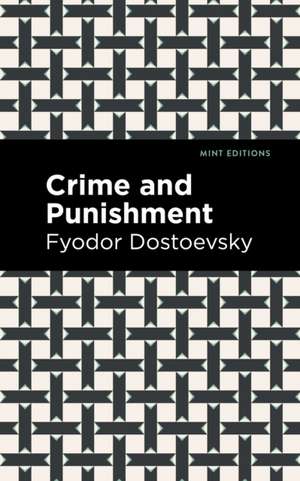
Crime and Punishment: Mint Editions (Philosophical and Theological Work)
Autor Fyodor Dostoevskyen Limba Engleză Hardback – 24 noi 2020
Observăm în proza lui Fyodor Dostoevsky o densitate psihologică ce transformă simpla narațiune într-o experiență cvasi-viscerală. În Crime and Punishment, stilul nu este doar un vehicul al poveștii, ci o oglindă a febrei și a delirului care îl cuprind pe protagonist. Această ediție în limba engleză, semnată de Constance Garnett, păstrează acea cadență tensionată, specifică autorului, în care monologul interior devine un câmp de luptă filozofic. Subliniem faptul că acesta este primul mare roman al maturității dostoievskiene, marcând o tranziție clară de la observația socială din The House of the Dead către explorarea abisurilor conștiinței umane. Premisa este deceptiv de simplă: Rodion Raskolnikov, un fost student sărac, comite o dublă crimă dintr-un amestec de necesitate și aroganță intelectuală. Însă esența cărții nu rezidă în actul violent, ci în „pedeapsa” care începe imediat după acesta — o prăbușire psihologică pe care autorul o documentează cu o precizie chirurgicală. În tradiția analizei literare propuse de Richard Peace în studiile sale despre autor, acest roman reimaginează conceptul de vinovăție nu ca pe o categorie juridică, ci ca pe o stare de alienare față de umanitate. Ritmul este deliberat sufocant, reflectând claustrofobia mansardelor din Sankt Petersburg, iar tonul pendulează între luciditate tăioasă și compasiune mistică. Față de complexitatea corală din The Brothers Karamazov, aici atenția este focalizată aproape obsesiv pe dualitatea personajului central, oferind o perspectivă unică asupra modului în care ideile abstracte pot corupe spiritul uman.
Din seria Mint Editions (Philosophical and Theological Work)
-
 Preț: 72.57 lei
 -
 Preț: 135.88 lei
 -
 Preț: 110.03 lei
 -
 Preț: 73.15 lei
 -
 Preț: 48.96 lei
 -
 Preț: 58.22 lei
 -
 Preț: 52.19 lei
 -
 Preț: 84.67 lei
 -
 Preț: 78.23 lei
 -
 Preț: 110.15 lei
 -
 Preț: 138.58 lei
 -
 Preț: 51.49 lei
 -
 Preț: 52.00 lei
 -
 Preț: 111.50 lei
 -
 Preț: 58.12 lei
 -
 Preț: 46.43 lei
 -
 Preț: 46.14 lei
 -
 Preț: 303.02 lei
 -
 Preț: 77.56 lei
 -
 Preț: 53.11 lei
 -
 Preț: 81.54 lei
 -
 Preț: 129.46 lei
 -
 Preț: 133.61 lei
Preț: 180.05 lei
Carte indisponibilă temporar
Specificații
ISBN-10: 1513220829
Pagini: 508
Dimensiuni: 132 x 209 x 33 mm
Greutate: 0.67 kg
Editura: Mint Editions
Colecția Mint Editions (Philosophical and Theological Work)
Seria Mint Editions (Philosophical and Theological Work)
V-ar putea interesa
-
 Wuthering HeightsEmily BrontëPreț: 28.01 lei
 -
 The Picture of Dorian GrayOscar WildePreț: 28.01 lei
 -
 CLASSICS HOUND OF BASKERVILLESArthur Conan DoylePreț: 28.01 lei
 -
 Japanese Women Don't Get Old or FatNaomi Moriyama-30%Preț: 93.24 lei132.46 lei
 -
 Animal FarmGeorge Orwell-28%Preț: 50.76 lei70.23 lei
 -
 The Little PrinceAntoine de Saint-Exupèry-26%Preț: 48.20 lei65.00 lei
 -
 Looking for AlaskaJohn GreenPreț: 84.45 lei
 -
 The Wonderful Wizard Of OzFrank L BaumPreț: 40.60 lei
 -
 Lord of the FliesWilliam GoldingPreț: 71.58 lei
 -
 Harry Potter and the Chamber of SecretsJ. K. Rowling-23%Preț: 51.09 lei66.40 lei
 -
 Harry Potter and the Goblet of FireJ. K. Rowling-20%Preț: 60.33 lei75.85 lei
 -
 Romeo and JulietWilliam ShakespearePreț: 36.06 lei
 -
 Midsummer Night''s DreamWilliam ShakespearePreț: 35.95 lei
 -
 War and PeaceLeo TolstoyPreț: 44.02 lei
 -
 Fairy TalesHans Christian AndersenPreț: 37.73 lei
 -
 PinocchioCarlo CollodiPreț: 35.93 lei
 -
 The IdiotFyodor DostoevskyPreț: 40.12 lei
 -
 Anna KareninaLeo TolstoyPreț: 42.39 lei
De ce să citești această carte
Pentru cititorul care dorește să exploreze granița dintre moralitate și rațiune pură. Crime and Punishment nu este doar un roman clasic, ci un studiu fundamental despre condiția umană, oferind o înțelegere profundă a modului în care conștiința funcționează sub presiunea vinei. Câștigați acces la una dintre cele mai influente opere ale literaturii universale, esențială pentru oricine este interesat de psihologie și filozofie existențială.
Despre autor
Fyodor Dostoevsky (1821–1881) a fost unul dintre cei mai profunzi romancieri ruși, a cărui viață a fost marcată de extreme: de la condamnarea la moarte și anii de muncă silnică în Siberia, până la recunoașterea ca voce literară de geniu. Experiențele sale din exil i-au modelat viziunea asupra suferinței și mântuirii, teme centrale în capodopere precum The Idiot sau The Brothers Karamazov. Este considerat un precursor al existențialismului, opera sa influențând decisiv gânditori precum Nietzsche și Sartre, dar și bazele psihanalizei moderne.
Descriere scurtă
Descriere
Translated by Constance Garnett with an Introduction and Notes by Dr Keith Carabine, University of Kent at Canterbury.
Crime and Punishment is one of the greatest and most readable novels ever written. From the beginning we are locked into the frenzied consciousness of Raskolnikov who, against his better instincts, is inexorably drawn to commit a brutal double murder.
From that moment on, we share his conflicting feelings of self-loathing and pride, of contempt for and need of others, and of terrible despair and hope of redemption: and, in a remarkable transformation of the detective novel, we follow his agonised efforts to probe and confront both his own motives for, and the consequences of, his crime.
The result is a tragic novel built out of a series of supremely dramatic scenes that illuminate the eternal conflicts at the heart of human existence: most especially our desire for self-expression and self-fulfilment, as against the constraints of morality and human laws; and our agonised awareness of the world's harsh injustices and of our own mortality, as against the mysteries of divine justice and immortality.
Recenzii
Superb... the Oxford University Press edition is beautifully produced and competitively priced.