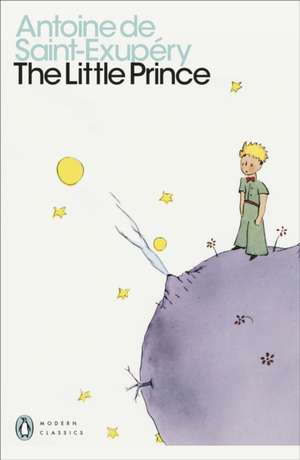
The Little Prince
Autor Antoine de Saint-Exupèry Traducere de T V F Cuffeen Limba Engleză Paperback – 25 ian 2001
Descoperim aici o ediție de colecție care transformă lectura într-o experiență interactivă de explorare a universului creat de Antoine de Saint-Exupèry. Această ediție aniversară de 75 de ani nu se limitează doar la textul clasic, ci invită cititorii să descopere „în spatele scenei” prin schițe originale, fotografii de arhivă și detalii despre procesul creativ. Este o oportunitate rară pentru părinți de a le arăta copiilor cum prinde viață o poveste, de la primele desene până la recenziile publicate la prima apariție a cărții. Reținem că această versiune Little Prince 75th Anniversary Edition pune accent pe contextul istoric, oferind o perspectivă documentară care lipsește din edițiile standard. Deși păstrează ritmul contemplativ și tonul filozofic care au consacrat volumul, prezența elementelor vizuale suplimentare și a biografiei autorului adaugă o profunzime educativă remarcabilă. Părinții care au explorat cu cei mici The Little Prince Deluxe Pop-Up Book pentru ingineria hârtiei vor aprecia și această ediție pentru bogăția informațiilor de arhivă, care explică de ce micul prinț a devenit un simbol universal. Dacă varianta pop-up mizează pe spectacol vizual tridimensional, ediția de față propune o conexiune emoțională și intelectuală mai strânsă cu autorul, fiind ideală pentru copiii care încep să pună întrebări despre cum se scrie o carte. Recomandăm acest volum ca pe o moștenire culturală, un obiect de bibliotecă ce poate fi răsfoit și studiat împreună, oferind răspunsuri la curiozitățile despre viața lui Antoine de Saint-Exupèry.
Preț: 47.97 lei
Preț vechi: 65.00 lei
-26%
Carte disponibilă
Livrare economică 13-25 noiembrie
Livrare express 29 octombrie-04 noiembrie pentru 36.43 lei
Specificații
ISBN-10: 0141185627
Pagini: 160
Dimensiuni: 129 x 200 x 12 mm
Greutate: 0.2 kg
Editura: Penguin Books
Locul publicării:London, United Kingdom
V-ar putea interesa
-
 Wuthering HeightsEmily BrontëPreț: 28.01 lei
 -
 The Picture of Dorian GrayOscar WildePreț: 28.01 lei
 -
 CLASSICS HOUND OF BASKERVILLESArthur Conan DoylePreț: 28.01 lei
 -
 The Wonderful Wizard Of OzFrank L BaumPreț: 40.60 lei
 -
 Black BeautyAnna SewellPreț: 39.76 lei
 -
 The HobbitJ. R. R. TolkienPreț: 107.33 lei
 -
 Lord of the FliesWilliam GoldingPreț: 71.58 lei
 -
 The CouplesLauren MackenziePreț: 81.15 lei
 -
 Harry Potter and the Chamber of SecretsJ. K. Rowling-23%Preț: 51.09 lei66.40 lei
 -
 Harry Potter and the Goblet of FireJ. K. Rowling-21%Preț: 60.26 lei75.85 lei
 -
 -18%Preț: 65.80 lei79.99 lei
 -
 Crime and PunishmentFyodor DostoevskyPreț: 39.02 lei
 -
 Romeo and JulietWilliam ShakespearePreț: 36.06 lei
 -
 Midsummer Night''s DreamWilliam ShakespearePreț: 35.95 lei
 -
 Fairy TalesHans Christian AndersenPreț: 37.73 lei
 -
 PinocchioCarlo CollodiPreț: 35.93 lei
 -
 The IdiotFyodor DostoevskyPreț: 40.12 lei
 -
 Anna KareninaLeo TolstoyPreț: 42.39 lei
De ce să citești această carte
Recomandăm această carte părinților care doresc să cultive empatia și gândirea critică a copiilor de peste 7 ani. Cititorul câștigă o perspectivă unică asupra priorităților vieții, învățând că responsabilitatea față de cei dragi („îmblânzirea”) este cea care dă valoare timpului nostru. Este o lectură fundamentală pentru a înțelege că maturitatea nu trebuie să însemne pierderea inocenței sau a curiozității.
Despre autor
Antoine De Saint-Exupery (1900–1944) a fost un aristocrat, scriitor și aviator francez, a cărui viață a fost marcată de pasiunea pentru zbor și explorarea condiției umane. Experiențele sale ca pilot de cursă lungă în Africa și America de Sud au servit drept fundament pentru proza sa, adesea încărcată de reflecții filozofice. A dispărut în mod misterios în timpul unei misiuni de recunoaștere deasupra Mediteranei în 1944, la scurt timp după publicarea capodoperei sale, lăsând în urmă o moștenire literară centrată pe valorile prieteniei și ale datoriei morale.
Descriere scurtă
Descriere
Antoine de Saint-Exupéry first published The Little Prince in 1943, only a year before his Lockheed P-38 vanished over the Mediterranean during a reconnaissance mission. More than a half century later, this fable of love and loneliness has lost none of its power. The narrator is a downed pilot in the Sahara Desert, frantically trying to repair his wrecked plane. His efforts are interrupted one day by the apparition of a little, well, prince, who asks him to draw a sheep. "In the face of an overpowering mystery, you don't dare disobey," the narrator recalls. "Absurd as it seemed, a thousand miles from all inhabited regions and in danger of death, I took a scrap of paper and a pen out of my pocket." And so begins their dialogue, which stretches the narrator's imagination in all sorts of surprising, childlike directions.
Notă biografică
Writer and aviator Antoine de Saint-Exupéry (1900-1944), was born into an aristocratic French family at the turn of the century. Saint-Exupéry was preoccupied with aviation from a young age; a passion which would lead him into the French Air Force. His first two books, Southern Mail and Night Flight, are distinguished by a poetic evocation of the romance and discipline of flying. Later works, including Wind, Sand and Stars and Flight to Arras, stress his humanistic philosophy. Saint-Exupéry's popular children's book The Little Prince is also read by adults for its allegorical meaning. In 1944, Saint-Exupéry's plane disappeared during a mission in World War II.