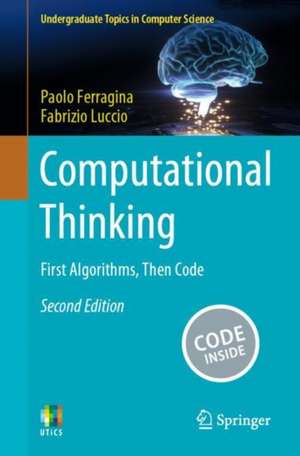
Computational Thinking: Undergraduate Topics in Computer Science
Autor Paolo Ferragina, Fabrizio Luccioen Limba Engleză Paperback – 11 oct 2024
Descoperim aici o abordare care transformă conceptele abstracte în soluții executabile, începând chiar din primele pagini cu un exercițiu clasic de organizare a unui turneu sportiv pentru a ilustra eficiența algoritmică. Computational Thinking nu se limitează la teorie, ci ghidează cititorul prin procesul de modelare a problemelor reale, cum ar fi optimizarea căutărilor pe web sau securizarea mesajelor prin metode criptografice. Subliniem rigoarea științifică pe care Paolo Ferragina și Fabrizio Luccio o mențin, reușind să explice mecanisme complexe fără a recurge la un aparat matematic intimidant.
Structura volumului este una progresivă: pornește de la o schiță istorică și definirea algoritmilor, avansează spre structuri de date esențiale și culminează cu analiza distincției dintre problemele „ușoare” și cele „dificile”. Notăm cu interes includerea unui capitol dedicat compresiei datelor, o temă recurentă în opera lui Paolo Ferragina, care face legătura cu lucrarea sa Pearls of Algorithm Engineering, unde acesta explorează eficiența practică a algoritmilor pentru volume mari de date. Față de Introduction to Computational Thinking de Thomas Mailund, care se concentrează pe arta programării, acest volum este mai puțin abstract și mai mult orientat spre aplicații multidisciplinare, fiind ancorat în probleme topice de inginerie și matematică aplicată.
Experiența de lectură este susținută de resurse digitale, codul Python fiind esențial pentru a înțelege cum logica devine funcționalitate. Este o resursă valoroasă pentru cei care doresc să treacă de la simpla utilizare a tehnologiei la înțelegerea principiilor care guvernează software-ul modern, oferind o perspectivă tehnică dar accesibilă asupra „gândirii computaționale”.
Din seria Undergraduate Topics in Computer Science
-
 Preț: 395.23 lei
 - 20%
 Preț: 385.10 lei
 - 20%
 Preț: 312.27 lei
 - 20%
 Preț: 189.38 lei
 - 20%
 Preț: 421.74 lei
 - 20%
 Preț: 305.83 lei
 - 20%
 Preț: 371.00 lei
 - 20%
 Preț: 449.65 lei
 - 20%
 Preț: 379.01 lei
 - 20%
 Preț: 418.11 lei
 - 20%
 Preț: 415.26 lei
 - 20%
 Preț: 420.26 lei
 - 20%
 Preț: 417.70 lei
 - 20%
 Preț: 405.77 lei
 - 38%
 Preț: 213.33 lei
 - 20%
 Preț: 307.20 lei
 - 20%
 Preț: 300.52 lei
 - 20%
 Preț: 209.72 lei
 - 20%
 Preț: 294.96 lei
 - 20%
 Preț: 300.06 lei
 - 20%
 Preț: 318.89 lei
 - 20%
 Preț: 360.32 lei
 - 20%
 Preț: 370.16 lei
 - 20%
 Preț: 395.42 lei
 - 20%
 Preț: 277.03 lei
 - 20%
 Preț: 228.11 lei
 -
 Preț: 251.33 lei
 - 20%
 Preț: 490.78 lei
 - 20%
 Preț: 300.10 lei
 - 20%
 Preț: 267.09 lei
 - 20%
 Preț: 299.46 lei
 - 20%
 Preț: 263.25 lei
 - 20%
 Preț: 432.63 lei
 - 20%
 Preț: 303.67 lei
 - 20%
 Preț: 304.25 lei
 - 20%
 Preț: 463.30 lei
 - 20%
 Preț: 432.17 lei
 - 20%
 Preț: 288.59 lei
 - 20%
 Preț: 211.77 lei
 - 20%
 Preț: 233.54 lei
 - 20%
 Preț: 359.54 lei
 - 20%
 Preț: 354.18 lei
 -
 Preț: 385.53 lei
 - 20%
 Preț: 373.16 lei
 - 20%
 Preț: 322.62 lei
 - 20%
 Preț: 302.22 lei
 - 20%
 Preț: 304.65 lei
Preț: 365.26 lei
Preț vechi: 456.57 lei
-20%
Carte disponibilă
Livrare economică 03-17 noiembrie
Livrare express 20-24 octombrie pentru 29.30 lei
Specificații
ISBN-10: 3031599217
Pagini: 212
Ilustrații: XV, 210 p.
Dimensiuni: 155 x 235 x 11 mm
Greutate: 0.37 kg
Ediția:Second Edition 2024
Editura: Springer
Colecția Undergraduate Topics in Computer Science
Seria Undergraduate Topics in Computer Science
Locul publicării:Cham, Switzerland
V-ar putea interesa
-
 -20%Preț: 223.44 lei279.31 lei
 -
 Absolute Beginner's Guide to AlgorithmsKirupa Chinnathambi-20%Preț: 202.22 lei252.78 lei
 -
 Concrete MathematicsRonald Graham-20%Preț: 560.73 lei700.91 lei
 -
 -20%Preț: 315.12 lei393.89 lei
 -
 Algorithms UnlockedThomas H. Cormen-26%Preț: 189.43 lei256.67 lei
 -
 AlgorithmsRobert Sedgewick-20%Preț: 521.68 lei652.09 lei
 -
 Programming ChallengesSteven S Skiena-20%Preț: 484.25 lei605.31 lei
 -
 How to Think about AlgorithmsJeff Edmonds-20%Preț: 238.42 lei298.02 lei
 -
 -20%Preț: 321.32 lei401.65 lei
 -
 Designing with Algorithms: A Mathematical GuideArash Soleimani-20%Preț: 329.03 lei411.29 lei
 -
 Foundations of AlgorithmsRichard Neapolitan-17%Preț: 486.00 lei585.67 lei
 -
 Coding For Dummies, All New EditionPaul McFedries-20%Preț: 116.94 lei146.18 lei
 -
 -9%Preț: 730.78 lei803.05 lei
 -
 -28%Preț: 66.42 lei92.00 lei
 -
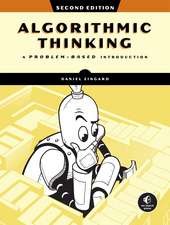 -35%Preț: 258.03 lei396.21 lei
 -
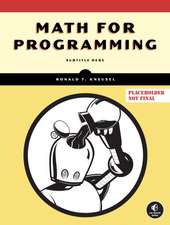 Math for ProgrammingRonald T. Kneusel-35%Preț: 244.16 lei373.27 lei
 -
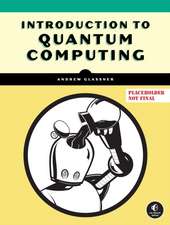 Quantum Computing: From Concepts to CodeAndrew Glassner-35%Preț: 241.51 lei371.31 lei
 -
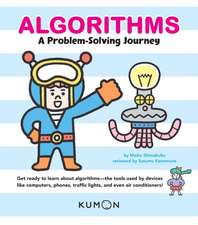 Kumon AlgorithmsKumonPreț: 76.79 lei
 -
 The Algorithm Design ManualSteven S. Skiena-20%Preț: 421.03 lei526.30 lei
 -
 Statistics for ScientistsUmberto Michelucci-20%Preț: 275.88 lei344.84 lei
De ce să citești această carte
Această carte este ideală pentru studenți și profesioniști care doresc să stăpânească logica din spatele algoritmilor moderni. Cititorul câștigă capacitatea de a descompune probleme complexe în pași logici, aplicabili în finanțe sau securitate informatică. Spre deosebire de manualele pur teoretice, prezența codului Python și a exemplelor din lumea reală oferă un avantaj practic imediat, transformând teoria în competențe de rezolvare a problemelor.
Despre autor
Paolo Ferragina este profesor de informatică la Universitatea din Pisa, recunoscut pentru contribuțiile sale în ingineria algoritmilor și structuri de date pentru căutare și compresie. Expertiza sa este reflectată în lucrări de referință precum Pearls of Algorithm Engineering și în coordonarea unor simpozioane internaționale de prestigiu, precum ESA și CPM. Alături de Fabrizio Luccio, profesor emerit cu o carieră vastă în fundamentele informaticii, acesta aduce în Computational Thinking un echilibru între rigoarea academică și aplicabilitatea industrială a soluțiilor algoritmice.
Cuprins
Notă biografică
Fabrizio Luccio is an emeritus professor of computer science at the University of Pisa. He received his Dr. Ing. degree in electrical engineering from the Politecnico di Milano in 1962. After industrial experience with Olivetti, he worked at MIT, the University of Southern California, and New York University, researching theoretical and algorithmic aspects of logical network synthesis. He has been at the University of Pisa since 1971, as a lecturer, professor of informatics, department chair, and coordinator of the PhD program. He was also responsible for international relations on development, and he actively supported UNESCO projects for the dissemination of informatics at university level in developing countries. He has been a visiting professor or scientist at the IBM T.J. Watson Research Center, the NTT LSI Laboratories, UCLA, the University of Illinois, the National University of Singapore, the University of Hawaii, and Carleton University in Ottawa. His main research interests are algorithm design in sequential, parallel, and distributed environments, and the relationship between abstract computational models and realistic computers and circuits. He is a Life Fellow of the IEEE.
Textul de pe ultima copertă
This revised and updated textbook/guide offers a gentle motivation and introduction to computational thinking, in particular to algorithms and how they can be coded to solve significant, topical real problems from domains such as finance, cryptography, web search, data compression and bioinformatics. Although the work assumes only basic mathematical knowledge, it still upholds the scientific rigor indispensable for transforming general ideas into executable algorithms, giving several solutions to common tasks, taken from topics of our everyday world.
Topics and features:
- Provides a readily accessible introduction, suitable for undergraduate and high-school students, as well as for self-study
- Organizes content neatly and conveniently by application or problem area
- Offers a helpful supporting website with Python code that implements the algorithms in the book
- Anchors the content practically, examining an excellent variety of modern topics in a concise volume
- Assumes knowledge of only basic computing skills as a prerequisite
- Written by highly experienced lecturers, as well as researchers of world renown
Paolo Ferragina is professor of computer science at the Sant’Anna School of Advanced Studies, Italy, and Fabrizio Luccio is an emeritus professor of computer science at the University of Pisa, Italy.