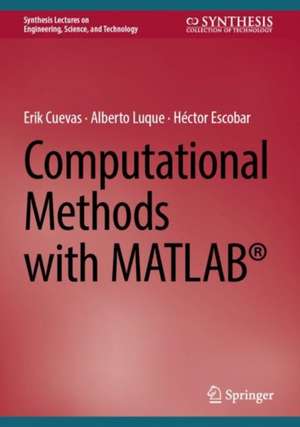
Computational Methods with MATLAB®: Synthesis Lectures on Engineering, Science, and Technology
Autor Erik Cuevas, Alberto Luque, Héctor Escobaren Limba Engleză Hardback – 25 aug 2023
Descoperim în Computational Methods with MATLAB® un instrument de lucru orientat spre rezultate, unde componenta practică primează prin numeroasele fragmente de cod și implementări gata de utilizat. Exercițiile și exemplele de calcul propuse nu sunt simple anexe, ci constituie nucleul cărții, facilitând o trecere rapidă de la înțelegerea conceptuală la execuția algoritmică. Autorii, Erik Cuevas, Alberto Luque și Héctor Escobar, au optat pentru o prezentare care prioritizează aplicabilitatea metodelor numerice în detrimentul demonstrațiilor matematice exhaustive, făcând volumul accesibil studenților din diverse ramuri ale ingineriei. Observăm o organizare logică a materialului, debutând cu o introducere în mediul de lucru și grafica MATLAB, elemente esențiale pentru vizualizarea datelor. Progresia continuă cu fundamentele algebrei liniare și interpolării polinomiale, avansând către metode numerice de diferențiere și integrare. Un punct forte al structurii îl reprezintă capitolele dedicate splin-urilor și ecuațiilor diferențiale, oferind o acoperire completă pentru un curs universitar de un semestru. Această lucrare completează perspectiva oferită de Numerical Methods with Worked Examples: Matlab Edition, adăugând o structură mai recentă, ancorată în cerințele curriculare ale anului 2024, și un accent sporit pe integrarea directă a codului în fluxul de învățare. Față de alte manuale tehnice, volumul de față reușește să mențină un echilibru între rigoarea algoritmilor și ușurința cu care aceștia pot fi transpuși în scripturi funcționale.
Din seria Synthesis Lectures on Engineering, Science, and Technology
-
 Preț: 360.85 lei
 -
 Preț: 416.81 lei
 - 15%
 Preț: 599.70 lei
 - 15%
 Preț: 388.98 lei
 - 15%
 Preț: 518.17 lei
 - 18%
 Preț: 700.98 lei
 -
 Preț: 211.90 lei
 - 15%
 Preț: 507.14 lei
 -
 Preț: 331.27 lei
 - 20%
 Preț: 615.94 lei
 -
 Preț: 442.22 lei
 - 20%
 Preț: 609.06 lei
 -
 Preț: 257.92 lei
 -
 Preț: 404.60 lei
 -
 Preț: 422.79 lei
 -
 Preț: 412.88 lei
 -
 Preț: 372.38 lei
 -
 Preț: 433.14 lei
 - 15%
 Preț: 546.89 lei
 - 15%
 Preț: 604.30 lei
 -
 Preț: 365.15 lei
 - 15%
 Preț: 546.89 lei
 -
 Preț: 390.45 lei
 - 15%
 Preț: 546.74 lei
 -
 Preț: 391.84 lei
 -
 Preț: 418.58 lei
 - 15%
 Preț: 548.42 lei
 -
 Preț: 373.00 lei
 -
 Preț: 422.53 lei
 - 18%
 Preț: 705.13 lei
 - 15%
 Preț: 663.81 lei
 - 15%
 Preț: 623.82 lei
 -
 Preț: 421.13 lei
 -
 Preț: 494.63 lei
 -
 Preț: 410.34 lei
 -
 Preț: 261.74 lei
 -
 Preț: 208.61 lei
 -
 Preț: 320.04 lei
 - 15%
 Preț: 550.15 lei
 - 15%
 Preț: 547.71 lei
 - 15%
 Preț: 548.23 lei
 -
 Preț: 374.96 lei
 -
 Preț: 416.83 lei
 -
 Preț: 157.99 lei
 -
 Preț: 339.13 lei
 -
 Preț: 385.66 lei
Preț: 442.82 lei
Carte disponibilă
Livrare economică 06-20 noiembrie
Specificații
ISBN-10: 3031404777
Pagini: 224
Ilustrații: IX, 212 p. 210 illus., 53 illus. in color.
Dimensiuni: 173 x 246 x 17 mm
Greutate: 0.55 kg
Ediția:1st ed. 2024
Editura: Springer
Colecția Synthesis Lectures on Engineering, Science, and Technology
Seria Synthesis Lectures on Engineering, Science, and Technology
Locul publicării:Cham, Switzerland
V-ar putea interesa
-
 Applied Numerical Methods for Chemical EngineersNavid Mostoufi-16%Preț: 481.94 lei571.56 lei
 -
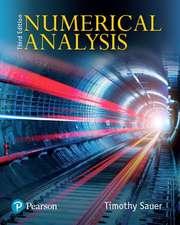 Numerical AnalysisTimothy Sauer-23%Preț: 1340.13 lei1740.42 lei
 -
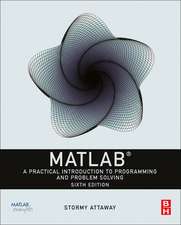 MATLAB: A Practical Introduction to Programming and Problem SolvingDorothy C. Attaway-40%Preț: 323.08 lei538.16 lei
 -
 Essential MATLAB for Engineers and ScientistsDaniel T. Valentine-40%Preț: 312.95 lei522.49 lei
 -
 Guide to Scientific ComputingPeter R. Turner-28%Preț: 423.15 lei584.53 lei
 -
 Numerical RecipesWilliam H. Press-14%Preț: 868.69 lei1010.10 lei
 -
 Preț: 450.14 lei
 -
 An Introduction to Numerical MethodsAbdelwahab Kharab-9%Preț: 681.62 lei749.03 lei
 -
 -27%Preț: 367.00 lei500.38 lei
 -
 MATLAB for Engineering Applications ISEWilliam Palm-27%Preț: 363.24 lei494.60 lei
 -
 -26%Preț: 346.79 lei471.01 lei
 -
 Programming and Engineering Computing with MATLAB 2023Huei-Huang Lee-20%Preț: 513.35 lei641.69 lei
 -
 Computational Methods in EngineeringS. P. Venkateshan-23%Preț: 756.30 lei982.21 lei
 -
 Introduction to Scientific Computing and Data AnalysisMark H. HolmesPreț: 478.88 lei
 -
 Computational CalculusWilliam C. BauldryPreț: 304.23 lei
 -
 Signals and Systems with MATLAB® and Simulink®Farzin AsadiPreț: 431.01 lei
 -
 MATLAB Lessons, Examples, and ExercisesMehdi Rahmani-AndebiliPreț: 403.81 lei
 -
 Differential EquationsChristian ConstandaPreț: 497.24 lei
 -
 Scientific Computing with MATLAB and OctaveAlfio QuarteroniPreț: 401.66 lei
De ce să citești această carte
Această ediție din 2024 este ideală pentru studenții și inginerii care au nevoie de o metodă rapidă de a implementa soluții numerice fără a se pierde în formalism matematic. Cititorul câștigă acces la o bibliotecă vastă de cod MATLAB adaptat pentru probleme de algebră, calcul integral și ecuații diferențiale, esențiale în modelarea științifică modernă.
Despre autor
Erik Cuevas, Alberto Luque și Héctor Escobar sunt cadre didactice și cercetători cu expertiză în inginerie și metode computaționale. Contribuția lor colectivă în cadrul editurii Springer reflectă o experiență vastă în utilizarea MATLAB ca instrument pedagogic. Autorii s-au specializat în transformarea algoritmilor complecși în proceduri accesibile, publicând numeroase lucrări în seria Synthesis Lectures on Engineering, Science, and Technology, menite să pună punți între teoria matematică și aplicațiile practice din ingineria contemporană.