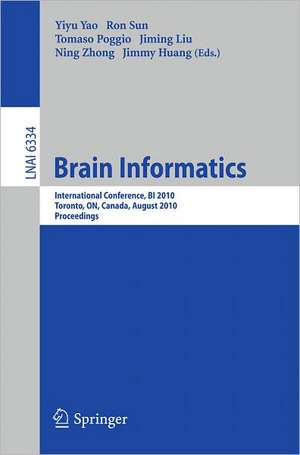
Brain Informatics: International Conference, BI 2010, Toronto, Canada, August 28-30, 2010, Proceedings: Lecture Notes in Computer Science, cartea 6334
Editat de Yiyu Yao, Ron Sun, Tomaso Poggio, Jiming Liu, Ning Zhong, Jimmy Huangen Limba Engleză Paperback – 11 aug 2010
Complementar volumului Brain Informatics and Health, care pune accent pe aplicațiile clinice și bunăstarea umană, Brain Informatics (BI 2010) se concentrează pe mecanismele fundamentale ale sistemului uman de procesare a informației (HIPS). În timp ce alte lucrări din serie, precum Neural Information Processing, explorează rețelele neuronale în sens larg, volumul de față izolează intersecția dintre neuroștiința cognitivă și tehnologiile Web Intelligence (WI). Găsim în această carte o abordare interdisciplinară riguroasă, menită să captureze principiile de funcționare ale creierului atât la nivel macroscopic, cât și microscopic.
Structura este organizată metodologic, începând cu prelegeri invitate despre raționalitate și informatică cognitivă, continuând cu secțiuni tehnice despre „Cognitive Computing” și „Data Brain and Analysis”. Suntem de părere că progresia textului reflectă fidel tranziția de la teorie la aplicație practică: de la modele adaptive bazate pe învățarea hebbiană, la metode specifice de procesare a semnalelor, cum ar fi clasificarea trial-urilor unice de EEG sau analiza imaginilor DTI (Diffusion Tensor Imaging). Un element distinctiv îl reprezintă accentul pus pe utilizarea grid-urilor de cunoștințe pentru analiza datelor la scară largă, propunând o infrastructură globală de cercetare.
Publicat de Springer în prestigioasa serie Lecture Notes in Computer Science, volumul documentează un moment de tranziție către colaborarea distribuită în neuroștiințe. Textul oferă detalii tehnice despre recunoașterea emoțiilor induse de conținut multimedia și conversia semnalelor cerebrale pentru simbioza cu umanoizii ambulatorii, marcând o direcție clară către sistemele hibride om-mașină.
Din seria Lecture Notes in Computer Science
- 20%
 Preț: 558.53 lei
 - 20%
 Preț: 617.17 lei
 - 20%
 Preț: 571.88 lei
 - 20%
 Preț: 1020.28 lei
 - 20%
 Preț: 851.78 lei
 - 20%
 Preț: 560.93 lei
 - 20%
 Preț: 633.70 lei
 - 20%
 Preț: 675.83 lei
 - 20%
 Preț: 1359.66 lei
 - 20%
 Preț: 620.33 lei
 - 20%
 Preț: 733.68 lei
 - 18%
 Preț: 945.44 lei
 - 15%
 Preț: 558.12 lei
 - 20%
 Preț: 793.92 lei
 - 20%
 Preț: 560.93 lei
 - 20%
 Preț: 748.63 lei
 - 20%
 Preț: 562.49 lei
 - 20%
 Preț: 1032.47 lei
 - 20%
 Preț: 731.82 lei
 - 20%
 Preț: 556.96 lei
 - 20%
 Preț: 1022.15 lei
 - 20%
 Preț: 562.49 lei
 - 20%
 Preț: 560.93 lei
 - 20%
 Preț: 313.10 lei
 - 20%
 Preț: 828.44 lei
 - 20%
 Preț: 560.93 lei
 - 20%
 Preț: 314.86 lei
 - 20%
 Preț: 1033.45 lei
 - 20%
 Preț: 563.29 lei
 - 20%
 Preț: 733.68 lei
 - 20%
 Preț: 1137.10 lei
 - 20%
 Preț: 735.28 lei
 - 20%
 Preț: 1079.23 lei
 - 20%
 Preț: 584.42 lei
 - 20%
 Preț: 854.16 lei
 - 15%
 Preț: 672.87 lei
 - 20%
 Preț: 606.22 lei
 - 20%
 Preț: 1246.46 lei
 - 20%
 Preț: 449.81 lei
 - 20%
 Preț: 984.64 lei
 - 20%
 Preț: 620.33 lei
 - 20%
 Preț: 402.28 lei
 - 20%
 Preț: 316.28 lei
 - 20%
 Preț: 663.69 lei
 - 20%
 Preț: 320.24 lei
 - 20%
 Preț: 343.12 lei
 - 20%
 Preț: 313.87 lei
Preț: 328.94 lei
Preț vechi: 411.17 lei
-20%
Carte disponibilă
Livrare economică 06-20 noiembrie
Specificații
ISBN-10: 3642153135
Pagini: 440
Ilustrații: XVI, 440 p. 162 illus.
Dimensiuni: 9 x 91 x 25 mm
Greutate: 0.68 kg
Ediția:2010
Editura: Springer Berlin, Heidelberg
Colecția Springer
Seriile Lecture Notes in Computer Science, Lecture Notes in Artificial Intelligence
Locul publicării:Berlin, Heidelberg, Germany
V-ar putea interesa
-
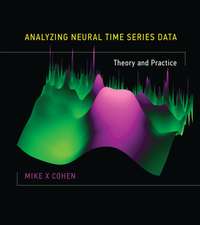 Analyzing Neural Time Series DataMike X Cohen-45%Preț: 490.96 lei896.75 lei
 -
 Natural NeuroscienceNachum Ulanovsky-14%Preț: 447.91 lei520.82 lei
 -
 Your Stone Age Brain in the Screen AgeRichard E. CytowicPreț: 211.48 lei
 -
 Bayesian Models of CognitionNick Chater-16%Preț: 818.23 lei974.08 lei
 -
 The Importance of Being EducableLeslie ValiantPreț: 187.73 lei
 -
 Principles of Cognitive NeuroscienceDale Purves-27%Preț: 1350.46 lei1849.95 lei
 -
 -8%Preț: 498.69 lei542.06 lei
 -
 Theoretical Neuroscience: Understanding CognitionXiao-Jing Wang-9%Preț: 809.37 lei889.42 lei
 -
 The Brain at RestJoseph JebelliPreț: 75.26 lei
 -
 Advances in Neural Computation, Machine Learning, and Cognitive Research VBoris Kryzhanovsky-20%Preț: 1395.81 lei1744.76 lei
 -
 -18%Preț: 1366.29 lei1666.21 lei
 -
 -20%Preț: 458.54 lei573.18 lei
 -
 The NeuronomiconGrayson W. Hooper-5%Preț: 434.27 lei457.12 lei
 -
 -20%Preț: 662.85 lei828.56 lei
 -
 -20%Preț: 642.40 lei803.00 lei
 -
 -20%Preț: 642.40 lei803.00 lei
 -
 Neural Information ProcessingMufti Mahmud-20%Preț: 419.64 lei524.54 lei
 -
 Data Intelligence and Cognitive InformaticsI. Jeena Jacob-24%Preț: 1480.47 lei1947.99 lei
Public țintă
ResearchDe ce să citești această carte
Recomandăm acest volum cercetătorilor din domeniul neuroștiințelor computaționale și inginerilor software interesați de modelarea proceselor cognitive. Cititorul câștigă acces la metodologii avansate de analiză a semnalelor cerebrale și la modele matematice pentru procesele decizionale. Este o resursă tehnică esențială pentru înțelegerea modului în care infrastructura Web poate accelera descoperirile despre funcționarea creierului uman.