
Aristotle: Complete Works: Two-Volume Set
Autor Aristotle Editat de C. D. C. Reeve, Pavlos Kontosen Limba Engleză Hardback – dec 2025
Preț: 907.62 lei
Preț vechi: 1185.40 lei
-23%
Puncte Express: 1361
Carte disponibilă
Livrare economică 09-23 noiembrie
Livrare express 24-30 octombrie pentru 199.70 lei
Livrare prin curier în România Termenul estimat este afișat lângă disponibilitate.
Transport gratuit pentru acest produs Plată online sau ramburs, în funcție de opțiunile comenzii.
Retur gratuit în 14 zile Comandă securizată și suport în română.
Specificații
ISBN-13: 9781647922160
ISBN-10: 164792216X
Pagini: 2762
Ilustrații: 37 line art
Dimensiuni: 152 x 229 x 97 mm
Greutate: 2.95 kg
Ediția:Special Edition, Boxed Set
Editura: Hackett Publishing Company,Inc
Colecția Hackett Publishing Company, Inc.
Locul publicării:United States
ISBN-10: 164792216X
Pagini: 2762
Ilustrații: 37 line art
Dimensiuni: 152 x 229 x 97 mm
Greutate: 2.95 kg
Ediția:Special Edition, Boxed Set
Editura: Hackett Publishing Company,Inc
Colecția Hackett Publishing Company, Inc.
Locul publicării:United States
V-ar putea interesa
-
 Aristotle: A Very Short IntroductionJonathan Barnes-19%Preț: 57.55 lei71.35 lei
 -
 Aristotle PoliticaDavid Ross-22%Preț: 272.80 lei350.86 lei
 -
 Philosophia Togata I: Essays on Philosophy and Roman SocietyMiriam Griffin-33%Preț: 660.35 lei981.34 lei
 -
 Philosophia Togata II: Plato and Aristotle at RomeJonathan Barnes-33%Preț: 723.17 lei1075.83 lei
 -
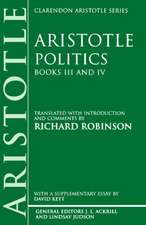 Politics: Books III and IVAristotle-29%Preț: 382.86 lei536.54 lei
 -
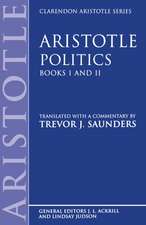 Politics: Books I and IIAristotle-29%Preț: 363.92 lei509.16 lei
 -
 -28%Preț: 372.29 lei519.46 lei
 -
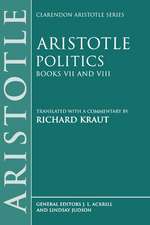 Politics: Books VII and VIIIAristotle-28%Preț: 364.50 lei509.50 lei
 -
 Aristotle's "Politics": Second EditionAristotlePreț: 142.26 lei
 -
 AristotleJohn Sellars-27%Preț: 56.20 lei77.49 lei
 -
 PoeticsAristotle-19%Preț: 20.09 lei24.92 lei
 -
 The Cambridge Translations of Medieval Philosophical TextsArthur Stephen McGrade-11%Preț: 505.83 lei568.34 lei
 -
 History of Animals, Volume IAristotlePreț: 228.42 lei
 -
 -14%Preț: 419.56 lei487.86 lei
 -
 -14%Preț: 418.63 lei486.77 lei
 -
 Aristotle's PoliticsAristotlePreț: 201.94 lei
 -
 Commentary on Aristotle's PoliticsThomas Aquinas-17%Preț: 161.92 lei196.10 lei
 -
 Epicurus and the Epicurean TraditionJeffrey FishPreț: 299.88 lei
 -
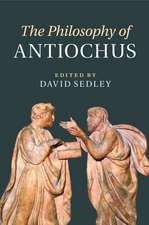 The Philosophy of AntiochusDavid SedleyPreț: 343.89 lei
 -
 PoliticsAristotlePreț: 51.49 lei
 -
 MetaphysicsAristotlePreț: 64.88 lei
 -
 Nicomachean EthicsAristotlePreț: 44.60 lei
 -
 De AnimaAristotlePreț: 70.31 lei
 -
 The PrinceNiccolò MachiavelliPreț: 33.48 lei
 -
 UtopiaThomas MorePreț: 33.19 lei
Recenzii
"[Aristotle: Complete Works] is a successor of sorts to the so-called Oxford Aristotle, edited by Jonathan Barnes and published in 1984. As Barnes notes in the introduction to that work, most of the translations in that volume were completed between 1908 and 1930. . . . So, it seems entirely fitting that the massive project of translating all the extant works of Aristotle be revisited after, for the most part, more than a hundred years.
"There are many ways, large and small, that the Hackett Aristotle differs from and surpasses the Oxford Aristotle. The Hackett Aristotle does not contain the dubious and spurious works attributed to Aristotle in the Berlin Academy edition of the Greek texts by Immanuel Bekker (1831) whereas the Oxford Aristotle does. The editors, however, promise to include these in a future companion volume. Apart from this, the [Hackett Aristotle] volumes contain a detailed table of contents, including the major subject divisions of each of the works; a substantial (79 pages) introduction to Aristotle and the Aristotelian corpus by Christof Rapp; a catalog of the lists of works attributed to Aristotle in antiquity cross-referenced to what is now taken as the standard list of Diogenes Laertius; an expansive and welcome annotated glossary of terms (134 pages); a convenient table of weights and measures; and an annotated index of all the names and places mentioned in the corpus.
"Most of the major works of Aristotle are translated by Reeve himself, based on previous single volume translations he has published with Hackett. The division of labor between the two editors is given in the Preface as follows: ‘C.D.C., Reeve established the norms of translation and edited the translations not credited to him, ensuring—among other things—that they follow these norms. Pavlos Kontos was responsible for the final editing of all the translations and for ensuring their accuracy and correctness. Everything else was a joint responsibility.'
"Reeve et al. have committed themselves to making Aristotle more accessible to the contemporary English-speaking audience than does Barnes and the other authors of the Oxford Aristotle. I think readers will appreciate the ample paragraphing in the former compared to sometimes page-long paragraphs in the latter. In addition, Reeve presents what seems to me a more vivid and direct colloquial English than does his predecessors.
"As one would expect, these translations, almost all of which were produced by senior Aristotle scholars, and having benefited by their authors’ own revisions and support from many critical and experienced eyes, are highly reliable.
"[T]hese two volumes constitute a notable achievement. The forthcoming translation of the dubia and spuria is eagerly awaited."
—Lloyd P. Gerson, University of Toronto, in Ancient Philosophy
"There are many ways, large and small, that the Hackett Aristotle differs from and surpasses the Oxford Aristotle. The Hackett Aristotle does not contain the dubious and spurious works attributed to Aristotle in the Berlin Academy edition of the Greek texts by Immanuel Bekker (1831) whereas the Oxford Aristotle does. The editors, however, promise to include these in a future companion volume. Apart from this, the [Hackett Aristotle] volumes contain a detailed table of contents, including the major subject divisions of each of the works; a substantial (79 pages) introduction to Aristotle and the Aristotelian corpus by Christof Rapp; a catalog of the lists of works attributed to Aristotle in antiquity cross-referenced to what is now taken as the standard list of Diogenes Laertius; an expansive and welcome annotated glossary of terms (134 pages); a convenient table of weights and measures; and an annotated index of all the names and places mentioned in the corpus.
"Most of the major works of Aristotle are translated by Reeve himself, based on previous single volume translations he has published with Hackett. The division of labor between the two editors is given in the Preface as follows: ‘C.D.C., Reeve established the norms of translation and edited the translations not credited to him, ensuring—among other things—that they follow these norms. Pavlos Kontos was responsible for the final editing of all the translations and for ensuring their accuracy and correctness. Everything else was a joint responsibility.'
"Reeve et al. have committed themselves to making Aristotle more accessible to the contemporary English-speaking audience than does Barnes and the other authors of the Oxford Aristotle. I think readers will appreciate the ample paragraphing in the former compared to sometimes page-long paragraphs in the latter. In addition, Reeve presents what seems to me a more vivid and direct colloquial English than does his predecessors.
"As one would expect, these translations, almost all of which were produced by senior Aristotle scholars, and having benefited by their authors’ own revisions and support from many critical and experienced eyes, are highly reliable.
"[T]hese two volumes constitute a notable achievement. The forthcoming translation of the dubia and spuria is eagerly awaited."
—Lloyd P. Gerson, University of Toronto, in Ancient Philosophy
Notă biografică
Christopher Shields studied English Literature and Classics at Bowling Green State University, in Ohio, before taking an M.A. and Ph. D. in Philosophy from Cornell University. He has been Professor of Philosophy and Classics at the University of Colorado at Boulder, Professor of Classical Philosophy at the University of Oxford, and is currently Shuster Professor of Philosophy and Concurrent Professor of Classics at the University of Notre Dame. He has held visiting positions at Cornell, Yale, Stanford, The Humboldt University, Berlin, and the Chinese University of Hong Kong.
Cuprins
- General Introduction
- A Note on the Text
- A Discursive Outline of De Anima
- TRANSLATION
- Book I
- Book II
- Book III
- COMMENTARY
- Book I
- Book II
- Book III
- Textual Notes and Variant Readings
- Glossary of Aristotelian Terminology
- Bibliography