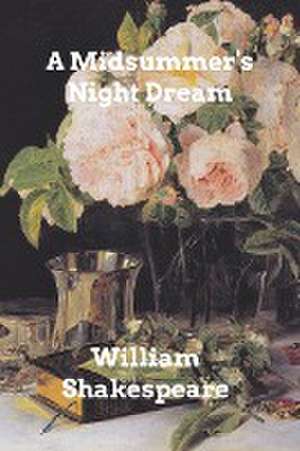
A Midsummer Night's Dream
Autor William Shakespeareen Limba Engleză Paperback – noi 2021
Structura acestei ediții publicate de Dover Publications Inc. se concentrează pe accesibilitatea textului sursă, oferind o versiune compactă a uneia dintre cele mai studiate comedii shakespeariene. Observăm cum textul este organizat pentru a evidenția simetria celor patru grupuri de personaje ale căror destine se intersectează în pădurea de lângă Atena. Metodologia narativă a lui William Shakespeare se bazează aici pe contrastul dintre ordinea rigidă a cetății și haosul eliberator al spațiului oniric, facilitat de intervențiile spiritului Puck. Ne-a atras atenția modul în care autorul utilizează poțiunile magice nu doar ca element de recuzită, ci ca instrument de analiză a fragilității sentimentelor umane. Această ediție acoperă aceeași arie tematică a jocurilor de seducție și a neînțelegerilor amoroase ca Much Ado About Nothing, dar cu o abordare mult mai fantastică și mai puțin bazată pe realismul social. În timp ce în Much Ado About Nothing conflictul se rezolvă prin dialog și spirit critic, în Midsummer Night's Dream rezolvarea vine prin intervenție supranaturală și vis. De asemenea, spre deosebire de tragedia Romeo and Juliet, unde dragostea tinerilor este condamnată de contextul social violent, aici explorarea pasiunii rămâne în zona ludicului, oferind o perspectivă optimistă asupra reconcilierii. Suntem de părere că formatul de 80 de pagini este ideal pentru studiu, păstrând integritatea versului alb și a pasajelor lirice care definesc stilul autorului.
Preț: 63.39 lei
Carte disponibilă
Livrare economică 17-31 octombrie
Specificații
ISBN-10: 1006340017
Pagini: 66
Dimensiuni: 152 x 229 x 4 mm
Greutate: 0.1 kg
Editura: Blurb
V-ar putea interesa
-
 MacbethWilliam ShakespearePreț: 29.37 lei
 -
 The TempestWilliam ShakespearePreț: 29.03 lei
 -
 Twelfth NightWilliam ShakespearePreț: 28.01 lei
 -
 SylvesterGeorgette Heyer-26%Preț: 57.95 lei77.99 lei
 -
 The Good Woman of SetzuanBertolt BrechtPreț: 70.31 lei
 -
 The Strange Case of Dr. Jekyll and Mr. HydeRobert Louis Stevenson-20%Preț: 19.78 lei24.65 lei
 -
 As You Like ItWilliam ShakespearePreț: 27.52 lei
 -
 Northanger AbbeyJane AustenPreț: 44.48 lei
 -
 The Tale of GenjiLady MurasakiPreț: 45.47 lei
 -
 Complete Dramatic WorksSamuel BeckettPreț: 142.11 lei
 -
 MacbethWilliam ShakespearePreț: 40.64 lei
 -
 HamletWilliam ShakespearePreț: 42.97 lei
 -
 The Canterbury Tales: Seventeen Tales and the General PrologueGeoffrey ChaucerPreț: 248.35 lei
 -
 I Promise You (the Promises Series)Christine Roussey-21%Preț: 46.09 lei58.39 lei
 -
 A Dress with PocketsLily Murray-34%Preț: 37.47 lei56.94 lei
 -
 Pride and PrejudiceJane AustenPreț: 31.04 lei
 -
 Sense and SensibilityJane AustenPreț: 25.35 lei
 -
 Tom JonesHenry FieldingPreț: 40.40 lei
 -
 The Scarlet LetterNathaniel HawthornePreț: 45.23 lei
 -
 Great GatsbyF. Scott FitzgeraldPreț: 29.75 lei
 -
 Hard TimesCharles DickensPreț: 28.01 lei
De ce să citești această carte
Recomandăm această ediție oricărui cititor care dorește să descopere mecanismele comediei clasice engleze fără barierele unui aparat critic dens. Veți câștiga o înțelegere clară a modului în care Shakespeare îmbină folclorul cu teatrul de curte. Este o lectură esențială pentru studenți și pasionați de dramaturgie, oferind un text fidel într-un format portabil, perfect pentru analiza structurii dramatice și a limbajului poetic.
Despre autor
William Shakespeare (1564–1616) este considerat cel mai mare scriitor al limbii engleze și cel mai important dramaturg al lumii. Opera sa, care include 38 de piese de teatru și 154 de sonete, a fost tradusă în toate limbile de circulație și este jucată mai des decât a oricărui alt autor. În contextul piesei Midsummer Night's Dream, Shakespeare își demonstrează măiestria în a combina elemente din mitologia clasică cu tradițiile populare englezești, creând un univers care continuă să influențeze literatura și artele spectacolului de peste patru secole.
Descriere
Features of each edition include:
- The original introduction to the Kittredge Edition
- Editor’s Introduction to the Focus Edition. An overview on major themes of the plays, and sections on the play’s performance history on stage and screen.
- Explanatory Notes. The explanatory notes either expand on Kittredge’s superb glosses, or, in the case of plays for which he did not write notes, give the needed explanations for Shakespeare’s sometimes demanding language.
- Performance notes. These appear separately and immediately below the textual footnotes and include discussions of noteworthy stagings of the plays, issues of interpretation, and film and stage choices.
- How to read the play as Performance Section. A discussion of the written play vs. the play as performed and the various ways in which Shakespeare’s words allow the reader to envision the work "off the page."
- Comprehensive Timeline. Covering major historical events (with brief annotations) as well as relevant details from Shakespeare’s life. Some of the Chronologies include time chronologies within the plays.
- Topics for Discussion and Further Study Section. Critical Issues: Dealing with the text in a larger context and considerations of character, genre, language, and interpretative problems. Performance Issues: Problems and intricacies of staging the play connected to chief issues discussed in the Focus Editions’ Introduction.
- Select Bibliography & Filmography
Each New Kittredge edition also includes screen grabs from major productions, for comparison and scene study.
Descriere scurtă
For more than seventy years, the Folger Shakespeare Library editions have been the standard classroom and reading editions of Shakespeare's plays. Used in high schools, colleges, universities, and theaters around the world, each volume combines the complete original text with expert editorial guidance that makes Shakespeare's language more accessible while preserving every nuance of the play.
In A Midsummer Night’s Dream, Shakespeare stages the workings of love. Theseus and Hippolyta, about to marry, are figures from mythology. In the woods outside Theseus’s Athens, two young men and two young women sort themselves out into couples—but not before they form first one love triangle, and then another.
Also in the woods, the king and queen of fairyland, Oberon and Titania, battle over custody of an orphan boy; Oberon uses magic to make Titania fall in love with a weaver named Bottom, whose head is temporarily transformed into that of a donkey by a hobgoblin or “puck,” Robin Goodfellow. Finally, Bottom and his companions ineptly stage the tragedy of “Pyramus and Thisbe.”
Whether you're reading A Midsummer Night's Dream for school, teaching it in the classroom, preparing for AP English Literature, studying Shakespeare in college, performing the play, or simply returning to one of the greatest works of English literature, this edition provides the context and guidance to help you read Shakespeare with confidence.
This Folger Shakespeare Library edition includes:
- Shakespeare's complete original text, carefully edited from the best early printed version of the play
- Clear explanatory notes conveniently placed on facing pages
- Scene-by-scene plot summaries for quick review and study
- An introduction to Shakespeare's language and dramatic style
- A guide to the play's most famous speeches, quotations, and memorable lines
- A scholarly introduction exploring the play's historical background, themes, characters, and enduring significance
- An essay by acclaimed Shakespeare scholar Catherine Belsey
- Illustrations and images from the Folger Shakespeare Library's world-renowned collections
- An annotated guide for further reading and study
The Folger Shakespeare Library in Washington, DC, is home to the world's largest collection of Shakespeare's printed works and one of the world's leading centers for Shakespeare scholarship, performance, and education. Every Folger Shakespeare Library edition combines authoritative scholarship with practical classroom support, making it an ideal choice for students, educators, actors, book clubs, and anyone seeking an accessible, reliable edition of Shakespeare's original plays.
Notă biografică
Textul de pe ultima copertă
Cuprins
About This Volume
List of Illustrations
Introduction
PART I: WILLIAM SHAKESPEARE, A MIDSUMMER NIGHT'S DREAM (EDITED BY DAVID BEVINGTON)
PART II. CONTEXTUAL READINGS
1. Popular Festivals and Court Celebrations
The Rites of May
John Stow,From A Survey of London
Henry Machyn,From Diary of a Resident in London
Philip Stubbes,From The Anatomy of Abuses
The Ballad
The Fetching Home of May
Court Entertainments
Kenilworth and Coventry
Robert Laneham, From A Letter Descibing the Entertainment of the Queen at Kenilworth
Coventry Records of the Hock Tuesday Play
The Fairy Queen
From Entertainment at Elvetham
Edmund Spencer, From The Shepheardes Calendar
2. The Making of Men
The Ranks of Men: William Harrison's Of Degrees of People
William Harrison, From The Description of England
The Formation of the Ruler: Plutarch's Life of Theseus
Plutarch, From The Lives of Nobles Grecians and Romans
The Formation of the Gentleman: Sir Thomas Elyot and Rodger Ascham
Sir Thomas Elyot, From The Book Named the Governor
Rodger Ascham, From The Schoolmaster
Working Men
The Statute of Artificers
From The Statute of Artificers
Royal Proclaimation Regulating Chester Wages
The New Man: Simon Forman's Dreams
Simon Forman, From The Autobiography of Simon Forman
3.Female Attachments and Family Ties
Amazons
Christine de Pizan, From The Book of the City of Ladies
Sir Walter Raleigh, From The History of the World
John Knox, From The First Blast of the Trumpet against the Monstrous Regiments of Women
Queen Elizabeth I, Address to the Troops at Tilbury
Gossips
Edward Gosynhyll, From The Schoolhouse of Women
Nuns
Richard Layton, A Letter, Certifying the Incontinency of the Nuns of Syon
Desiderius Erasmus, From A Maid Hating Marriage
The Virgin Queen
Queen Elizabeth I, From Speech to Parliment on Marriage and Succession
William Camden, From The Annals of Queen Elizabeth
A Poet and Her Patron
Amelia Lanyer, From The Description of Cooke-ham
Family Ties
Thomas Becon, From A New Catechism
Henry Bullinger, From The Christian Statue of Matrimony
William Gouge, From Of Domestical Duties
Philip Stubbes, From A Crystal Glass for Christian Women
4. Natural and Supernatural
Bad Weather and Dearth
John Stow, From The Annals of England
Metamorphosis and Monstrosity
Ovid and Reginald Scot
Ovid, From Metamorphoses, Book 14
Bestiality and Monstrosity
Prosecuting Buggery
From Calendar of Assize Records
Monsters and Prodigies
Ambroise Paré, From Of Monsters and Prodigies
Fairy Belief
John Aubrey,Collecting Fairy Lore
Richard Corbett, The Fairies' Farewell
The Mad Merry Pranks of Robin Good-fellow
ICorinthians 2:1--16
Bibliography
Index
ILLUSTRATIONS
1. Title Page of the Quarto A Midsummer Night's Dream
2. Woodcuts fo City and Woods from the Roxburghe Ballasd
3. Morris Dancers from the WIndow of a Gentleman'a House
4. Maypole DAnce from Michael Drayton;s Poly-Olbion
5. Woodcut Illustrating the Ballas "The Crost Couple"
6. Queen Elizabeth I on a Hunt
7. The Entertainment at Elvetham
8. The Queen and Her Court, from Edmund Spencer's The Shepheaardes Calandar
9. Page from Plutarch's The Lives of the Noble Grecians and Romans
10. Title Page from A Catechism
11. Title Page from George Tuberville's The Noble Art of Venery
12. Manuscript Page from The Autobiography of SImon Forman
13. Lascivious and Threatening Amazons from Sir Walter Raleigh's The Discovery of Guiana
14. Amazons, Each with a Breast Removed, from John Bulwer's Anthropometamorphosis
15. Queen Elizabeth I as an Amazon
16. Frontispiece from Samuel Rowland's 'Tis Merry When Gossip Meet
17. Woodcut from Christine de Pizan's The Book of the City of Ladies
18. Circe Transforming Ulysses' Sailor into Animals
19. Monster, Half-Man, Half-Pig, from Ambroise Pare's Of Monsters and Prodigies
20. Title Page from Robin Good-fellow, His Mad Pranks
Recenzii
- Annalisa Castaldo, Widener University
The differences between, and comparative merits of, various editorial series are suggested by the three editions of The Taming of the Shrew published this year. Laury Magnus's New Kittredge Shakespeare edition is, like the other New Kittredge volumes, a workable text for high school and first year college students interested in film and theater. The introduction elaborates on one theme — Elizabethan constructions of gender — and offers a very broad performance history, focusing on Sam Taylor's and Zeffirelli's film versions as well as adaptations such as Kiss Me Kate and Ten Things I Hate About You (accompanied by a still of ten hearthtrobs Heath Ledger and Julia Stiles). The volume is determined to eradicate any confusion that a first time reader of the play might experience: the dramatis personae page explains that "Bianca Minola" is "younger daughter to Baptista, wooed by Lucentio-in-disguise (as Cambio) and then wife to him, also wooed by the elderly Gremio and Hortensio-in-disguise (as Licio)" (p.1). Other editorial notes, based on Kittredge's own, are confined mostly to explaining individual words and phrases: additional footnotes discuss interpretive choices made by film and stage productions. Throughout, the editorial emphasis is on the play less as text than as performance piece, culminating in fifteen largely performance-oriented "study questions" on topics such as disguise, misogyny, and violence.
Studies in English Literature, Tudor and Stuart Drama, Volume 51, Spring 2011, Number 2, pages 497-499.