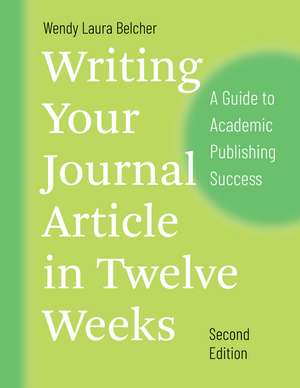
Writing Your Journal Article in Twelve Weeks, Second Edition: A Guide to Academic Publishing Success: Chicago Guides to Writing, Editing, and Publishing
Autor Wendy Laura Belcheren Limba Engleză Paperback – 7 iun 2019
Descoperim în Writing Your Journal Article in Twelve Weeks, Second Edition un instrument metodologic riguros, axat prioritar pe dezvoltarea abilităților de writing și reading critic, esențiale pentru succesul editorial în mediul academic. Notăm cu interes faptul că Wendy Laura Belcher nu se limitează la sfaturi teoretice, ci propune un sistem de lucru structurat pe parcursul a 12 săptămâni, transformând procesul adesea intimidant al publicării într-o succesiune de sarcini zilnice previzibile. Putem afirma că forța acestui volum rezidă în caracterul său de caiet de lucru; spre deosebire de manualele clasice, acesta ghidează cititorul prin revizuirea activă a propriului text, oferind template-uri și memento-uri care elimină incertitudinea.
Ca și Productivity and Publishing de Margaret-Mary Sulentic Dowell, lucrarea de față vizează cercetătorii aflați la început de drum, însă se diferențiază prin rigoarea calendaristică și prin integrarea cercetărilor recente despre productivitate. Structura cuprinsului reflectă o progresie logică: de la designul unui plan de lucru în prima săptămână, până la înțelegerea proceselor interne ale jurnalelor științifice. În contextul operei sale, deși Wendy Laura Belcher este cunoscută pentru studii de nișă precum The Life of Walatta-Petros sau Abyssinia's Samuel Johnson, această lucrare reprezintă distilarea experienței sale pedagogice de peste un deceniu, fiind un pilon al seriei Chicago Guides to Writing, Editing, and Publishing. Această a doua ediție extinde sfaturile către discipline diverse și introduce exerciții țintite pentru cei care scriu „de la zero”, oferind o experiență de învățare pragmatică și un ton încurajator, menit să combată anxietatea paginii albe.
Din seria Chicago Guides to Writing, Editing, and Publishing
-
 Preț: 100.11 lei
 -
 Preț: 137.44 lei
 -
 Preț: 138.18 lei
 -
 Preț: 127.06 lei
 -
 Preț: 139.80 lei
 -
 Preț: 436.54 lei
 -
 Preț: 140.63 lei
 -
 Preț: 156.79 lei
 -
 Preț: 148.71 lei
 -
 Preț: 254.78 lei
 -
 Preț: 105.22 lei
 -
 Preț: 184.55 lei
 -
 Preț: 119.88 lei
 -
 Preț: 176.52 lei
 -
 Preț: 152.54 lei
 -
 Preț: 113.65 lei
 -
 Preț: 259.68 lei
 -
 Preț: 131.01 lei
 -
 Preț: 164.09 lei
 -
 Preț: 114.14 lei
 -
 Preț: 185.38 lei
 -
 Preț: 181.57 lei
 -
 Preț: 354.20 lei
 -
 Preț: 176.78 lei
 -
 Preț: 103.56 lei
 -
 Preț: 181.57 lei
 -
 Preț: 128.16 lei
 -
 Preț: 136.81 lei
 -
 Preț: 141.19 lei
 -
 Preț: 158.99 lei
 -
 Preț: 185.41 lei
 -
 Preț: 127.82 lei
 -
 Preț: 140.07 lei
 -
 Preț: 210.58 lei
 -
 Preț: 162.44 lei
 -
 Preț: 114.43 lei
 -
 Preț: 174.34 lei
 -
 Preț: 155.84 lei
 -
 Preț: 144.41 lei
 -
 Preț: 222.58 lei
 -
 Preț: 138.84 lei
 -
 Preț: 117.64 lei
 -
 Preț: 175.98 lei
 -
 Preț: 226.54 lei
Preț: 468.76 lei
Preț vechi: 608.78 lei
-23%
Carte disponibilă
Livrare economică 10-24 noiembrie
Livrare express 24-30 octombrie pentru 68.80 lei
Specificații
ISBN-10: 022649991X
Pagini: 427
Dimensiuni: 216 x 279 x 28 mm
Greutate: 1.02 kg
Ediția:Second Edition
Editura: University of Chicago Press
Colecția University of Chicago Press
Seria Chicago Guides to Writing, Editing, and Publishing
V-ar putea interesa
-
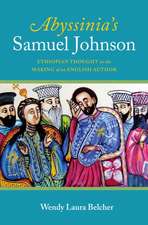 Abyssinia's Samuel Johnson: Ethiopian Thought in the Making of an English AuthorWendy Laura Belcher-31%Preț: 696.39 lei1008.77 lei
 -
 How the Light Gets In: Writing as a Spiritual PracticePat SchneiderPreț: 129.61 lei
 -
 Style 5/EJoseph Williams-19%Preț: 521.70 lei644.08 lei
 -
 The Life of Walatta-PetrosGalawdewosPreț: 127.47 lei
 -
 -20%Preț: 113.95 lei142.06 lei
 -
 Writing a Novel and Getting Published for Dummies UKGeorge GreenPreț: 143.61 lei
 -
 Creative Writing Exercises For DummiesMaggie HamandPreț: 112.11 lei
 -
 Experimental Fiction: An Introduction for Readers and WritersDr Julie Armstrong-14%Preț: 659.91 lei767.33 lei
 -
 Pep Talks for WritersGrant FaulknerPreț: 89.93 lei
 -
 Can Creative Writing Really Be Taught?: Resisting Lore in Creative Writing Pedagogy (10th anniversary edition)Professor Stephanie Vanderslice-25%Preț: 181.50 lei242.15 lei
 -
 How to Write a Novel Using the Snowflake MethodRandy IngermansonPreț: 79.40 lei
 -
 Let's Get Creative: Writing Fiction that Sells!William F. NolanPreț: 87.51 lei
 -
 -9%Preț: 119.78 lei132.16 lei
 -
 The Complete Guide to Writing for Young AdultsGabrielle HarbowyPreț: 116.99 lei
 -
 Short CircuitVanessa GebbiePreț: 100.62 lei
De ce să citești această carte
Recomandăm această carte doctoranzilor, cercetătorilor postdoctorali și cadrelor didactice care doresc să demistifice regulile adesea nescrise ale publicării academice. Cititorul câștigă nu doar un articol gata de trimis către jurnale peer-reviewed, ci și un sistem de lucru sustenabil. Este un ghid esențial pentru oricine simte că procesul de scriere stagnează, oferind disciplina necesară pentru a transforma cercetarea în publicații de impact.
Despre autor
Wendy Laura Belcher este profesor de literatură africană la Universitatea Princeton și un expert recunoscut în procesele de scriere academică. Experiența sa vastă în consilierea cercetătorilor este reflectată în acest ghid, devenit o referință internațională. Pe lângă contribuțiile sale pedagogice, Belcher este o cercetătoare distinsă, autoare a unor lucrări premiate precum The Life of Walatta-Petros, o biografie a unei femei etiopiene din secolul al XVII-lea, și Abyssinia's Samuel Johnson, demonstrând o capacitate remarcabilă de a îmbina rigoarea academică cu claritatea scrierii, elemente pe care le transmite și în manualele sale de scriere creativă și academică.
Descriere scurtă
With this new edition, Belcher expands her advice to reach beginning scholars in even more disciplines. She builds on feedback from professors and graduate students who have successfully used the workbook to complete their articles. A new chapter addresses scholars who are writing from scratch. This edition also includes more targeted exercises and checklists, as well as the latest research on productivity and scholarly writing.
Writing Your Journal Article in Twelve Weeks is the only reference to combine expert guidance with a step-by-step workbook. Each week, readers learn a feature of strong articles and work on revising theirs accordingly. Every day is mapped out, taking the guesswork and worry out of writing. There are tasks, templates, and reminders. At the end of twelve weeks, graduate students, recent PhDs, postdoctoral fellows, adjunct instructors, junior faculty, and international faculty will feel confident they know that the rules of academic publishing and have the tools they need to succeed.
Notă biografică
Cuprins
Acknowledgments
Introduction: Using This Workbook
The workbook’s goals, field-tested nature, pragmatic emphasis, radical audience, revision focus, and disciplines.
Feedback from readers
Week 1: Designing Your Plan for Writing
Instruction Understanding feelings about writing. Keys to positive writing experiences: successful academic writers write; read; make writing social; persist despite rejection; and pursue their passions.
Your tasks Designing a plan for submitting your article in twelve weeks. Day 1, reading the workbook. Day 2, designing your writing schedule. Day 3, selecting a paper for revision. Day 4, rereading your paper to identify revision tasks. Day 5, setting up your writing site, citation software, and file backup system; addressing coauthorship; and reading a journal article.
Week 2: Advancing Your Argument
Instruction Myths about publishable journal articles: being profoundly theoretical, packed with ideas, and entirely original. What gets published and why: how publishable articles pair evidence and approaches. What gets rejected and why: perfectly acceptable articles and those with no argument. Understanding and making arguments: what is an argument; how do you know whether you have one; how do you make strong arguments; and how do you write an argument-driven article?
Your tasks Organizing your article around your argument. Day 1, reading the workbook. Day 2, testing out your argument. Day 3, reviewing your article for argument. Days 4–5, revising your article around your argument.
Week 3: Abstracting Your Article
Instruction Abstracts as a tool for success. Ingredients of a good abstract: good SciQua and HumInt abstracts.
Your tasks Crafting an effective abstract. Day 1, talking your way to clarity about your article. Day 2, reading others’ abstracts and drafting your own. Day 3, reading strong articles in your field. Day 4, reading articles to cite in your article. Day 5, getting feedback on and revising your abstract.
Week 4: Selecting a Journal
Instruction Good news about journals. The importance of picking the right journal. Types of academic journals: nonrecommended, debatable, and preferred publishing outlets.
Your tasks Finding suitable academic journals. Day 1, reading the workbook. Day 2, searching for journals. Days 3–4, evaluating academic journals. Day 5, reading relevant journals and writing query letters.
Week 5: Refining Your Works Cited
Instruction Reading scholarly texts. Types of scholarly texts: primary, original, or exhibit sources; scholarly or secondary literature; and derivative or tertiary documents. Advice for scholars at resource-poor institutions. Strategies for citing your reading: common mistakes in citing texts; establishing your “citation values”; avoiding improper borrowing; good citation habits; and post-borrowing solutions. Strategies for getting reading done: reading theoretical literature; related literature; and original, primary, or exhibit literature. Strategies for writing your related-literature review: what’s your entry point; what is a related-literature review; and how do you write a methodological- or theoretical-literature review?
Your tasks Writing about others’ research. Day 1, reading the workbook. Day 2, evaluating your current Works Cited list. Day 3, identifying and reading any additional works. Day 4, identifying your entry point into the related literature. Day 5, writing or revising your related-literature review.
Week 6: Crafting Your Claims for Significance
Instruction On the difference between arguments and claims for significance. What is a claim for significance: types of claims; examples of claims; making claims; and the “So What?” exercise. Types of feedback: what to do (and not do) when giving and receiving feedback.
Your tasks Claiming significance. Day 1, reading the workbook. Day 2, exchanging writing and doing the “So What?” exercise. Day 3, writing and inserting your claims for significance. Days 4–5, revising your article according to feedback received.
Week 7: Analyzing Your Evidence
Instruction Analyzing evidence. Types of evidence: textual; qualitative; quantitative; and experimental.
Your tasks Revising your evidence. Day 1, reading the workbook. Day 2, highlighting and analyzing your evidence. Day 3, analyzing the quality, relevance, and placement of your evidence. Day 4, analyzing your interpretation of your evidence. Day 5, collecting additional evidence.
Week 8: Presenting Your Evidence
Instruction Presenting evidence in SciQua articles, in HumInt articles, and in illustrations; obtaining image or text permissions.
Your tasks Revising your presentation of evidence. Day 1, reading the workbook. Days 2–4, revising your presentation of evidence. Day 5, checking your presentation of evidence by section.
Week 9: Strengthening Your Structure
Instruction On the importance of structure. Article-structuring principles: macrostructure and microstructure; structural building blocks; rhetorical orders of structure; structure signals; and common genres’ structures. Types of journal article macrostructures: SciQua; HumInt; disciplinary; and synaptic macrostructure. Types of pre- and postdraft outlining.
Your tasks Revising your structure. Day 1, reading the workbook. Day 2, outlining someone else’s published article. Day 3, making a postdraft outline of your article. Days 4–5, restructuring your article.
Week 10: Opening and Concluding Your Article
Instruction On the importance of openings: fashioning your title; molding your introduction; and choosing your name. On the importance of conclusions.
Your tasks Finalizing your opening and conclusion. Day 1, reading the workbook and revising your title. Day 2, molding your introduction. Day 3, molding your introduction and choosing your name. Day 4, revising your abstract and author order. Day 5, constructing your conclusion.
Week 11: Editing Your Sentences
Instruction The nature of microrevising. The Belcher Editing Diagnostic Test and its principles: reduce lists; strengthen verbs; clarify pronouns; decrease prepositions; and cut unnecessary words.
Your tasks Editing your article. Day 1, Reading the workbook and running the Belcher Editing Diagnostic Test. Days 2–5, revising your article using the Belcher Editing Diagnostic Test.
Week 12: Sending Your Article!
Instruction On the importance of finishing. Following journal submission guidelines: understanding the journal’s style manual; implementing the journal’s documentation, punctuation, and spelling style; collecting journal submission information; and writing a submission cover letter. What to do after sending.
Your tasks Getting your submission ready. Day 1, identifying what remains to be done. Day 2, putting your article in the journal’s style. Days 3–4, wrapping up any remaining issues. Day 5, send and celebrate!
Week X: Revising and Resubmitting Your Article
Instruction and tasks Navigating the review process. Receiving the journal’s decision: tracking the journal’s time to decision; emotionally managing and interpreting the journal’s decision. Responding to the journal’s decision: responding to a journal’s decision to reject your article or to a revise-and-resubmit notice; setting up for revising your article; revising your article; drafting your revision cover letter; and resubmitting your article. After the journal publishes your article: bringing attention to your article and reviewing someone else’s article.
Week 0: Writing Your Article from Scratch
Instruction and tasks Writing your article from scratch without an idea. Writing your article from scratch with an idea.
List of Resources
List of References
Index