
Worldbuilding for Game Designers: CRC Press Guides to Tabletop Game Design
Autor Steve Deeen Limba Engleză Hardback – iun 2025
Unlike all other artforms, games mandate participation, with the audience stepping into the world of the game and taking on the roles that the rules and pieces demand of them. Likewise, whenever an audience engages with a fictional world they are inherently playing a game of make‑believe and imagining themselves within a different context. This makes worldbuilding and gaming a perfect match, with each element giving more power to the other. This book unlocks exactly how the two disciplines are entwined and work together and how a designer can harness that synergy to the best effect.
This text is composed of short, focussed chapters that explain every step of building a compelling world, from getting your first ideas to moving towards publication. It also provides a deeper understanding of the how and why of world creation and why worlds have so much power over us as players and as people.
Features:
- Covers every step of world creation from getting ideas to seeking publication
- Comprehensive analysis of the field
- Inspirational tricks to break blocks or find new angles
- Practical exercises at the end of every chapter
- Simple and accessible material for every kind of game or game designer



Preț: 1006.23 lei
Preț vechi: 1257.79 lei
-20%
Puncte Express: 1509
Carte tipărită la comandă
Livrare economică 08-22 iunie
Specificații
ISBN-13: 9781032862293
ISBN-10: 1032862297
Pagini: 298
Dimensiuni: 152 x 229 x 18 mm
Greutate: 0.57 kg
Ediția:1
Editura: CRC Press
Colecția CRC Press
Seria CRC Press Guides to Tabletop Game Design
ISBN-10: 1032862297
Pagini: 298
Dimensiuni: 152 x 229 x 18 mm
Greutate: 0.57 kg
Ediția:1
Editura: CRC Press
Colecția CRC Press
Seria CRC Press Guides to Tabletop Game Design
V-ar putea interesa
-
 How a Game LivesJacob Geller-20%Preț: 178.34 lei222.93 lei
 -
 Rules of PlayEric Zimmerman-22%Preț: 496.77 lei633.94 lei
 -
 Playing at the World, 2E, Volume 2Jon PetersonPreț: 429.84 lei
 -
 Video Game StorytellingE. SkolnickPreț: 103.83 lei
 -
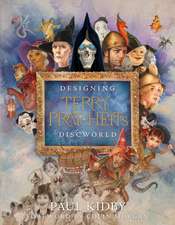 Designing Terry Pratchett's DiscworldPaul KidbyPreț: 225.26 lei
 -
 The Definitive Game Narrative GuideBrian Kindregan-20%Preț: 379.15 lei473.95 lei
 -
 -20%Preț: 437.45 lei546.81 lei
 -
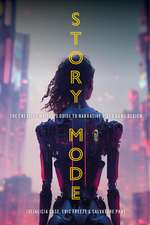 Story Mode: The Creative Writer's Guide to Narrative Video Game DesignProfessor Julialicia Case-21%Preț: 133.62 lei169.01 lei
 -
 Designing Ttrpgs for DummiesMartin BuinickiPreț: 109.89 lei
 -
 If You Like World-Building Games, Try This!Marne VenturaPreț: 67.82 lei
 -
 Todd Howard: Worldbuilding in Tamriel and BeyondWendi Sierra-28%Preț: 162.63 lei227.26 lei
 -
 -19%Preț: 56.63 lei69.70 lei
 -
 Preț: 73.22 lei
 -
 -20%Preț: 94.67 lei118.34 lei
 -
 -18%Preț: 126.72 lei154.65 leiRecomandat
 -
 -20%Preț: 60.18 lei75.51 lei
 -
 The Game Master's Book of Instant Towns and CitiesJeff AshworthPreț: 164.24 lei
 -
 Preț: 87.52 lei
 -
 -19%Preț: 222.67 lei275.99 lei
Public țintă
Professional Practice & Development and Professional ReferenceCuprins
Part One: General Principles, 1. Worlds Must Be Built to Purpose, 2. Setting Exists To Communicate Mechanics, 3. Worlds and Games Are Built On Narratives, 4. World Building is Character Building, 5. Astrology not Astronomy, 6. Realism and Believability, 7. Keep Asking Questions, 8. Question Everything, 9. Reality is Your Muse, 10. Keeping Asking People, 11. Rigidly Defined Areas of Doubt and Uncertainty, 12. Embodiment and Anthropology, Part Two: Breaking Ground, 13. Extrinsic and Intrinsic Worldbuilding, 14. Start Small and End Small, 15. Go Big and Go Home, 16. The Richard Scarry Interrogative, 17. Gods and Monsters, 18. The Map is not the Territory, 19. Genesis and the Bible, 20. Top Down…, 21. …and Bottom Up, 22. The Spongebob Technique, 23. Good vs Evil and Other Popular Brands, 24. Psychographics and Psychodrama, 25. Plot Armour and Railroading, Part Three: Developing Your World, 26. Never Say Never Again, 27. Pipe and How To Lay It, 28. The Slice of Life, 29. Signs and Signifiers, 30. Synecdoche and Statistics, 31. A Game Is A Map, 32. Teaching and Example, 33. The Jimmy Olsen Blues, 34. The Ray Arnold Principle, 35. Filling the Fractal, 36. Borrowing, Stealing and Appropriating, 37. Lawyers, Puns and Money
Recenzii
“Steve Dee’s book is the best work on worldbuilding since the Hadean Eon.” – Dan Abnett, New York Times bestselling author and writer of wrongs.
“I can count on Steve always to deliver on the creativity. He has a knack for digging in deep and coming up with something marvelous! When it comes to worldbuilding, he knows his subject and would-be game designers can learn a lot from him.” – Robert J Schwalb, Game Designer (Shadow of the Demon Lord, Dungeons & Dragons, Warhammer Fantasy Roleplay)
“I can count on Steve always to deliver on the creativity. He has a knack for digging in deep and coming up with something marvelous! When it comes to worldbuilding, he knows his subject and would-be game designers can learn a lot from him.” – Robert J Schwalb, Game Designer (Shadow of the Demon Lord, Dungeons & Dragons, Warhammer Fantasy Roleplay)
Descriere
Our modern world is dominated by giant media companies, and increasingly they don’t so much sell story, characters or gameplay as they do their setting. Fictional worlds are big business and represent big value to companies and audiences alike, and they are increasingly expected and demanded by both.