
Utilitarianism
Autor John Stuart Millen Limba Engleză Paperback
Preț: 43.52 lei
Puncte Express: 65
Carte disponibilă
Livrare economică 16-30 noiembrie
Livrare prin curier în România Termenul estimat este afișat lângă disponibilitate.
Transport gratuit de la 400.00 lei Plată online sau ramburs, în funcție de opțiunile comenzii.
Retur gratuit în 14 zile Comandă securizată și suport în română.
Specificații
ISBN-13: 9781453857526
ISBN-10: 1453857524
Pagini: 72
Dimensiuni: 203 x 254 x 4 mm
Greutate: 0.16 kg
Editura: CreateSpace Independent Publishing Platform
ISBN-10: 1453857524
Pagini: 72
Dimensiuni: 203 x 254 x 4 mm
Greutate: 0.16 kg
Editura: CreateSpace Independent Publishing Platform
V-ar putea interesa
-
 The Art of RhetoricAristotlePreț: 28.01 lei
 -
 Letters from a StoicLucius SenecaPreț: 29.76 lei
 -
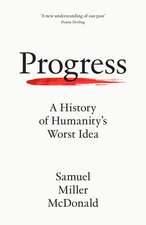 ProgressSamuel Miller McDonaldPreț: 161.19 lei
 -
 Utilitarianism and Other EssaysJeremy Bentham-18%Preț: 64.64 lei79.27 lei
 -
 The Fable of the BeesBernard MandevillePreț: 96.57 lei
 -
 On Liberty and the Subjection of WomenJohn Stuart Mill-26%Preț: 53.76 lei72.33 lei
 -
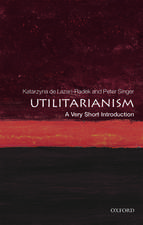 Utilitarianism: A Very Short IntroductionKatarzyna de Lazari-Radek-19%Preț: 57.46 lei71.12 lei
 -
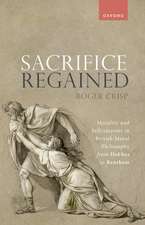 -20%Preț: 207.86 lei259.44 lei
 -
 Culture and AnarchyMatthew Arnold-18%Preț: 58.45 lei71.69 lei
 -
 On Liberty, Utilitarianism and Other EssaysJohn Stuart Mill-15%Preț: 63.49 lei74.49 lei
 -
 The Morality of LawLon L. FullerPreț: 195.53 lei
 -
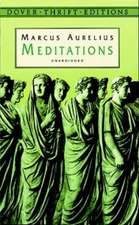 MeditationsMarcus AureliusPreț: 34.00 lei
 -
 On LibertyJohn Stuart Mill-55%Preț: 21.02 lei46.20 lei
 -
 On Liberty and UtilitarianismJohn Stuart MillPreț: 42.90 lei
 -
 Good to GreatJim Collins-24%Preț: 146.96 lei192.27 lei
 -
 -6%Preț: 96.00 lei102.54 lei
 -
 The Classical UtilitariansJeremy Bentham-17%Preț: 109.63 lei131.77 lei
 -
 BenthamMichael QuinnPreț: 150.76 lei
 -
 The Methods of EthicsHenry SidgwickPreț: 103.21 lei
 -
 Auguste Comte and PositivismJohn Stuart MillPreț: 52.91 lei
 -
 Nicomachean EthicsAristotlePreț: 44.60 lei
 -
 AutobiographyJohn Stuart MillPreț: 41.86 lei
 -
 Utilitarianism - Ed. HeydtJohn Stuart MillPreț: 135.45 lei
 -
 -25%Preț: 71.05 lei94.73 lei
 -
 Confessions of an Advertising ManDavid Ogilvy-18%Preț: 88.22 lei108.16 lei
 -
 MeditationsMarcus AureliusPreț: 45.09 lei
 -
 Utilitarianism /Der UtilitarismusJohn Stuart MillPreț: 55.70 lei
 -
 UtopiaThomas MorePreț: 33.19 lei
Descriere
Descriere de la o altă ediție sau format:
This edition of Utilitarianism supplements the text of Mill's classic essay with 58 related remarks carefully selected from Mill's other writings, ranging from his treatise on logic to his personal correspondence. In these remarks, Mill comments on specific passages of Utilitarianism, elaborates on topics he handles briefly in Utilitarianism, and discusses additional aspects of his moral thought.
Short introductory comments accompany the related remarks, and an editor's introduction provides an overview of Utilitarianism crafted specifically to enhance accessibility for first-time readers of the essay.
Short introductory comments accompany the related remarks, and an editor's introduction provides an overview of Utilitarianism crafted specifically to enhance accessibility for first-time readers of the essay.
Recenzii
"Some of the ambiguity of Utilitarianism can be resolved, or at least debated, by attention to Mill's other writings. Eggleston's edition provides the primary sources for such discussion in its endnotes. A serious teacher of Utilitarianism should use this edition."
—Henry West, Professor of Philosophy Emeritus, Macalester College
—Henry West, Professor of Philosophy Emeritus, Macalester College
"Eggleston has produced easily the best edition of Utilitarianism available. By conveniently including so many of the relevant passages from supplementary works, all organized for ease of reference, scholars and students alike will now have at their fingertips the materials needed to make sense of Mill's classic text. This is important not just for an accurate understanding of Mill's own moral and political philosophy, but for a proper appreciation of utilitarianism as a leading moral tradition."
—Piers Norris Turner, Associate Professor of Philosophy, The Ohio State University
—Piers Norris Turner, Associate Professor of Philosophy, The Ohio State University
"Wonderful idea to publish Mill's Utilitarianism with related remarks from Mill's other writings. Like Nietzsche, Mill clearly assumed that the readers of Utilitarianism knew his other writings, which is no longer the case. That is why this is such a valuable edition, especially for students."
—Robert H. Haraldsson, University of Iceland
—Robert H. Haraldsson, University of Iceland
Notă biografică
John Stuart Mill (20 May 1806 - 7 May 1873) was an English philosopher, political economist, Member of Parliament (MP) and civil servant. One of the most influential thinkers in the history of classical liberalism, he contributed widely to social theory, political theory, and political economy. Dubbed "the most influential English-speaking philosopher of the nineteenth century" by the Stanford Encyclopedia of Philosophy, he conceived of liberty as justifying the freedom of the individual in opposition to unlimited state and social control.Mill was a proponent of utilitarianism, an ethical theory developed by his predecessor Jeremy Bentham. He contributed to the investigation of scientific methodology, though his knowledge of the topic was based on the writings of others, notably William Whewell, John Herschel, and Auguste Comte, and research carried out for Mill by Alexander Bain. He engaged in written debate with Whewell.A member of the Liberal Party and author of the early feminist work The Subjection of Women, Mill was also the second Member of Parliament to call for women's suffrage after Henry Hunt in 1832.
Cuprins
1. General remarks; 2. What utilitarianism is; 3. Of the ultimate sanction of the principle of utility; 4. Of that sort of proof the principle of utility is susceptible; 5. Of the connexion between justice and utility.