
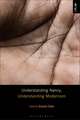
Understanding Foucault, Understanding Modernism: Understanding Philosophy, Understanding Modernism
Editat de Dr David Scotten Limba Engleză Paperback – 23 aug 2018
Understanding Foucault, Understanding Modernism shows, on the one hand, that literature and the arts play a fundamental structural role in Foucault's works, while, on the other hand, it shifts to the foreground what it presumes to be motivating Foucault: the interrogation of the problem of modernism. To that end, even his most explicitly historical or strictly epistemological and methodological enquiries directly engage the problem of modernism through the works of writers and artists from de Sade, Mallarmé, Baudelaire to Artaud, Manet, Borges, Roussel, and Bataille. This volume, therefore, adopts a transdisciplinary approach, as a way to establish connections between Foucault's thought and the aesthetic problems that emerge out of those specific literary and artistic works, methods, and styles designated "modern." The aim of this volume is to provide a resource for students and scholars not only in the fields of literature and philosophy, but as well those interested in the intersections of art and intellectual history, religious studies, and critical theory.
Din seria Understanding Philosophy, Understanding Modernism
- nou
 Preț: 200.29 lei
 - 28%
 Preț: 233.56 lei
 - 24%
 Preț: 279.10 lei
 - 15%
 Preț: 255.86 lei
 - 15%
 Preț: 254.19 lei
 - 24%
 Preț: 256.27 lei
 - 15%
 Preț: 275.76 lei
 - 24%
 Preț: 250.75 lei
 - 25%
 Preț: 233.97 lei
 - 26%
 Preț: 243.56 lei
 - 25%
 Preț: 214.01 lei
 - 42%
 Preț: 512.96 lei
 - 27%
 Preț: 204.32 lei
 - 24%
 Preț: 212.69 lei
 - 37%
 Preț: 589.73 lei
 -
 Preț: 200.99 lei
 - 29%
 Preț: 199.19 lei
 - 29%
 Preț: 198.97 lei
 - 37%
 Preț: 586.96 lei
 - 34%
 Preț: 555.03 lei
 - 26%
 Preț: 200.26 lei
 - 33%
 Preț: 559.36 lei
 - 34%
 Preț: 556.07 lei
 - nou
 Preț: 558.53 lei
Preț: 254.19 lei
Preț vechi: 336.03 lei
-24%
Puncte Express: 381
Carte tipărită la comandă
Livrare economică 08-22 iunie
Specificații
ISBN-13: 9781501344701
ISBN-10: 1501344706
Pagini: 280
Dimensiuni: 150 x 226 x 16 mm
Greutate: 0.82 kg
Ediția:NIPPOD
Editura: Bloomsbury Publishing
Colecția Bloomsbury Academic
Seria Understanding Philosophy, Understanding Modernism
Locul publicării:New York, United States
ISBN-10: 1501344706
Pagini: 280
Dimensiuni: 150 x 226 x 16 mm
Greutate: 0.82 kg
Ediția:NIPPOD
Editura: Bloomsbury Publishing
Colecția Bloomsbury Academic
Seria Understanding Philosophy, Understanding Modernism
Locul publicării:New York, United States
Cuprins
Series Preface
List of Abbreviations
Introduction: Foucault's Modernisms
David Scott, Coppin State University, USA
Part 1. Conceptualizing Foucault
1. The Origin of Parresia in Foucault's Thinking: Truth and Freedom in The History of Madness
Leonard Lawlor and Daniel J. Palumbo, Penn State University, USA
2. The Secret of the Corpse-Language Machine: The Birth of the Clinic and Raymond Roussel
David Scott, Coppin State University, USA
3. Intersections of the Concept and Literature in TheOrder of Things: Foucault and Canguilhem
Samuel Talcott, University of the Sciences, USA
4. Archeology of Knowledge: Foucault and the Time of Discourse
Heath Massey, Beloit University, USA
5. Carceral, Capital, Power: The 'Dark Side' of the Enlightenment in Discipline and Punish
Christopher Penfield, Purdue University, USA
6. Foucault's History of Sexuality
Chloë Taylor, University of Alberta, Canada
Part 2. Foucault and Aesthetics
7. Technologies of Modernism: Historicism in Foucault and Dos Passos
Christopher Breu, Illinois State University, USA
8. Thought as Spirituality in Raymond Roussel
Ann Burlein, Hofstra University, USA
9. Life Escaping: Foucault, Vitalism, and Gertrude Stein's Life-Writing
Sarah Posman, Ghent University, Belgium
10. The Specter of Manet: A Contribution to the Archaeology of Painting
Joseph Tanke, University of Hawaii, USA
11. The Hermaphroditic Image: Modern Art, Thought and Expérience in Michel Foucault
Nicole Ridgway, University of Wisconsin-Milwaukee, USA
Part 3. Glossary
Archaeology
Heath Massey, Beloit College, USA
The "Author-Function"
Seth Forrest, Coppin State University, USA
Biopower
Chloë Taylor, University of Alberta, Canada
Discipline
Steve Tammelleo, University of San Diego, USA
Episteme
Samuel Talcott, University of the Sciences, USA
Genealogy
Brad Elliot Stone, Loyola Marymount University, USA
Power
Brad Elliot Stone, Loyola Marymount University, USA
Problematization
Daniele Lorenzini, University Paris-Est Créteil, France
Transgression
Janae Scholtz, Alvernia University, USA
Truth
Marc De Kesel, Saint Paul University, Canada
Subjectivation
Mark Murphy, University of Glasgow, UK
Notes on Contributors
Index
List of Abbreviations
Introduction: Foucault's Modernisms
David Scott, Coppin State University, USA
Part 1. Conceptualizing Foucault
1. The Origin of Parresia in Foucault's Thinking: Truth and Freedom in The History of Madness
Leonard Lawlor and Daniel J. Palumbo, Penn State University, USA
2. The Secret of the Corpse-Language Machine: The Birth of the Clinic and Raymond Roussel
David Scott, Coppin State University, USA
3. Intersections of the Concept and Literature in TheOrder of Things: Foucault and Canguilhem
Samuel Talcott, University of the Sciences, USA
4. Archeology of Knowledge: Foucault and the Time of Discourse
Heath Massey, Beloit University, USA
5. Carceral, Capital, Power: The 'Dark Side' of the Enlightenment in Discipline and Punish
Christopher Penfield, Purdue University, USA
6. Foucault's History of Sexuality
Chloë Taylor, University of Alberta, Canada
Part 2. Foucault and Aesthetics
7. Technologies of Modernism: Historicism in Foucault and Dos Passos
Christopher Breu, Illinois State University, USA
8. Thought as Spirituality in Raymond Roussel
Ann Burlein, Hofstra University, USA
9. Life Escaping: Foucault, Vitalism, and Gertrude Stein's Life-Writing
Sarah Posman, Ghent University, Belgium
10. The Specter of Manet: A Contribution to the Archaeology of Painting
Joseph Tanke, University of Hawaii, USA
11. The Hermaphroditic Image: Modern Art, Thought and Expérience in Michel Foucault
Nicole Ridgway, University of Wisconsin-Milwaukee, USA
Part 3. Glossary
Archaeology
Heath Massey, Beloit College, USA
The "Author-Function"
Seth Forrest, Coppin State University, USA
Biopower
Chloë Taylor, University of Alberta, Canada
Discipline
Steve Tammelleo, University of San Diego, USA
Episteme
Samuel Talcott, University of the Sciences, USA
Genealogy
Brad Elliot Stone, Loyola Marymount University, USA
Power
Brad Elliot Stone, Loyola Marymount University, USA
Problematization
Daniele Lorenzini, University Paris-Est Créteil, France
Transgression
Janae Scholtz, Alvernia University, USA
Truth
Marc De Kesel, Saint Paul University, Canada
Subjectivation
Mark Murphy, University of Glasgow, UK
Notes on Contributors
Index
Recenzii
Foucault's radical and incisive analysis of modernity has had a transformative effect on our understanding of history. This wide-ranging volume allows us to connect that analysis to his more neglected account of aesthetic modernism. It gives us a fuller and richer picture of a thinker who remains indispensable.
David Scott has brought together an exceptional group of scholars to explore the range of Foucault's penetrating analysis of modernity. The tripartite structure of the volume-which includes close readings of Foucault's major books, analyses of Foucault's engagements with modernist literature and art, and a glossary of Foucault's key concepts-makes this a delightfully accessible and comprehensive guide to Foucault's work.
Michel Foucault (1926-84) devoted path-breaking works of critical analysis to deciphering "games of truth." One of his notable preoccupations was the problem of historical discourse and its pronounced tendency toward periodization. The essays in the present, handsomely designed volume trace the mercurial philosopher's many lines of inquiry converging on the problematic notion of modernity. Like other volumes in the Understanding Philosophy, Understanding Modernism series, the book comprises three main sections, one on conceptualizing, another on aesthetics, and a third offering a glossary. Most of the 19 contributors are young scholars working in the areas of philosophy, English, art, ethics, and religion-a range that lends this collection a cutting-edge flavor-and most are from North America, though universities abroad are represented. The essays in the first two sections are well crafted, insightful, and scholarly; the brief glossary and essays in part 3 highlight Foucault's pivotal terms and make the volume especially useful for nonspecialists. ... Summing Up: Highly recommended. Lower-division undergraduates through faculty.
David Scott has brought together an exceptional group of scholars to explore the range of Foucault's penetrating analysis of modernity. The tripartite structure of the volume-which includes close readings of Foucault's major books, analyses of Foucault's engagements with modernist literature and art, and a glossary of Foucault's key concepts-makes this a delightfully accessible and comprehensive guide to Foucault's work.
Michel Foucault (1926-84) devoted path-breaking works of critical analysis to deciphering "games of truth." One of his notable preoccupations was the problem of historical discourse and its pronounced tendency toward periodization. The essays in the present, handsomely designed volume trace the mercurial philosopher's many lines of inquiry converging on the problematic notion of modernity. Like other volumes in the Understanding Philosophy, Understanding Modernism series, the book comprises three main sections, one on conceptualizing, another on aesthetics, and a third offering a glossary. Most of the 19 contributors are young scholars working in the areas of philosophy, English, art, ethics, and religion-a range that lends this collection a cutting-edge flavor-and most are from North America, though universities abroad are represented. The essays in the first two sections are well crafted, insightful, and scholarly; the brief glossary and essays in part 3 highlight Foucault's pivotal terms and make the volume especially useful for nonspecialists. ... Summing Up: Highly recommended. Lower-division undergraduates through faculty.