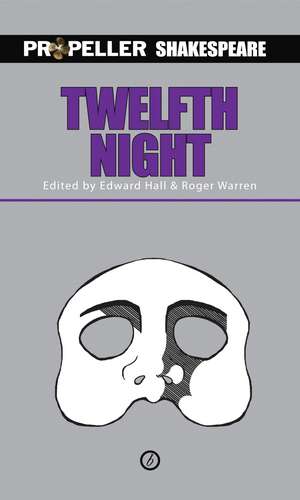
Twelfth Night: Propeller Shakespeare: Oberon Modern Plays
Autor William Shakespeare Editat de Edward Hall, Roger Warrenen Limba Engleză Paperback – 12 mar 2012
SERIA Collins Classroom Classics aduce o perspectivă proaspătă asupra textelor canonice, iar acest volum, Twelfth Night, nu face excepție. Observăm cum această ediție reușește să transforme o piesă clasică de secol XVII într-un instrument de învățare adaptat nevoilor elevilor și studenților de astăzi. Ne-a atras atenția în mod deosebit modul în care textul original al lui William Shakespeare este încadrat de un aparat critic solid, care nu se rezumă doar la glosar, ci plonjează adânc în rădăcinile culturale ale epocii.
Structura volumului este una progresivă: după o introducere care stabilește coordonatele istorice, piesa este prezentată integral, fiind urmată de o secțiune fascinantă de „Contexte Culturale”. Aici, cititorii pot explora eseuri despre rolul muzicii în perioada elisabetană sau despre semnificația sărbătorii de a „Douăsprezecea Noapte”. Considerăm că această abordare este esențială pentru tinerii cititori care doresc să înțeleagă nu doar ce se întâmplă în comedie, ci și de ce anumite teme, precum travestiul sau identitatea fluidă, erau atât de relevante.
Comparativ cu alte lucrări ale autorului, cum ar fi The Tempest sau Much Ado About Nothing, această operă se distinge prin echilibrul fin între melancolie și farsă. Părinții care au citit cu plăcere Twelfth Night, Or, What You Will (ediția cu note de la World's Leading Center) vor aprecia și această versiune pentru modul în care clarifică limbajul arhaic prin note de subsol accesibile, fără a întrerupe ritmul lecturii. Este o resursă valoroasă care demonstrează că William Shakespeare rămâne actual prin explorarea onestă a naturii umane.
Din seria Oberon Modern Plays
- 37%
 Preț: 68.52 lei
 - 26%
 Preț: 55.44 lei
 - 21%
 Preț: 145.99 lei
 - 26%
 Preț: 61.88 lei
 - 25%
 Preț: 69.49 lei
 - 26%
 Preț: 57.54 lei
 - 25%
 Preț: 75.68 lei
 - 26%
 Preț: 67.32 lei
 - 26%
 Preț: 67.06 lei
 - 26%
 Preț: 67.45 lei
 - 26%
 Preț: 62.10 lei
 - 25%
 Preț: 68.48 lei
 - 25%
 Preț: 80.64 lei
 -
 Preț: 39.11 lei
 - 14%
 Preț: 64.85 lei
 - 26%
 Preț: 67.32 lei
 - 25%
 Preț: 68.28 lei
 - 25%
 Preț: 68.28 lei
 - 18%
 Preț: 48.63 lei
 - 17%
 Preț: 71.86 lei
 - 24%
 Preț: 71.32 lei
 - 26%
 Preț: 67.88 lei
 - 25%
 Preț: 75.28 lei
 - 25%
 Preț: 68.69 lei
 - 25%
 Preț: 68.69 lei
 - 18%
 Preț: 61.57 lei
 - 23%
 Preț: 87.77 lei
 - 23%
 Preț: 80.73 lei
 - 25%
 Preț: 68.28 lei
 - 25%
 Preț: 65.05 lei
 - 25%
 Preț: 59.39 lei
 - 14%
 Preț: 58.52 lei
 - 43%
 Preț: 47.53 lei
 - 14%
 Preț: 64.00 lei
 - 25%
 Preț: 70.03 lei
 - 26%
 Preț: 67.45 lei
 - 25%
 Preț: 70.03 lei
 - 26%
 Preț: 46.84 lei
 - 25%
 Preț: 68.28 lei
 - 18%
 Preț: 74.77 lei
 - 18%
 Preț: 74.47 lei
 - 25%
 Preț: 68.28 lei
 - 24%
 Preț: 76.55 lei
 - 24%
 Preț: 79.59 lei
 - 26%
 Preț: 67.45 lei
 - 25%
 Preț: 68.32 lei
 - 19%
 Preț: 73.82 lei
 - 25%
 Preț: 70.46 lei
 - 24%
 Preț: 72.16 lei
 - 12%
 Preț: 73.49 lei
Preț: 62.42 lei
Preț vechi: 95.47 lei
-35%
Carte indisponibilă temporar
Specificații
ISBN-10: 1849434220
Pagini: 104
Dimensiuni: 128 x 208 x 6 mm
Greutate: 0.2 kg
Editura: Bloomsbury Publishing
Colecția Oberon Books
Seria Oberon Modern Plays
Locul publicării:London, United Kingdom
V-ar putea interesa
-
 Pride and PrejudiceJane AustenPreț: 28.01 lei
 -
 MacbethWilliam ShakespearePreț: 29.48 lei
 -
 The Secret GardenFrances Hodgson BurnettPreț: 28.01 lei
 -
 The TempestWilliam ShakespearePreț: 29.03 lei
 -
 A Midsummer Night's DreamWilliam ShakespearePreț: 28.01 lei
 -
 The MartianAndy WeirPreț: 49.59 lei
 -
 Death of a SalesmanArthur Miller-28%Preț: 50.97 lei70.66 lei
 -
 AmadeusPeter Shaffer-21%Preț: 54.79 lei69.29 lei
 -
 A Streetcar Named DesireTennessee WilliamsPreț: 70.70 lei
 -
 Oxford School Shakespeare: Twelfth NightWilliam ShakespearePreț: 48.76 lei
 -
 AvengerFrederick Forsyth-30%Preț: 68.53 lei97.64 lei
 -
 Complete Dramatic WorksSamuel BeckettPreț: 144.12 lei
 -
 -35%Preț: 58.73 lei90.54 lei
 -
 Preț: 59.73 lei
 -
 -30%Preț: 57.02 lei81.19 lei
 -
 The NightingaleKristin Hannah-32%Preț: 50.21 lei73.42 lei
 -
 Apt Pupil: An iconic story from the No. 1 bestsellerStephen King-18%Preț: 57.71 lei70.52 lei
 -
 The Fall of the House of Usher (Special Edition)Edgar Allan PoePreț: 42.00 lei
 -
 Midsummer Night''s DreamWilliam ShakespearePreț: 35.95 lei
 -
 Pocket Tutor NeuroimagingRory Piper-5%Preț: 158.82 lei167.18 lei
 -
 The Old Man and the SeaHans-Christian OeserPreț: 51.00 lei
 -
 Preț: 138.32 lei
De ce să citești această carte
Recomandăm această ediție părinților care doresc să le ofere adolescenților o introducere prietenoasă în literatura engleză clasică. Dincolo de textul piesei, cititorul câștigă o înțelegere profundă a istoriei și culturii britanice prin eseurile incluse. Este o alegere excelentă pentru pregătirea examenelor sau pentru dezvoltarea unui vocabular elevat în limba engleză, transformând o lectură școlară într-o experiență de descoperire culturală.
Despre autor
William Shakespeare (1564–1616), supranumit „Bardul din Avon”, este considerat cel mai mare scriitor de limbă engleză și cel mai influent dramaturg al lumii. Opera sa vastă cuprinde 38 de piese de teatru și 154 de sonete, fiind tradusă în toate limbile moderne majore. Cariera sa de succes în Londra, ca actor și acționar al companiei Lord Chamberlain's Men, i-a permis să exploreze o gamă largă de genuri, de la comedii rafinate la tragedii profunde precum Hamlet sau Macbeth. Twelfth Night aparține perioadei sale de maturitate artistică în genul comediei, reflectând geniul său în crearea unor personaje complexe și a unor intrigi pline de spirit.
Descriere
This edition of Twelfth Night Includes the Propeller edit of the text, accompanied by an introduction to the text and Propeller's process, with articles on notable features specific to the production, including the use of music, design, and costume.
Recenzii
Whether you love Shakespeare or fear Shakespeare, these shows can speak to you. They are thrillingly fresh collisions of the contemporary and the classical.
Notă biografică
Shakespeare was born and raised in Stratford-upon-Avon, Warwickshire. At the age of 18, he married Anne Hathaway, with whom he had three children: Susanna and twins Hamnet and Judith. Sometime between 1585 and 1592, he began a successful career in London as an actor, writer, and part-owner of a playing company called the Lord Chamberlain's Men, later known as the King's Men. At age 49 (around 1613), he appears to have retired to Stratford, where he died three years later. Few records of Shakespeare's private life survive; this has stimulated considerable speculation about such matters as his physical appearance, his sexuality, his religious beliefs, and whether the works attributed to him were written by others.
Shakespeare produced most of his known works between 1589 and 1613.[11][12][d] His early plays were primarily comedies and histories and are regarded as some of the best work produced in these genres. Until about 1608, he wrote mainly tragedies, among them Hamlet, Othello, King Lear, and Macbeth, all considered to be among the finest works in the English language. In the last phase of his life, he wrote tragicomedies (also known as romances) and collaborated with other playwrights. Many of Shakespeare's plays were published in editions of varying quality and accuracy in his lifetime. However, in 1623, two fellow actors and friends of Shakespeare's, John Heminges and Henry Condell, published a more definitive text known as the First Folio, a posthumous collected edition of Shakespeare's dramatic works that included all but two of his plays.[13] The volume was prefaced with a poem by Ben Jonson, in which Jonson presciently hails Shakespeare in a now-famous quote as "not of an age, but for all time".[13]
Throughout the 20th and 21st centuries, Shakespeare's works have been continually adapted and rediscovered by new movements in scholarship and performance. His plays remain popular and are studied, performed, and reinterpreted through various cultural and political contexts around the world.
Textul de pe ultima copertă
Cuprins
About This Volume
List of Illustrations
Introduction
PART ONE:
WILLIAM SHAKESPEARE, TWELFTH NIGHT, OR WHAT YOU WILL
EDITED BY DAVID BEVINGTON
PART TWO:
Cultural Contexts
1. Romance
Sir Benjamin Rudyerd, From Le Prince d'Amour, or The Prince of Love
Place
George Sandys, From A Relation of a Journey Begun Anno Domini 1610
Roger Ascham, From The Schoolmaster
Barnaby Rich, From Barnaby Rich His Farewell to the Military Profession
Time
From The Book of Common Prayer
Henry Bourne, From Antiquitates Vulgares, or the Antiquities of the Common People
2. Music
Musical Resources
Aristotle (Attributed), From The Problems of Aristotle, with Other Philosophers and Physicians
Anthony Gibson, From A Woman's Worth Defended Against All the Men in the World
Mind and Bodies
Ovid, from Ovid's Metamorphosis Englished, Mythologized, and Represented in Figures
Plutarch, From Lives of the Noble Grecians and Romans Compared Together
John Case (Attributed), From The Praise of Music
Thomas Wright, From The Passions of the Mind in General
3. Sexuality
Will and Passion
William Shakespeare, from Shake-spear's Sonnets, Never Before Imprinted
Heart, Soul, and Genitalia
Thomas Wright, From The Passions of the Mind in General
Helkiah Crooke, From Microcosmographia: A Description of the Body of Man
Ovid, From The Heroical Epistles of Publius Ovidius Naso in English Verse
John Donne, Sappho to Philaenis
John Lyly, From Gallathea
From The Whole Volume of Statutes at Large and Sir Edward Coke, From The Third Part of the Institutes of the Laws of England
Michel de Montaigne, From Essays
Francis Beaumont, from Salmacis and Hermaphroditus
4. Clothing and Disguise
From Of Excess of Apparel
Edward Alleyn and Philip Henslowe, An Inventory of Costumes
Social Rank
A Proclamation Enforcing Statutes and Proclamations of Apparel,
Robert Greene, from A Quip for an Upstart Courtier
I. T. (or J. T.), from The Haven of Pleasure Containing a Direction How to Live Well
Gender
Sir Philip Sidney, from Arcadia
From Hic Mulier, or The Man-Woman and From Haec-Vir, or The Womanish Man
Eight Accounts of Boy Actors
5. Household Economies
Decorum
Stephano Guazzo, From Civil Conversation
William Vaughan, From The Golden Grove Moralized in Three Books
Traditional Hospitality
Ben Jonson, To Penshurst
From Grievous Groans for the Poor
Donald Lupton, From London and the Country Cardonadoed and Quartered into Several Characters
Puritan Ideals
I. T. (or J. T.), From The Haven of Pleasure, Containing a Free Man's Felicity and a True Direction How to Live Well
William Perkins, From Christian Economy
Alternative Households
William Prynne, from Histrio-Mastix, The Players' Scourge or Actors' Tragedy
Augustine Phillips, Last Will and Testament
6. Puritan Probity
Sir Thomas Overbury, From A Wife . . . Whereunto Are Added Many Witty Characters
Religion
William Bradshaw, from English Puritanism
Richard Bancroft, from A Survey of the Pretended Holy Discipline
Economics
Robert Cleaver and John Dod, From A Godly Form of Household Government
The Politics of Mirth
Phillip Stubbes, from The Anatomy of Abuses in Ailgna
James I and Charles I. The King's Majesty's Declaration to His Subjects Concerning Lawful Sports to be Used
7. Clowning and Laughter
Quintilian, from Institutio Oratoria
Robert Armin's Career
Robert Armin, From Fool upon Fool, or Six Sorts of Sots
Robert Armin, From Quips upon Questions, or A Clown's Conceit on Occasion Offered
Theories of Laughter
Plato, from Philebus
Plato, from Republic
Aristotle, from Nicomachean Ethics
Giovanni della Casa, From Galateo . . . or rather A Treatise of the Manners and Behaviors It Behooveth a Man to Use and Eschew
Quintilian, from Institutio Oratoria
Laurent Joubert, From Treatise on Laughter
Sir Philip Sidney, From A Defense of Poesy
Bibliography
Index