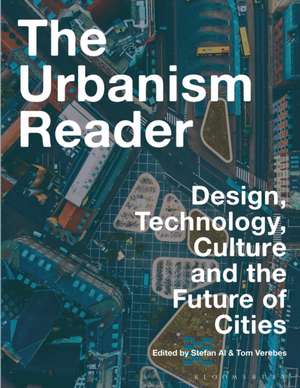
The Urbanism Reader: Design, Technology, Culture and the Future of Cities: Bloomsbury Visual Arts
Editat de Stefan Al, Tom Verebesen Limba Engleză Paperback – 20 feb 2025
The selection of readings presented here is uniquely tailored to a design perspective for architects and urban designers - balancing social issues in urbanism with a clear focus on foregrounding design as an instrument for change in cities, and examining the outcomes and challenges of recent design theories, design methods, and technologies in the built urban environment.
Covering today's most urgent issues, 45 texts explore key topics in urbanism - from digital design technologies to smart cities, from the ongoing ecological crisis to public health and the impact of Covid-19, and from emergence and informality to economic inequity in global cities. Chapters cover cultural issues including diversity, indigenous knowledge, decolonization, social justice, and inclusion alongside technological developments, while a final chapter speculates on the future of urbanism through readings in AI, virtual reality, and the frontiers of current thinking in architecture and urban design.
The extracts are grouped by theme, each with an introduction to the historical contexts and guiding paradigms - helping design students, researchers, and professionals to make sense of the diverse field of theory and practice in the past, present, and future of global urbanism.
Din seria Bloomsbury Visual Arts
- 33%
 Preț: 118.78 lei
 - 36%
 Preț: 565.96 lei
 - 19%
 Preț: 186.85 lei
 - 35%
 Preț: 571.05 lei
 - 30%
 Preț: 526.48 lei
 - 35%
 Preț: 572.92 lei
 - 28%
 Preț: 202.84 lei
 - 30%
 Preț: 523.63 lei
 - 16%
 Preț: 160.36 lei
 - 6%
 Preț: 231.52 lei
 - 9%
 Preț: 244.61 lei
 - 34%
 Preț: 233.62 lei
 - 35%
 Preț: 610.08 lei
 - 17%
 Preț: 184.45 lei
 - 31%
 Preț: 455.20 lei
 - 48%
 Preț: 123.91 lei
 - 32%
 Preț: 601.53 lei
 - 36%
 Preț: 565.15 lei
 - 44%
 Preț: 158.94 lei
 - 23%
 Preț: 191.39 lei
 - 16%
 Preț: 162.81 lei
 - 26%
 Preț: 190.34 lei
 - 22%
 Preț: 207.67 lei
 - 24%
 Preț: 162.59 lei
 - 25%
 Preț: 215.17 lei
 - 18%
 Preț: 180.93 lei
 - 22%
 Preț: 221.88 lei
 - 31%
 Preț: 612.17 lei
 - 25%
 Preț: 212.63 lei
 - 36%
 Preț: 553.25 lei
 - 35%
 Preț: 607.68 lei
 - 9%
 Preț: 303.14 lei
 - 30%
 Preț: 544.72 lei
 - 34%
 Preț: 106.70 lei
 - 27%
 Preț: 214.46 lei
 -
 Preț: 317.03 lei
 - 23%
 Preț: 186.77 lei
 - 26%
 Preț: 218.79 lei
 - 31%
 Preț: 741.79 lei
 - 35%
 Preț: 637.35 lei
 - 32%
 Preț: 553.58 lei
 - 27%
 Preț: 193.31 lei
 - 30%
 Preț: 527.16 lei
 - 32%
 Preț: 554.37 lei
 - 25%
 Preț: 211.42 lei
 - 21%
 Preț: 267.18 lei
 - 30%
 Preț: 582.78 lei
 - 20%
 Preț: 344.66 lei
 - 26%
 Preț: 220.06 lei
Preț: 220.83 lei
Preț vechi: 258.82 lei
-15%
Puncte Express: 331
Carte disponibilă
Livrare economică 16-30 noiembrie
Livrare express 31 octombrie-06 noiembrie pentru 85.93 lei
Livrare prin curier în România Termenul estimat este afișat lângă disponibilitate.
Transport gratuit de la 400.00 lei Plată online sau ramburs, în funcție de opțiunile comenzii.
Retur gratuit în 14 zile Comandă securizată și suport în română.
Specificații
ISBN-13: 9781350377905
ISBN-10: 1350377902
Pagini: 280
Ilustrații: 30 bw illus
Dimensiuni: 190 x 242 x 18 mm
Greutate: 0.76 kg
Editura: Bloomsbury Publishing
Colecția Bloomsbury Visual Arts
Seria Bloomsbury Visual Arts
Locul publicării:London, United Kingdom
ISBN-10: 1350377902
Pagini: 280
Ilustrații: 30 bw illus
Dimensiuni: 190 x 242 x 18 mm
Greutate: 0.76 kg
Editura: Bloomsbury Publishing
Colecția Bloomsbury Visual Arts
Seria Bloomsbury Visual Arts
Locul publicării:London, United Kingdom
V-ar putea interesa
-
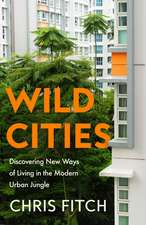 Wild CitiesChris FitchPreț: 143.05 lei
 -
 Inventing Future CitiesMichael Batty-21%Preț: 146.24 lei184.24 lei
 -
 The Image of the CityKevin LynchPreț: 277.67 lei
 -
 The Architecture of UrbanityVishaan ChakrabartiPreț: 242.47 lei
 -
 Preț: 352.39 lei
 -
 Geodesign, Urban Digital Twins, and FuturesPaul CuretonPreț: 355.82 lei
 -
 The Power of Design and Convergence of AITai Lee Siang-20%Preț: 419.95 lei524.93 lei
 -
 The City ReaderRichard T. LeGates-8%Preț: 466.10 lei506.63 lei
 -
 -20%Preț: 371.62 lei464.52 lei
 -
 Preț: 387.50 lei
 -
 Public Places Urban Spaces: The Dimensions of Urban DesignMatthew CarmonaPreț: 473.09 lei
 -
 The Homegrown CityMatias EchanovePreț: 152.63 lei
 -
 The Physical and the Digital CitySilvio Carta-23%Preț: 705.86 lei916.70 lei
 -
 Future CitiesEllen AdamsPreț: 131.63 lei
 -
 Teaching Urbanism: Lucerne TalksHeike BiechtelerPreț: 349.86 lei
 -
 Future CityAlyn GriffithsPreț: 338.58 lei
 -
 Flux CitiesGregor H. MewsPreț: 309.59 lei
Cuprins
List of Figures
Introduction
Chapter 1: Spatial Heterogeneity, Diversity and Difference After Modernist Planning
Robert Venturi and Denise Scott Brown - Learning from Las Vegas: The Forgotten Symbolism of Architectural Form
Colin Rowe and Fred Koetter -Collage City
Kenneth Frampton - Modern Architecture: A Critical History
Chapter 2: Urbanism and Models of Design Complexity
Christopher Alexander - "The City is Not a Tree"
Manuel De Landa - A Thousand Years of Nonlinear History
Stan Allen - Architecture After Geometry
Peter Eisenman - Diagram Diaries
Sanford Kwinter -Far from Equilibrium: Essays on Technology and Design Culture.
Chapter 3: Intensities, Flows, Connectivity, and Networked Urbanism
Frei Otto - Occupying and Connecting: Thoughts on Territories and Spheres of Influence with Particular Reference to Human Settlement
Michael Weinstock - The Architecture of Emergence: The Evolution of Form in Nature and Civilisation
Manuel Castells - The Rise of the Network Society: The Information Age: Economy, Society, and Culture
Jonathan D. Solomon - Shaping the City: Studies in History, Theory and Urban Design
Michael Kubo, Farshid Moussavi, and Alejandro Zaera Polo - The Yokohama Project
Chapter 4: Density, the Compact City and Metropolitan Culture
Richard Rogers - Cities for a Small Planet
Rem Koolhaas - "The Future's Past"
Winy Maas - "Datascape: The Final Extravaganza"
Chapter 5: Ecology, Resilience, and Green Infrastructure
Anne Whiston Spirn - The Granite Garden
Charles Waldheim - The Landscape Urbanism Reader
Kongjian Yu - "Beautiful Big Feet: Toward a New Landscape Aesthetic"
Watson, J., H. Abukhodair, N. A. Naeema Ali, A. Robertson, H. Issaoui, and C. Sun - "Design by Radical Indigenism: Equitable Underwater & Intertidal Technologies of the Global South"
Chapter 6: Health, Equity, and Liveable Cities
Jan Gehl - Life Between Buildings: Using Public Space
Nicole Kalms - She City
Walter Hood and Grace Mitchell Tada - Black Landscapes Matter
Chapter 7: Emergent, Tactical, and Informal Urbanism
Ananya Roy - "Urban Informality: Toward an Epistemology of Planning"
Alfredo Brillembourg and Hubert Klumpner - "Rules of Engagement: Caracas and the Informal City"
Alejandro Aravena - "Elemental: A Do Tank"
Mike Lydon and Anthony Garcia - Tactical Urbanism
Chapter 8: Evolutionary, Computational, and Parametric Urbanism
Gordon Pask - "The Architectural Relevance of Cybernetics"
John Frazer - An Evolutionary Architecture
Tom Verebes - Masterplanning the Adaptive City: Computational Urbanism in the Twenty-first Century
Patrik Schumacher - The Autopoiesis of Architecture: A New Agenda for Architecture
Benjamin H. Bratton - "Parametricist Architecture Would Be a Good Idea"
Michael Batty - Cities and Complexity: Understanding Cities with Cellular Automata, Agent-Based Models, and Fractals
Chapter 9: Virtuality, Extended Realities, and the Metaverse
William J. Mitchell - Me++: The Cyborg Self and the Networked City
Carlo Ratti and Matthew Claudel - The City of Tomorrow: Sensors, Networks, Hackers, and the Future of Urban Life
Andrea Moneta - "Architecture, Heritage, and the Metaverse"
Chapter 10: Artificial Intelligence, the Internet of Things, and Technological Determinism
Areti Markopoulou - Learning Cities: Collective Intelligence in Urban Design
Neil Leach - Architecture in the Age of Artificial Intelligence: An Introduction to AI for Architects
Matias del Campo - Neural Architecture: Design and Artificial Intelligence
Kate Crawford - Atlas of AI: Power, Politics and the Planetary Costs of Artificial Intelligence
Bibliography
Index
Introduction
Chapter 1: Spatial Heterogeneity, Diversity and Difference After Modernist Planning
Robert Venturi and Denise Scott Brown - Learning from Las Vegas: The Forgotten Symbolism of Architectural Form
Colin Rowe and Fred Koetter -Collage City
Kenneth Frampton - Modern Architecture: A Critical History
Chapter 2: Urbanism and Models of Design Complexity
Christopher Alexander - "The City is Not a Tree"
Manuel De Landa - A Thousand Years of Nonlinear History
Stan Allen - Architecture After Geometry
Peter Eisenman - Diagram Diaries
Sanford Kwinter -Far from Equilibrium: Essays on Technology and Design Culture.
Chapter 3: Intensities, Flows, Connectivity, and Networked Urbanism
Frei Otto - Occupying and Connecting: Thoughts on Territories and Spheres of Influence with Particular Reference to Human Settlement
Michael Weinstock - The Architecture of Emergence: The Evolution of Form in Nature and Civilisation
Manuel Castells - The Rise of the Network Society: The Information Age: Economy, Society, and Culture
Jonathan D. Solomon - Shaping the City: Studies in History, Theory and Urban Design
Michael Kubo, Farshid Moussavi, and Alejandro Zaera Polo - The Yokohama Project
Chapter 4: Density, the Compact City and Metropolitan Culture
Richard Rogers - Cities for a Small Planet
Rem Koolhaas - "The Future's Past"
Winy Maas - "Datascape: The Final Extravaganza"
Chapter 5: Ecology, Resilience, and Green Infrastructure
Anne Whiston Spirn - The Granite Garden
Charles Waldheim - The Landscape Urbanism Reader
Kongjian Yu - "Beautiful Big Feet: Toward a New Landscape Aesthetic"
Watson, J., H. Abukhodair, N. A. Naeema Ali, A. Robertson, H. Issaoui, and C. Sun - "Design by Radical Indigenism: Equitable Underwater & Intertidal Technologies of the Global South"
Chapter 6: Health, Equity, and Liveable Cities
Jan Gehl - Life Between Buildings: Using Public Space
Nicole Kalms - She City
Walter Hood and Grace Mitchell Tada - Black Landscapes Matter
Chapter 7: Emergent, Tactical, and Informal Urbanism
Ananya Roy - "Urban Informality: Toward an Epistemology of Planning"
Alfredo Brillembourg and Hubert Klumpner - "Rules of Engagement: Caracas and the Informal City"
Alejandro Aravena - "Elemental: A Do Tank"
Mike Lydon and Anthony Garcia - Tactical Urbanism
Chapter 8: Evolutionary, Computational, and Parametric Urbanism
Gordon Pask - "The Architectural Relevance of Cybernetics"
John Frazer - An Evolutionary Architecture
Tom Verebes - Masterplanning the Adaptive City: Computational Urbanism in the Twenty-first Century
Patrik Schumacher - The Autopoiesis of Architecture: A New Agenda for Architecture
Benjamin H. Bratton - "Parametricist Architecture Would Be a Good Idea"
Michael Batty - Cities and Complexity: Understanding Cities with Cellular Automata, Agent-Based Models, and Fractals
Chapter 9: Virtuality, Extended Realities, and the Metaverse
William J. Mitchell - Me++: The Cyborg Self and the Networked City
Carlo Ratti and Matthew Claudel - The City of Tomorrow: Sensors, Networks, Hackers, and the Future of Urban Life
Andrea Moneta - "Architecture, Heritage, and the Metaverse"
Chapter 10: Artificial Intelligence, the Internet of Things, and Technological Determinism
Areti Markopoulou - Learning Cities: Collective Intelligence in Urban Design
Neil Leach - Architecture in the Age of Artificial Intelligence: An Introduction to AI for Architects
Matias del Campo - Neural Architecture: Design and Artificial Intelligence
Kate Crawford - Atlas of AI: Power, Politics and the Planetary Costs of Artificial Intelligence
Bibliography
Index
Recenzii
Cumulatively, The Urbanism Reader is less a definitive canon than it is a provocation, a reminder of the need for design techniques and political principles adequate to the complexities of contemporary urban life. To that extent, it succeeds not only as pedagogy, but as disciplinary self-reflection.
This is the collection of essays many of us have been waiting for: thematically organized, critically framed, bite-sized excerpts, global reach, well-known essays, writing gems that we're glad to discover. The Urbanism Reader will stand as the compilation of urban thinking after modernism.
This reader brings coherence, a sense of continuity, and contemporary context to a particularly dense and conceptually challenging period of urban theory. It is an invaluable resource that balances summary, insight and original texts with exceptional clarity and finesse-I wish I'd had it to hand as a student.
This is the collection of essays many of us have been waiting for: thematically organized, critically framed, bite-sized excerpts, global reach, well-known essays, writing gems that we're glad to discover. The Urbanism Reader will stand as the compilation of urban thinking after modernism.
This reader brings coherence, a sense of continuity, and contemporary context to a particularly dense and conceptually challenging period of urban theory. It is an invaluable resource that balances summary, insight and original texts with exceptional clarity and finesse-I wish I'd had it to hand as a student.