Confucius’ Courtyard: Architecture, Philosophy and the Good Life in China: Bloomsbury Visual Arts
Autor Xing Ruanen Limba Engleză Paperback – 18 noi 2021
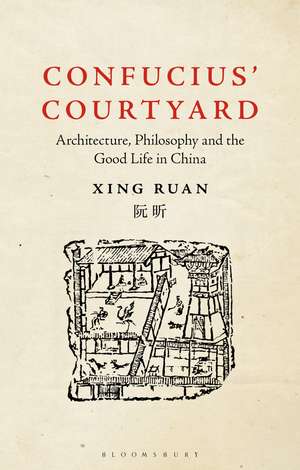
Part architectural history, and part introduction to the cultural and philosophical history of China, the book explores the Chinese view of the world, and reveals the extent to which this is inextricably intertwined with the ancient concept of the courtyard, a place and a way of life which, it appears, has been almost entirely overlooked in China since the middle of the 20th century, and in the West for centuries. Along the way, it provides an accessible introduction to the Confucian idea of zhongyong ('the Middle Way'), the Chinese moral universe and the virtuous good life in the absence of an awesome God, and shows how these can only be fully understood through the humble courtyard - a space which is grounded in the earth, yet open to the heavens.
Erudite, elegant and illustrated throughout by the author's own architectural drawings and sketches, Confucius' Courtyard weaves together architecture, philosophy and cultural history to explore what lies at the very heart of Chinese civilization.
Din seria Bloomsbury Visual Arts
- 33%
 Preț: 118.78 lei
 - 36%
 Preț: 565.96 lei
 - 19%
 Preț: 186.85 lei
 - 35%
 Preț: 571.05 lei
 - 30%
 Preț: 526.48 lei
 - 35%
 Preț: 572.92 lei
 - 28%
 Preț: 202.84 lei
 - 30%
 Preț: 523.63 lei
 - 16%
 Preț: 160.36 lei
 - 6%
 Preț: 231.52 lei
 - 9%
 Preț: 244.61 lei
 - 34%
 Preț: 233.62 lei
 - 35%
 Preț: 610.08 lei
 - 17%
 Preț: 184.45 lei
 - 31%
 Preț: 455.20 lei
 - 32%
 Preț: 601.53 lei
 - 36%
 Preț: 565.15 lei
 - 44%
 Preț: 158.94 lei
 - 23%
 Preț: 191.39 lei
 - 16%
 Preț: 162.81 lei
 - 26%
 Preț: 190.34 lei
 - 22%
 Preț: 207.67 lei
 - 24%
 Preț: 162.59 lei
 - 25%
 Preț: 215.17 lei
 - 18%
 Preț: 180.93 lei
 - 22%
 Preț: 221.88 lei
 - 31%
 Preț: 612.17 lei
 - 25%
 Preț: 212.63 lei
 - 36%
 Preț: 553.25 lei
 - 35%
 Preț: 607.68 lei
 - 9%
 Preț: 303.14 lei
 - 30%
 Preț: 544.72 lei
 - 34%
 Preț: 106.70 lei
 - 27%
 Preț: 214.46 lei
 -
 Preț: 317.03 lei
 - 23%
 Preț: 186.77 lei
 - 26%
 Preț: 218.79 lei
 - 31%
 Preț: 741.79 lei
 - 35%
 Preț: 637.35 lei
 - 32%
 Preț: 553.58 lei
 - 27%
 Preț: 193.31 lei
 - 30%
 Preț: 527.16 lei
 - 32%
 Preț: 554.37 lei
 - 25%
 Preț: 211.42 lei
 - 21%
 Preț: 267.18 lei
 - 30%
 Preț: 582.78 lei
 - 20%
 Preț: 344.66 lei
 - 26%
 Preț: 220.06 lei
Preț: 123.91 lei
Preț vechi: 237.00 lei
-48%
Puncte Express: 186
Carte disponibilă
Livrare economică 17 noiembrie-01 decembrie
Livrare prin curier în România Termenul estimat este afișat lângă disponibilitate.
Transport gratuit de la 400.00 lei Plată online sau ramburs, în funcție de opțiunile comenzii.
Retur gratuit în 14 zile Comandă securizată și suport în română.
Specificații
ISBN-13: 9781350217614
ISBN-10: 1350217611
Pagini: 368
Ilustrații: 61 bw illus
Dimensiuni: 138 x 216 x 30 mm
Greutate: 0.48 kg
Editura: Bloomsbury Publishing
Colecția Bloomsbury Visual Arts
Seria Bloomsbury Visual Arts
Locul publicării:London, United Kingdom
ISBN-10: 1350217611
Pagini: 368
Ilustrații: 61 bw illus
Dimensiuni: 138 x 216 x 30 mm
Greutate: 0.48 kg
Editura: Bloomsbury Publishing
Colecția Bloomsbury Visual Arts
Seria Bloomsbury Visual Arts
Locul publicării:London, United Kingdom
Cuprins
Prologue
Part One: Heaven
A Panacea from the Courtyard
1. What Makes the Chinese House
I. The Conceptual Parti
II. Confucius' Courtyard
III. From Object to Void
2. Heaven and What is Below
I. The Chinese Tian
II. The King's City
III. The Built World and the Literary World
Part Two: Heaven and Earth
Equilibrium in the Courtyard
3. The Divergent Tower
I. The Emergence of the Individual and Metaphysics
II. Immortality and Freedom Imagined
4. Secluded World and Floating Life
I. The Middling Hermit
II. The Artful Transition
5. A Deceiving Symbol
I. The Travelling Merchant and the Oddity of their Courtyard
II. Women in Chinese Marriage and Household
III. Behind Good Taste and Refinement
6. Literary Enchantment and the Garden House
I. Li Yü's World
II. Internalized Garden and the "Horizon" beyond
III. Courtyard and Decorum
7. The Golden Mean Finely Tuned
I. The Anatomy of a Beijing Quadrangle
II. Life and Ambience in the Hutong
III. The City as a Large Quadrangle
IV. Distinctive Character versus Uniformity
8. Living like the Chinese
I. The "Guest" Chinese and their Chinese Courtyards
II. Chinese Form and Exotic Meaning
Part Three: Earth
The Emancipation of Desire and the Loss of Courtyard
9. The Irresistible Metropolis
I. Modern City Born of Refugee Crisis
II. From Diminishing Courtyard to Porous House
10. The Assault of Modernity
I. Quadrangle without the Confucian World
II. The Lingering Courtyard
III. Nothingness, Horizon and Discreet Pleasure
Epilogue
The Four or the Five
Bibliography
Index
Part One: Heaven
A Panacea from the Courtyard
1. What Makes the Chinese House
I. The Conceptual Parti
II. Confucius' Courtyard
III. From Object to Void
2. Heaven and What is Below
I. The Chinese Tian
II. The King's City
III. The Built World and the Literary World
Part Two: Heaven and Earth
Equilibrium in the Courtyard
3. The Divergent Tower
I. The Emergence of the Individual and Metaphysics
II. Immortality and Freedom Imagined
4. Secluded World and Floating Life
I. The Middling Hermit
II. The Artful Transition
5. A Deceiving Symbol
I. The Travelling Merchant and the Oddity of their Courtyard
II. Women in Chinese Marriage and Household
III. Behind Good Taste and Refinement
6. Literary Enchantment and the Garden House
I. Li Yü's World
II. Internalized Garden and the "Horizon" beyond
III. Courtyard and Decorum
7. The Golden Mean Finely Tuned
I. The Anatomy of a Beijing Quadrangle
II. Life and Ambience in the Hutong
III. The City as a Large Quadrangle
IV. Distinctive Character versus Uniformity
8. Living like the Chinese
I. The "Guest" Chinese and their Chinese Courtyards
II. Chinese Form and Exotic Meaning
Part Three: Earth
The Emancipation of Desire and the Loss of Courtyard
9. The Irresistible Metropolis
I. Modern City Born of Refugee Crisis
II. From Diminishing Courtyard to Porous House
10. The Assault of Modernity
I. Quadrangle without the Confucian World
II. The Lingering Courtyard
III. Nothingness, Horizon and Discreet Pleasure
Epilogue
The Four or the Five
Bibliography
Index
Recenzii
[Confucius' Courtyard] is a delightful reflection on and exposition of the significance of the courtyard to the Chinese conceptualization of the cosmos and way of life . Ruan elegantly weaves together literary, philosophical, artistic and architectural musings. The book is both learned and readable.
What can I say? This is a truly magnificent work of scholarship for the understanding of China, one that I have been waiting for - China as a civilization at the centre of which is the courtyard: an architectural feature that embodies the doctrine of the mean set in a material world, compact enough to be readily accessible to reason and lived with due deference to the social rites and rules under Heaven's benign patronage, a world that modern society has vigorously transgressed in recent decades, leading us to wonder, what follows? Unlike many scholarly books Xing Ruan's comes to life, almost jumps off the page, because it draws not only on traditional sources in history and philosophy, but also on charming narratives of how the Chinese people actually lived. It is a book for the scholar's study and for the hammock by the seashore. It is a triumph that I envy!
An enchanting story paradoxically woven round a void - the courtyard - it offers a fresh account of the transformations of the Chinese city.
Xing Ruan grasps a fundamental architectural element as an insightful window for understanding broader issues of society and history. Ruan's elegant prose soars as he weaves nuanced observations, classical Chinese writings, and buildings throughout the world into a cohesive narrative.
This humane and intelligent study compares courtyard buildings of widely different ages and geographies. Deep insight into architectural world-building is the result. Apparently empty, the courtyard is full of potential, actualized historically in ways that still make sense, even today.
What can I say? This is a truly magnificent work of scholarship for the understanding of China, one that I have been waiting for - China as a civilization at the centre of which is the courtyard: an architectural feature that embodies the doctrine of the mean set in a material world, compact enough to be readily accessible to reason and lived with due deference to the social rites and rules under Heaven's benign patronage, a world that modern society has vigorously transgressed in recent decades, leading us to wonder, what follows? Unlike many scholarly books Xing Ruan's comes to life, almost jumps off the page, because it draws not only on traditional sources in history and philosophy, but also on charming narratives of how the Chinese people actually lived. It is a book for the scholar's study and for the hammock by the seashore. It is a triumph that I envy!
An enchanting story paradoxically woven round a void - the courtyard - it offers a fresh account of the transformations of the Chinese city.
Xing Ruan grasps a fundamental architectural element as an insightful window for understanding broader issues of society and history. Ruan's elegant prose soars as he weaves nuanced observations, classical Chinese writings, and buildings throughout the world into a cohesive narrative.
This humane and intelligent study compares courtyard buildings of widely different ages and geographies. Deep insight into architectural world-building is the result. Apparently empty, the courtyard is full of potential, actualized historically in ways that still make sense, even today.