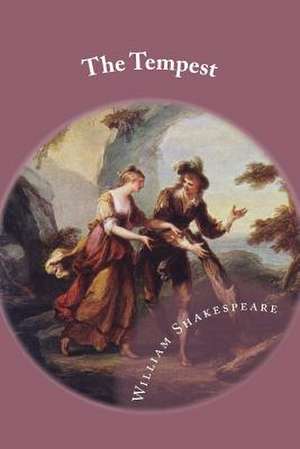
The Tempest
Autor William Shakespeareen Limba Engleză Paperback – vârsta de la 7 până la 9 ani
Considerăm că introducerea copiilor și adolescenților în universul lui William Shakespeare este un pas esențial în dezvoltarea gândirii critice și a empatiei. Tema centrală a piesei The Tempest — pierderea și regăsirea puterii într-un cadru exotic — oferă tinerilor cititori o perspectivă fascinantă asupra modului în care greșelile trecutului pot fi îndreptate prin iertare, nu prin răzbunare. Situația lui Prospero, un duce trădat care își folosește exilul pentru a stăpâni forțele naturii, rezonează cu dorința fiecărui tânăr de a deține controlul asupra propriului destin.
Subliniem valoarea acestei ediții din seria Collins Classroom Classics, care transformă o lectură complexă într-o experiență accesibilă. Spre deosebire de Twelfth Night, unde accentul cade pe confuziile comice de identitate, sau Othello, care explorează profunzimile distructive ale geloziei, The Tempest reușește să educe și să captiveze fără a fi didactică, oferind un echilibru între spectacolul magic și dilemele etice. Structura cărții este remarcabilă: după textul piesei, cititorul găsește o secțiune de apendice ce include texte de Michel de Montaigne sau Ovid, oferind contextul istoric necesar pentru a înțelege viziunea autorului despre „omul natural” și civilizație.
Notăm cu interes modul în care această operă se raportează la alte lucrări ale „Bardului”. Dacă în Macbeth ambiția duce la o spirală a violenței, aici Prospero alege să-și rupă bagheta magică și să se reconcilieze cu inamicii săi. Este o lectură fundamentală care, prin ritmul său alert și personajele memorabile precum spiritul Ariel sau sălbaticul Caliban, facilitează tranziția către literatura clasică.
Preț: 70.41 lei
Carte indisponibilă temporar
Specificații
ISBN-10: 1496047273
Pagini: 104
Dimensiuni: 156 x 234 x 6 mm
Greutate: 0.16 kg
Editura: CreateSpace Independent Publishing Platform
V-ar putea interesa
-
 Fahrenheit 451Ray BradburyPreț: 70.74 lei
 -
 Great ExpectationsCharles DickensPreț: 28.01 lei
 -
 MacbethWilliam ShakespearePreț: 29.48 lei
 -
 WEIRDSTONE OF BRISINGAMEN PBAlan GarnerPreț: 64.97 lei
 -
 Hard TimesCharles DickensPreț: 28.01 lei
 -
 The Giver. Film Tie-InLois LowryPreț: 57.70 lei
 -
 HamletCollins GcsePreț: 28.01 lei
 -
 Romeo and JulietWilliam ShakespearePreț: 29.50 lei
 -
 OthelloWilliam ShakespearePreț: 28.01 lei
 -
 BabbittSinclair Lewis-19%Preț: 64.04 lei78.75 lei
 -
 -25%Preț: 59.20 lei79.29 lei
 -
 -19%Preț: 52.53 lei64.66 lei
 -
 A Christmas Carol and Other Christmas WritingsCharles Dickens-26%Preț: 48.68 lei65.60 lei
 -
 Of Mice and MenJohn Steinbeck-29%Preț: 49.89 lei70.16 lei
 -
 Master Harold ...and the BoysAthol FugardPreț: 86.48 lei
 -
 I Know Why the Caged Bird SingsMaya AngelouPreț: 56.64 lei
 -
 WonderR. J. Palacio-17%Preț: 49.06 lei58.90 leiRecomandat
 -
 Lord of the FliesWilliam GoldingPreț: 71.58 lei
 -
 The House on Mango StreetSandra Cisneros-34%Preț: 50.84 lei77.53 lei
 -
 Holes: The iconic childhood-defining phenomenonLouis Sachar-33%Preț: 43.22 lei64.94 lei
 -
 Romeo and JulietWilliam ShakespearePreț: 36.06 lei
 -
 HamletWilliam ShakespearePreț: 30.38 lei
 -
 The Maze Runner 1James DashnerPreț: 68.24 lei
 -
 A Streetcar named DesireHerbert GeisenPreț: 51.63 lei
De ce să citești această carte
Recomandăm această ediție elevilor și părinților care doresc să abordeze literatura engleză într-un mod structurat. The Tempest nu este doar o piesă de teatru, ci un exercițiu de vocabular și analiză culturală. Cititorul câștigă o înțelegere profundă a naturii umane și a puterii de a ierta, totul într-un format paperback ușor de parcurs, îmbogățit cu note explicative esențiale pentru examene sau lectură de plăcere.
Despre autor
William Shakespeare (1564–1616), cunoscut drept „Bardul de pe Avon”, este considerat cel mai mare dramaturg al lumii. Opera sa, tradusă în toate limbile majore, continuă să fie fundamentul teatrului modern. Născut în Stratford-upon-Avon, Shakespeare a creat o moștenire impresionantă de 39 de piese și 154 de sonete. The Tempest ocupă un loc special în bibliografia sa, fiind considerată piesa sa de „adio”, unde figura magicianului Prospero este adesea interpretată ca un alter-ego al dramaturgului care își ia rămas bun de la scenă. Stilul său combină profunzimea filozofică cu o măiestrie lingvistică inegalabilă.
Descriere scurtă
Descriere
'How beauteous mankind is! O brave new worldThat has such people in't!'Performed variously as escapist fantasy, celebratory fiction, and political allegory, The Tempest is one of the plays in which Shakespeare's genius as a poetic dramatist found its fullest expression. Significantly, it was placed first when published in the First Folio of 1623, and is now generally seen as the playwright's most penetrating statement about his art.The New Oxford Shakespeare offers authoritative editions of Shakespeare's works with introductory materials designed to encourage new interpretations of the plays and poems. Using the text from the landmark The New Oxford Shakespeare Complete Works: Modern Critical Edition, these volumes offer readers the latest thinking on the authentic texts (collated from all surviving original versions of Shakespeare's work) alongside innovative introductions from leading scholars. The texts are accompanied by a comprehensive set of critical apparatus to give readers the best resources to help understand and enjoy Shakespeare's work.ABOUT THE SERIES: For over 100 years Oxford World's Classics has made available the widest range of literature from around the globe. Each affordable volume reflects Oxford's commitment to scholarship, providing the most accurate text plus a wealth of other valuable features, including expert introductions by leading authorities, helpful notes to clarify the text, up-to-date bibliographies for further study, and much more.
Notă biografică
Recenzii
This edition features interleaved materials that expand upon allusions in the play and explore elements of its stagecraft. Appendices offer excerpts from Shakespeare’s key sources and inspirations, along with historical materials on exploration and colonialism.
“I heartily welcome this new edition of The Tempest. In their introduction, the editors offer a deftly balanced, deeply nuanced interpretation of the play. While fully explicating its historical context, sources, and afterlife, the editors engage deeply with the play’s ethical ambiguities. They reveal The Tempest as a canonical play that speaks powerfully to today’s social concerns about justice, memory, revenge, service, freedom, and power. As the editors put it beautifully, ‘it is a quality of great works of art that they—unlike the people who make them—grow younger, stronger, more various, and more influential as they grow older.’ Long may it be so.” — Gail Kern Paster, Director Emerita, Folger Shakespeare Library
“This stellar edition of The Tempest does an excellent job of situating the play in its historical contexts. A splendid introduction and a well-chosen set of secondary materials will give students and teachers alike a clear entry point into the play’s noted interests in political and ethical questions posed by colonial conquest and other forms of usurpation. The vivid illustrations and longer notes interspersed throughout the playtext itself offer the reader an experience unique to this edition, beautifully illuminating the importance of visual art and staged image to The Tempest, Shakespeare’s most spectacular play.” — Adam Zucker, University of Massachusetts Amherst
“Despite there being many fine editions of this play, past and present, this one is a good choice for both the classroom and the study, and one that scholars should consult when considering editing, interpreting, or teaching The Tempest, a play that has been a favourite of many… Bernard and Yachnin have produced a balanced, measured, thoughtful, scholarly, clear, and well-considered edition, and they and their publisher are to be commended.” — Jonathan Locke Hart, Renaissance and Reformation
Cuprins
Introduction
Shakespeare’s Life
Shakespeare’s Theater
William Shakespeare and The Tempest: A Brief Chronology
A Note on the Text
The Tempest
Appendix A
From Aristotle, Politics (fourth century BCE)
Appendix B
From Ovid, Metamorphoses (8 CE)
Appendix C
From Juan Ginés de Sepúlveda, The Second Democrate; or, The Just Causes of the War against the Indians (1547)
Appendix D
From Bartolomé de las Casas, A Short Account of the Destruction of the Indies (1552)
Appendix E
From Michel de Montaigne, “Of the Cannibals” (1578–80)
Appendix F
From William Strachey, A True Reportory of the Wracke (1610)
Appendix G
From John Dryden and William Davenant, The Tempest; or, The Enchanted Island (1670)
Works Cited and Select Bibliography
Caracteristici
Illustrated with photographs of classic and unusual performances
Outstanding on-page notes which explain words and phrases unfamiliar to a modern audience, including the slang, political references and bawdy humour often ignored or censored in competing editions
Includes scene-by-scene summary, offering an easily understandable way into the play
Completely new introduction by Jonathan Bate, exploring the text and critical debates around it
Summary of the play's performance history at the RSC and elsewhere
Interviews with important Shakespearean directors Peter Brook, Sam Mendes and Rupert Goold discussing key productions at the RSC