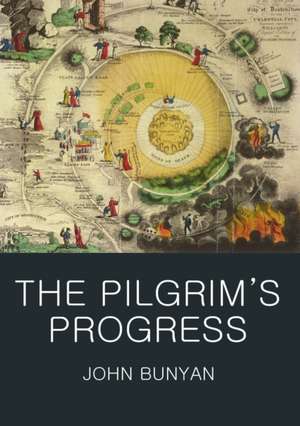
The Pilgrim's Progress: Classics of World Literature
Autor John Bunyanen Limba Engleză Paperback – 5 noi 1996
Descoperim în The Pilgrim's Progress o lectură stratificată, a cărei cadență amintește de pasul hotărât, dar adesea îngreunat, al unui drumeț pe un teren necunoscut. Ritmul nu este unul al vitezei, ci al reflecției profunde; este o narațiune care se cere parcursă cu răbdare, lăsând fiecare simbol și fiecare întâlnire a protagonistului Christian să rezoneze cu propriile noastre căutări interioare. Scrisă parțial în izolarea unei celule de închisoare, opera lui John Bunyan transcende simpla literatură de secol XVII, devenind o hartă universală a spiritului uman. Apreciem modul în care Bunyan transformă concepte abstracte — disperarea, speranța, ignoranța — în personaje vii, cu care cititorul interacționează direct. Pe același raft cu Pilgrim's Progress in Today's English de James Thomas, această ediție de la Collins Classics se distinge prin păstrarea textului original, oferind acea patină de autenticitate și forță lingvistică pe care adaptările moderne o simplifică adesea. Considerăm că forța cărții rezidă tocmai în această asprime a limbajului arhaic, care conferă greutate fiecărei încercări prin care trece pelerinul. În contextul operei sale, The Pilgrim's Progress reprezintă vârful de lance al unei bibliografii vaste, fiind strâns legată de The Pilgrim's Progress and Grace Abounding to the Chief of Sinners. Dacă lucrarea autobiografică Grace Abounding to the Chief of Sinners ne oferă perspectiva intimă a luptei interioare a lui John Bunyan, pelerinajul lui Christian este transpunerea acestor trăiri într-o mitologie creștină universală. Este o operă fundamentală care a modelat imaginația literară occidentală, oferind nume și situații care au devenit puncte de referință în cultura universală.
Din seria Classics of World Literature
-
 Preț: 43.71 lei
 -
 Preț: 45.48 lei
 -
 Preț: 44.16 lei
 -
 Preț: 43.81 lei
 -
 Preț: 50.28 lei
 -
 Preț: 43.02 lei
 -
 Preț: 44.33 lei
 -
 Preț: 45.91 lei
 -
 Preț: 48.29 lei
 -
 Preț: 49.92 lei
 -
 Preț: 49.99 lei
 -
 Preț: 48.01 lei
 -
 Preț: 46.10 lei
 -
 Preț: 42.21 lei
 -
 Preț: 45.02 lei
 -
 Preț: 46.88 lei
 -
 Preț: 44.09 lei
 -
 Preț: 44.28 lei
 -
 Preț: 55.43 lei
 -
 Preț: 46.64 lei
 -
 Preț: 49.64 lei
 -
 Preț: 46.68 lei
 -
 Preț: 43.39 lei
 -
 Preț: 42.78 lei
 -
 Preț: 41.69 lei
 -
 Preț: 42.85 lei
 -
 Preț: 42.78 lei
 -
 Preț: 45.18 lei
 -
 Preț: 42.26 lei
 -
 Preț: 43.48 lei
 -
 Preț: 44.36 lei
 -
 Preț: 46.59 lei
 -
 Preț: 45.68 lei
 -
 Preț: 46.55 lei
 -
 Preț: 47.77 lei
 -
 Preț: 42.32 lei
Preț: 43.22 lei
Carte disponibilă
Livrare economică 07-21 septembrie
Livrare express 21-27 august pentru 18.29 lei
Specificații
ISBN-10: 1853264687
Pagini: 272
Dimensiuni: 125 x 195 x 22 mm
Greutate: 0.18 kg
Ediția:New
Editura: WORDSWORTH EDITIONS LTD
Colecția Classics of World Literature
Seria Classics of World Literature
Locul publicării:United Kingdom
V-ar putea interesa
-
 Robinson CrusoeDaniel De FoePreț: 24.60 lei
 -
 CLASSICS THE PILGRIMS PROGRESSJohn BunyanPreț: 24.60 lei
 -
 Scary Stories to Tell in the DarkAlvin SchwartzPreț: 57.70 lei
 -
 Socrates: A Man for Our TimesPaul JohnsonPreț: 98.11 lei
 -
 The Catcher in the RyeJ. D. Salinger-20%Preț: 50.48 lei63.05 lei
 -
 Pilgrim's Progress (Hodder Classics)John BunyanPreț: 91.18 lei
 -
 Preț: 99.03 lei
 -
 Pilgrim's Progress in Today's EnglishJames ThomasPreț: 70.68 lei
 -
 Dangerous JourneyOliver HunkinPreț: 156.34 lei
 -
 Pilgrim's ProgressGary D. SchmidtPreț: 101.47 lei
 -
 MemoriesLang Leav-19%Preț: 87.12 lei107.33 lei
 -
 Grace Abounding to the Chief of SinnersJohn BunyanPreț: 39.46 lei
 -
 The Pilgrim's Progress (Illustrated Edition)John BunyanPreț: 100.42 lei
 -
 Treasured Possessions: From the Renaissance to the EnlightenmentDr Melissa CalaresuPreț: 310.24 lei
 -
 Preț: 49.64 lei
 -
 CapitalKarl MarxPreț: 49.99 lei
 -
 The General Theory of Employment, Interest and MoneyJohn Maynard KeynesPreț: 46.10 lei
 -
 Pilgrim's Progress 2John BunyanPreț: 121.58 lei
 -
 IliadHomerPreț: 36.91 lei
 -
 HistoriesHerodotusPreț: 46.88 lei
 -
 Seven Pillars of WisdomT. E. LawrencePreț: 46.64 lei
 -
 RepublicPlatoPreț: 44.09 lei
 -
 Preț: 41.59 lei
 -
 The PrinceNiccolo MachiavelliPreț: 42.21 lei
 -
 The Origin of SpeciesCharles DarwinPreț: 44.36 lei
 -
 The InfernoDante AlighieriPreț: 42.78 lei
 -
 BunyanJames Anthony FroudePreț: 80.16 lei
De ce să citești această carte
Recomandăm această carte celor care caută o lectură contemplativă, cu rădăcini istorice și spirituale adânci. Cititorul va câștiga nu doar acces la o piesă esențială a literaturii engleze, ci și o perspectivă fascinantă asupra rezilienței umane în fața adversității. Este un volum ideal pentru cei care apreciază alegoria clasică și doresc să exploreze textul original care a influențat generații de scriitori, de la C.S. Lewis la Nathaniel Hawthorne.
Despre autor
John Bunyan (1628–1688) a fost un scriitor și predicator puritan englez, a cărui viață a fost marcată de o profundă transformare spirituală și de o rezistență dârză în fața opresiunii religioase. De meserie cârpaci, Bunyan a servit în armata parlamentară în timpul Războiului Civil Englez înainte de a se dedica predicării nonconformiste. A petrecut doisprezece ani în închisoarea din Bedford pentru refuzul de a renunța la credința sa, perioadă în care a scris cele mai importante lucrări ale sale, inclusiv autobiografia spirituală Grace Abounding to the Chief of Sinners. Moștenirea sa literară este definită de un stil simplu, dar vizionar, care a făcut din scrierile sale un model de claritate și forță narativă.
Descriere scurtă
John Bunyan was variously a tinker, soldier, Baptist minister, prisoner and writer of outstanding narrative genius which reached its apotheosis in this, his greatest work. It is an allegory of the Christian life of true brilliance and is presented as a dream which describes the pilgrimage of the hero - Christian - from the City of Destruction via the Slough of Despond, the Hill of Difficulty, the Valley of the Shadow of Death and Vanity Fair over the River of the Water of Life and into the Celestial City.
The Pilgrim's Progress has been translated into 108 languages, was a favourite of Dr Johnson and was praised by Coleridge as one of the few books which might be read repeatedly and each time with a new and different pleasure.
Textul de pe ultima copertă
Notă biografică
He was imprisoned again for about six months in 1676. He continued to write, and to preach in Bedfordshire and London. In 1678 he published the first part of The Pilgrim's Progress. It became am immediate bestseller, running through twelve ditions and being translated into Dutch, French and Welsh during Bunyan's lifetime; since then it has been traslated into more than two hundred languages. Its counterpart, The Life and Death of Mr Badman (1682) is epic in cope. The second part of The Pilgrim's Progress came out in 1684, partly in response to a number of imitations and spurious sequels. A Book for Boys and Girls, one of the earliest examples of literature for children, was published in 1686.
Bunyan died in 1688 for a fever contracted while riding from Reading to London to try to effect a reconciliation between a father and son. He left a number of works in manuscript, many of them published by Chalres Doe in his folio of 1692, which also contained the first (brief) biography of Bunyan.
ROGER POOLEY teaches at Keele University. His Cambridge Ph.D. thesis on Bunyan was partly supervised by the late Roger Sharrock, the editor of the previous Penguin Classics Pilgrim's Progress. He is the author of English Prose of the Seventeenth Century (1993) and a number of shorter pieces on Bunyan and other seventeenth-century figures. He has co-edited The Lord of the Journey; A Reader in Christina Spirituality and The Discerning Reader: Literature and Theory in Christian Perspecitve. He is an active member of the International John Bunyan Society.
Descriere
The Pilgrim’s Progress has inspired readers across the centuries to persevere in their faith. For longstanding fans of Bunyan’s tale, or for those encountering it for the first time, this illustrated edition offers new beauty and insight with striking hand-painted illustrations and enlightening commentary for all ages.
Inside you’ll find:
- 15 chapters, accompanied by gorgeous hand-painted scenes at the beginning of each chapter
- annotations embedded across every chapter to help readers gain a deeper understanding of the allegory
- a presentation page for thoughtful gifting and a notes section to write down your thoughts
- colorful artwork throughout the entire book
The Pilgrim’s Progress is perfect for:
- homeschooling families or an addition to your family library
- men, women, and children who enjoy learning about history