
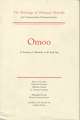
The Piazza Tales: Volume Nine: Melville
Autor Herman Melvilleen Limba Engleză Paperback – 18 noi 1996
In this new edition of The Piazza Tales, the editors of the acclaimed Northwestern-Newberry Edition of the Writings of Herman Melville have used the original magazine versions for five of the six stories in order to present the most accurate tests of these works. Here, in such famous stories as "Bartleby, the Scrivener" and "The Encantadas, or Enchanted Isles," we find Melville's imagination and style at its best. Of the less well-known tales, the humor in "The Piazza" and "The Lightning-Rod Man," and the gothic horror of "The Bell Tower," command attention as well. Whether in the exotic Galapagos or the more familiar climes of Wall Street or a Massachusetts farmhouse, Melville's power and imagination transport the reader into his unique worlds.
This edition is an Approved Text of the Center for Editions of American Authors (Modern Language Association of America).
This edition is an Approved Text of the Center for Editions of American Authors (Modern Language Association of America).


Preț: 144.78 lei
Preț vechi: 173.32 lei
-16%
Puncte Express: 217
Carte indisponibilă temporar
Doresc să fiu notificat când acest titlu va fi disponibil:
Se trimite...
Specificații
ISBN-13: 9780810114678
ISBN-10: 0810114674
Pagini: 187
Dimensiuni: 140 x 216 x 18 mm
Greutate: 0.25 kg
Ediția:1
Editura: Northwestern University Press
Colecția Northwestern University Press
Seria Melville
ISBN-10: 0810114674
Pagini: 187
Dimensiuni: 140 x 216 x 18 mm
Greutate: 0.25 kg
Ediția:1
Editura: Northwestern University Press
Colecția Northwestern University Press
Seria Melville
V-ar putea interesa
-
 CLASSICS TALES OF THE JAZZ AGEF. Scott FitzgeraldPreț: 24.60 lei
 -
 Great Short Works of Herman MelvilleHerman MelvillePreț: 112.05 lei
 -
 Billy Budd, Bartleby, and Other StoriesHerman Melville-19%Preț: 57.75 lei71.63 lei
 -
 Herman Melville: A Very Short IntroductionMaurice S. Lee-22%Preț: 54.59 lei69.71 lei
 -
 Billy Budd, Sailor and Selected TalesHerman Melville-18%Preț: 53.69 lei65.49 lei
 -
 Melville's Short NovelsHerman MelvillePreț: 122.87 lei
 -
 Bartleby and Benito CerenoHerman MelvillePreț: 28.06 lei
 -
 The World's Greatest Short StoriesJames DaleyPreț: 47.36 lei
 -
 TypeeHerman MelvillePreț: 52.01 lei
 -
 The Essential Tales and Poems of Edgar Allan PoeEdgar Allan Poe-17%Preț: 91.77 lei110.33 lei
 -
 Bartleby the ScrivenerHerman MelvillePreț: 27.51 lei
 -
 Preț: 294.46 lei
 -
 Edgar Allan Poe's Classic Tales of Mystery and ImaginationEdgar Allan PoePreț: 112.33 lei
 -
 Tales and PoemsEdgar Allan Poe-34%Preț: 51.85 lei78.14 lei
 -
 -21%Preț: 227.38 lei289.60 lei
 -
 The Raven & Other WritingsEdgar Allan PoePreț: 48.26 leiRecomandat
 -
 All The Sad Young MenF. Scott FitzgeraldPreț: 57.30 lei
 -
 -6%Preț: 61.77 lei65.49 lei
 -
 BartlebyFerdinand SchunckPreț: 37.27 lei
Notă biografică
HERMAN MELVILLE (1819–1891) was an American novelist, short story writer, essayist, and poet. He is best known for his novel Moby-Dick. His first three books gained much contemporary attention (the first, Typee, becoming a bestseller), and after a fast-blooming literary success in the late 1840s, his popularity declined precipitously in the mid-1850s and never recovered during his lifetime. When he died in 1891, he was almost completely forgotten. It was not until the "Melville Revival" in the early 20th century that his work won recognition, especially Moby-Dick, which was hailed as one of the literary masterpieces of both American and world literature. He was the first writer to have his works collected and published by the Library of America.
Recenzii
"There are very few stories that, on re-reading after re-reading, seem to become impossibly more perfect, but Herman Melville’s eerie, aching story Bartleby, the Scrivener is one such. Like a parable without an obvious moral, it is defiance raised to the metaphysical." —The Guardian
Descriere
Descriere de la o altă ediție sau format:
Herman Melville’s The Piazza Tales is the only collection of short fiction that he published in his lifetime, and it includes his two most famous short stories, “Bartleby, the Scrivener” and “Benito Cereno,” along with the less well-known but deeply engaging sketches of the Galapagos Islands that make up “The Encantadas,” as well as three more short stories: “The Piazza,” “The Bell-Tower,” and “The Lightning-Rod Man.” This new edition places these stories in the context of nineteenth-century debates over slavery, free will and determinism, science and technology, and the nature and value of literary artistry. The stories in The Piazza Tales demonstrate the global range of Melville’s cultural and aesthetic concerns, as Melville set his stories in locales ranging from rural western Massachusetts and Wall Street in the United States to the Pacific coast of South America and southern Europe.
This edition is especially concerned with Melville’s engagement with both political questions related to slavery and imperialism and aesthetic questions germane to the short-story tradition as developed by his near-contemporaries Nathaniel Hawthorne and Edgar Allan Poe.
Herman Melville’s The Piazza Tales is the only collection of short fiction that he published in his lifetime, and it includes his two most famous short stories, “Bartleby, the Scrivener” and “Benito Cereno,” along with the less well-known but deeply engaging sketches of the Galapagos Islands that make up “The Encantadas,” as well as three more short stories: “The Piazza,” “The Bell-Tower,” and “The Lightning-Rod Man.” This new edition places these stories in the context of nineteenth-century debates over slavery, free will and determinism, science and technology, and the nature and value of literary artistry. The stories in The Piazza Tales demonstrate the global range of Melville’s cultural and aesthetic concerns, as Melville set his stories in locales ranging from rural western Massachusetts and Wall Street in the United States to the Pacific coast of South America and southern Europe.
This edition is especially concerned with Melville’s engagement with both political questions related to slavery and imperialism and aesthetic questions germane to the short-story tradition as developed by his near-contemporaries Nathaniel Hawthorne and Edgar Allan Poe.
Cuprins
Acknowledgements
Introduction
Herman Melville: A Brief Chronology
A Note on the Text
The Piazza Tales
Introduction
Herman Melville: A Brief Chronology
A Note on the Text
The Piazza Tales
- “The Piazza”
- “Bartleby”
- “Benito Cereno”
- “The Lightning-Rod Man”
- “The Encantadas; or Enchanted Isles”
- “The Bell-Tower”
- From Herman Melville, “Hawthorne and his Mosses” (1850)
- From Edgar Allan Poe, Review of Nathaniel Hawthorne’s Twice-Told Tales (1842)
- Review of The Piazza Tales in United States Democratic Review (September 1856)
- Nathaniel Hawthorne, Preface to The House of the Seven Gables (1852)
- From Amasa Delano, Narrative of Voyages and Travels in the Northern and Southern Hemispheres (1817)
- From Frederick Douglass, The Heroic Slave (1853)
- From George Lippard, New York, Its Upper Ten and Lower Million (1854)
- From John Quincy Adams, Argument of John Quincy Adams (1841)
- The Slave Deck of the Bark “Wildfire,” Brought into Key West on April 30, 1860
- Alfred, Lord Tennyson, “Mariana” (1830)
- “Inscription for the Back of a Bank-Note” (1853)
- Matthew 5:38–48, King James Bible
- Job 3:1–26, King James Bible
- Judges 4:4–22, King James Bible
- From Charles Darwin, Journal of Researches (1839)
- From Jonathan Edwards, A Careful and Strict Inquiry into the Modern Prevailing Notions of that Freedom of Will (1754)
- sFrom Joseph Priestley, The Doctrine of Philosophical Necessity Illustrated (1777)