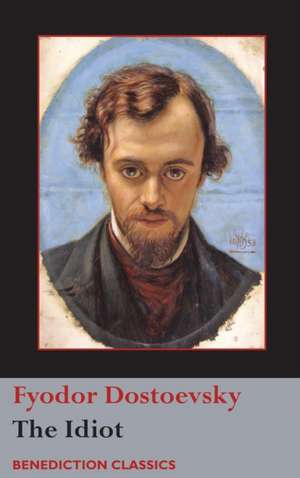
The Idiot
Autor Fyodor Dostoevskyen Limba Engleză Hardback – iun 2018
Remarcăm, încă de la primele pagini, o structură narativă densă, în care perspectivele multiple se intersectează într-un dans frenetic al ideilor și impulsurilor contradictorii. „The Idiot” nu este doar o cronică a societății ruse, ci o disecție a sufletului uman, operată cu precizia unui psiholog care a cunoscut abisul. În centrul acestei arhitecturi se află Prințul Mîșkin, o figură a purității absolute a cărei întoarcere într-o lume dominată de lăcomie și pasiune distructivă declanșează un seism moral. Subliniem modul în care Fyodor Dostoevsky reușește să mențină un echilibru fragil între realismul social și simbolismul religios, transformând o intrigă de salon într-o interogație metafizică despre posibilitatea binelui. Pe același raft cu Crime and Punishment de Fyodor Dostoevsky, această operă se distinge prin contrastul dintre lumina interioară a protagonistului și întunericul nihilist care începe să cuprindă Rusia epocii sale. Dacă în Crime and Punishment explorăm consecințele crimei și ale vinovăției, în „The Idiot” suntem martorii tragediei inocenței într-o lume care nu mai are loc pentru ea. Această lucrare ocupă un loc central în tetralogia marilor romane dostoievskiene, continuând explorarea limitelor umane începută în Poor Folk și rafinată ulterior în The Brothers Karamazov. Ritmul narațiunii este unul febril, marcat de dialoguri lungi, confesive, care alternează cu momente de o intensitate dramatică aproape insuportabilă, oferind cititorului o experiență de lectură profund interioară.
Preț: 226.63 lei
Carte disponibilă
Livrare economică 06-20 noiembrie
Livrare express 22-28 octombrie pentru 41.75 lei
Specificații
ISBN-10: 1781399816
Pagini: 366
Dimensiuni: 161 x 240 x 26 mm
Greutate: 0.74 kg
Editura: BENEDICTION CLASSICS
V-ar putea interesa
-
 Wuthering HeightsEmily BrontëPreț: 28.01 lei
 -
 XGULLIVERS TRAVELS_CLASSICS PBJonathan SwiftPreț: 28.01 lei
 -
 The Picture of Dorian GrayOscar WildePreț: 28.01 lei
 -
 CLASSICS HOUND OF BASKERVILLESArthur Conan DoylePreț: 28.01 lei
 -
 The Heart Of A DogMikhail Bulgakov-28%Preț: 51.13 lei70.78 lei
 -
 The Little PrinceAntoine de Saint-Exupèry-27%Preț: 47.71 lei65.00 lei
 -
 Essays and AphorismsArthur Schopenhauer-28%Preț: 88.32 lei122.13 lei
 -
 Letters to a Young PoetRainer Maria Rilke-39%Preț: 17.48 lei28.48 lei
 -
 The Wonderful Wizard Of OzFrank L BaumPreț: 40.60 lei
 -
 The HobbitJ. R. R. TolkienPreț: 107.33 lei
 -
 Lord of the FliesWilliam GoldingPreț: 71.58 lei
 -
 Harry Potter and the Chamber of SecretsJ. K. Rowling-24%Preț: 50.59 lei66.40 lei
 -
 Harry Potter and the Goblet of FireJ. K. Rowling-21%Preț: 59.70 lei75.85 lei
 -
 Crime and PunishmentFyodor DostoevskyPreț: 39.53 lei
 -
 Romeo and JulietWilliam ShakespearePreț: 36.06 lei
 -
 Midsummer Night''s DreamWilliam ShakespearePreț: 35.95 lei
 -
 Fairy TalesHans Christian AndersenPreț: 37.73 lei
 -
 PinocchioCarlo CollodiPreț: 35.93 lei
 -
 Anna KareninaLeo TolstoyPreț: 42.39 lei
De ce să citești această carte
Recomandăm această ediție Wordsworth Classics celor care doresc să exploreze profunzimile psihologiei dostoievskiene prin prisma unui personaj unic în literatura universală. Cititorul câștigă o perspectivă nuanțată asupra luptei dintre idealism și cinism, primind acces la o traducere clasică ce păstrează cadența originală a textului. Este o lectură esențială pentru a înțelege rădăcinile existențialismului și complexitatea morală a Rusiei imperiale.
Despre autor
Fyodor Dostoevsky (1821–1881) rămâne unul dintre cei mai influenți scriitori ai literaturii mondiale, recunoscut pentru capacitatea sa de a sonda ungherele cele mai obscure ale minții umane. Viața sa, marcată de o condamnare la moarte comutată în ultimul moment și de ani grei de muncă silnică în Siberia, a infuzat opera sa cu o profunzime spirituală și o urgență existențială rar întâlnite. Autor de romane fundamentale precum The Brothers Karamazov și Demons, Dostoevsky a influențat generații de gânditori, de la Nietzsche la Sartre, rămânând până astăzi un reper în explorarea condiției umane în fața modernității.
Notă biografică
Descriere scurtă
Textul de pe ultima copertă
'The chief thing is that they all need him' -thus Dostoyevsky described Prince Myshkin, the hero of perhaps his most remarkable novel. As the still, radiant center of a plot whose turbulent action is extraordinary even for Dostoyevsky, Myshkin succeeds in dominating through sheer force a personality a cast of characters who vividly and violently embody the passions and conflicts of the 19th century Russia.
Descriere
Prince Myshkin returns to Russia from an asylum in Switzerland. As he becomes embroiled in the frantic amatory and financial intrigues which centre around a cast of brilliantly realised characters and which ultimately lead to tragedy, he emerges as a unique combination of the Christian ideal of perfection and Dostoevsky's own views, afflictions and manners. His serene selflessness is contrasted with the worldly qualities of every other character in the novel. Dostoevsky supplies a harsh indictment of the Russian ruling class of his day who have created a world which cannot accomodate the goodness of this idiot.
Translated by Constance Garnett, with an Introduction and Notes by Agnes Cardinal, Honorary Senior Lecturer in Comparative Literature at the University of Kent. Prince Myshkin returns to Russia from an asylum in Switzerland. As he becomes embroiled in the frantic amatory and financial intrigues which centre around a cast of brilliantly realised characters and which ultimately lead to tragedy, he emerges as a unique combination of the Christian ideal of perfection and Dostoevsky's own views, afflictions and manners.
His serene selflessness is contrasted with the worldly qualities of every other character in the novel. Dostoevsky supplies a harsh indictment of the Russian ruling class of his day who have created a world which cannot accomodate the goodness of this idiot.