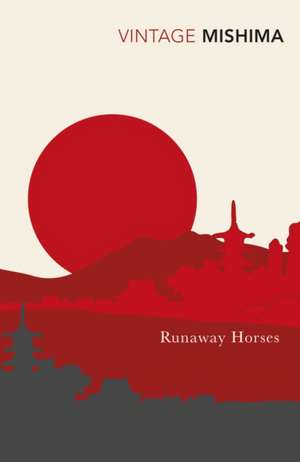
Runaway Horses
Autor Yukio Mishimaen Limba Engleză Paperback – 11 mar 1999
Ne-a atras atenția felul în care Yukio Mishima transformă o dilemă metafizică într-o cronică a fanatismului politic. În „Runaway Horses”, al doilea volum din tetralogia The Sea of Fertility, îl regăsim pe Shigekuni Honda în anul 1932, acum judecător în Osaka. Premisa este tulburătoare: Honda devine obsedat de ideea că tânărul revoluționar Isao este reîncarnarea prietenului său din copilărie, Kiyoaki. Această certitudine îl aruncă pe omul legii într-o încercare disperată de a salva tânărul de la un destin tragic, în timp ce Isao, alimentat de un etos arhaic al samurailor, plănuiește o lovitură violentă împotriva noilor industriași care corup spiritul națiunii. Apreciem precizia cu care autorul disecă rădăcinile fanatismului japonez din anii premergători războiului, oferind o analiză psihologică la fel de tăioasă ca o lamă de sabie. Ritmul narativ amintește de eleganța melancolică din Spring Snow, dar structura este mult mai densă și ideologică, înlocuind lirismul primului volum cu o tensiune politică ascuțită. Dacă în The Temple of the Golden Pavilion Mishima explora obsesia pentru frumusețea absolută, aici el mută accentul pe puritatea distructivă a spiritului național. Stilul său rămâne fidel fuziunii dintre tradiția estetică niponă și tehnicile literare occidentale, creând o operă despre identitate, onoare și inevitabilitatea decăderii.
Preț: 80.16 lei
Carte disponibilă
Livrare economică 16-30 noiembrie
Livrare express 30 octombrie-05 noiembrie pentru 24.04 lei
Specificații
ISBN-10: 0099282895
Pagini: 432
Dimensiuni: 128 x 198 x 32 mm
Greutate: 0.3 kg
Ediția:New edition.
Editura: Vintage Publishing
Locul publicării:United Kingdom
V-ar putea interesa
-
 NevernightJay KristoffPreț: 73.59 lei
 -
 Temple of DawnYukio Mishima-18%Preț: 59.29 lei72.38 lei
 -
 Spring SnowYukio Mishima-25%Preț: 60.20 lei79.89 lei
 -
 Decay of the AngelYukio Mishima-26%Preț: 58.13 lei78.63 lei
 -
 Temple of the Golden PavilionYukio Mishima-26%Preț: 58.16 lei78.67 lei
 -
 The Housekeeper and the ProfessorYoko Ogawa-27%Preț: 52.00 lei71.28 lei
 -
 Beyond Good and Evil: Prelude to a Philosophy of the FutureFriedrich Nietzsche-19%Preț: 63.63 lei78.47 lei
 -
 Confessions of a MaskYukio Mishima-26%Preț: 57.53 lei78.09 lei
 -
 -26%Preț: 61.25 lei82.96 lei
 -
 Bushido: The Soul of JapanInazô Nitobe-19%Preț: 45.71 lei56.63 lei
 -
 Cat's CradleKurt Vonnegut-27%Preț: 51.59 lei71.03 lei
 -
 The Birth of TragedyFriedrich Nietzsche-50%Preț: 17.89 lei35.63 lei
 -
 The Celestine ProphecyJames Redfield-25%Preț: 64.70 lei86.26 lei
 -
 A Grief ObservedC. S. LewisPreț: 70.19 lei
 -
 The Way of KingsBrandon SandersonPreț: 91.44 lei
 -
 Words of RadianceBrandon SandersonPreț: 91.73 lei
 -
 OathbringerBrandon SandersonPreț: 92.14 lei
 -
 No Longer HumanOsamu DazaiPreț: 85.29 lei
 -
 -31%Preț: 55.78 lei80.79 lei
 -
 The Wicked King (A Novel of Elfhame)Holly Black-25%Preț: 54.82 lei72.66 lei
 -
 TaoismEva WongPreț: 140.56 lei
 -
 -17%Preț: 77.63 lei94.01 lei
 -
 War and Peace (Vintage Classic Russians Series)Leo Tolstoy-8%Preț: 96.41 lei105.03 lei
 -
 Ecce HomoFrederich NietzschePreț: 56.06 lei
 -
 -25%Preț: 69.83 lei93.57 lei
 -
 TowerMyung-Hoon BaePreț: 94.83 lei
 -
 Express Korean Vocabulary 1000Bridge EducationPreț: 75.49 lei
De ce să citești această carte
Recomandăm această lectură celor care doresc să înțeleagă complexitatea sufletului japonez și tensiunea dintre modernitate și tradiție. „Runaway Horses” oferă nu doar o intrigă politică densă, ci și o meditație profundă asupra destinului și reîncarnării. Cititorul câștigă o perspectivă unică asupra modului în care idealurile nobile pot degenera în fanatism, totul sub semnătura unuia dintre cei mai rafinați stiliști ai secolului XX.
Despre autor
Yukio Mishima (1925–1970) a fost un scriitor, poet și dramaturg japonez, considerat unul dintre cei mai importanți autori ai secolului XX. Opera sa este marcată de un vocabular luxuriant și de o explorare obsesivă a legăturii dintre frumusețe, erotism și moarte. Naționalist convins și fondator al miliției Tatenokai, Mishima a militat pentru restaurarea demnității Împăratului și împotriva materialismului occidental. Viața sa s-a încheiat printr-un act simbolic și violent: sinuciderea rituală (seppuku), după o tentativă eșuată de lovitură de stat, un gest care oglindește temele onoarei și sacrificiului prezente constant în scrierile sale.
Notă biografică
The Sea of Fertility tetralogy, however, is his masterpiece. After Mishima conceived the idea of The Sea of Fertility in 1964, he frequently said he would die when it was completed. On November 25th, 1970, the day he completed The Decay of the Angel, the last novel of the cycle, Mishima committed seppuku (ritual suicide) at the age of forty-five.
Descriere scurtă
Isao is a young, engaging patriot, and a fanatical believer in the ancient samurai ethos. He turns terrorist, organising a violent plot against the new industrialists, who he believes are threatening the integrity of Japan and usurping the Emperor's rightful power. As the conspiracy unfolds and unravels, Mishima brilliantly chronicles the conflicts of a decade that saw the fabric of Japanese life torn apart.
'Runaway Horses is disturbing material, also a harbinger of Mishima's own act of 'patriotic' self-slaughter... Strange, elegant, erotic' Guardian
Recenzii
—The Baltimore Sun
“Mishima is like Stendhal in his precise psychological analyses, like Dostoevsky in his explorations of darkly destructive personalities.”
—Christian Science Monitor